Pedro Martinez
The ongoing narrative in the American League Cy Young race is that there hasn’t been any dominating pitching, and therefore, Zach Britton should probably win the Cy Young. The narrative is flipped. The case for Britton is that he has been historically dominant out of the bullpen, and therefore he should receive some consideration. I did consider him, but ultimately, he wasn’t my choice for Cy Young. Here is my ballot:
1st – Corey Kluber
To say that there hasn’t been a dominant starting pitcher is to ignore the type of season Kluber had with the Cleveland Indians this year. In 32 starts, Kluber has pitched 215.0 innings. Overall, Kluber is 18-9 with a 3.14 ERA, 1.056 WHIP, 9.5 K/9, 227 strikeouts, 1.056 WHIP, 149 ERA+, 3.26 FIP, and a 6.5 WAR. He also led the American League in shutouts (2).
Coincidentally, when Kluber won the Cy Young Award in 2014, he was 18-9 with a 2.44 ERA and a 1.095 WHIP. These two seasons are not that appreciably different.
They’re not appreciably different because Kluber had another fantastic season. Kluber led the American League in pitcher WAR, shutouts, ERA+, FIP, adjusted pitching runs (33), and adjusting pitching wins (3.5). He was also in the Top 10 in many of the major pitching categories. Kluber was fifth in innings pitched, sixth in ERA, third in wins, eight in win-loss percentage (.667), fourth in WHIP, third in hits per nine (7.116), fourth in strikeouts per nine, fifth in innings pitched, third in strikeouts, fifth in games started, third in complete games (3), tenth in strikeout to walk ratio (3.983), fifth in homers per nine (0.921), fifth in batters faced (860), and seventh in WPA (2.7).
Overall, Kluber was the most dominant starting pitcher in the American League this season. He was every bit as dominant as he was in 2014 when he won his first Cy Young Award. Considering how he matched that level of dominance, he should be taking home his second Cy Young Award this season.
2nd – Rick Porcello
About a year ago, the baseball world was laughing at the Red Sox for not only trading away Yoenis Cespedes got obtain the 9-15 Porcello and his 4.92 ERA, but also because the Red Sox gave him a four year $82.5 million extension. This year, it was Porcello and the Red Sox who were laughing.
The 2007 first round pick seemingly fulfilled his promise in his eight major league season going 22-4 with a 3.15 ERA, 1.009 WHIP, 145 ERA+, and a 5.91 strikeout-to-walk ratio. This was clearly the best season of his career, and he was one of the main reasons the Red Sox won the AL East.
Overall, Porcello would lead the majors in both wins and strikeout-to-walk ratio. He would also fair well in the Top 10 categories for American League pitchers finishing fifth in pitching WAR (5.0), fifth in ERA, second in win-loss percentage (.846), second in WHIP, seventh in hits per nine (7.789), second in walks per nine (1.292), fourth in innings pitched (223.0), eight in strikeouts (189), fourth in games started (33), third in complete games (3), fifth in home runs per nine (0.928), fourth in batters faced (890), second in ERA+, second in FIP, second in adjusted pitching runs (32), and second in adjusted pitching wins (3.2).
Porcello wasn’t that glamour ace that went out there and struck out 10+ batters a game and had the fans rhythmically clapping for that next strikeout. Instead, he was a ground ball pitcher that was best suited for his team and his ballpark. Twenty years ago, he probably wins the Cy Young Award as he had the most wins. Now, with better information available, he finishes second.
3rd – Chris Sale
4th – Justin Verlander
At this point is where it gets more and more difficult to differentiate between players. In many ways, Sale and Verlander were neck-in-neck for the next spot on the ballot.
Sale made 32 starts pitching 226.2 innings going 17-10 with a 3.34 ERA, 1.037 WHIP, 120 ERA+, 3.46 FIP, and a 9.3 K/9. Verlander made 34 starts pitching 227.2 innings going 16-9 with a 3.04 ERA, 1.001 WHIP, 136 ERA+, 3.49 FIP, and a 10.0 K/9.
Both were in the Top 10 in multiple categories among American League pitchers. Sale finished seventh in WAR (4.9), ninth in ERA, fourth in wins, third in WHIP, fourth in hits per nine (7.544), fourth in walks per nine (1.787), sixth in strikeouts per nine, third in innings pitched, second in strikeouts (233), first in complete games (6), second in shutouts (1), third in strikeout-to-walk ratio (5.178), second in batters faced (907), and third in FIP.
Verlander finished first in WAR (6.6), second in ERA, sixth in wins, first in WHIP, second in hits per nine (6.760), third in strikeouts per nine, second in innings pitched, first in strikeouts, second in games started, fifth in complete games (2), seventh in strikeout-to-walk ratio (4.456), third in batters faced, sixth in ERA+, fourth in FIP, third in adjusted pitching runs (29), and third in adjusted pitching wins (3.0).
Overall, they were neck-in-neck. The deciding factors were Sale went deeper into games, and Sale issuing fewer free passes while having similar strikeout numbers.
5th – Zach Britton
This very easily could have gone to any number of pitchers, including Michael Fulmer, who should be the American League Rookie of the Year. However, a vote needed to be made for Britton who had a historically great year for a reliever.
Britton’s ERA+ this season is 827. No, that’s not a typo. It is actually that high. That’s better than anyone has ever posted in any single season in major league history. Note, unlike Tim Keefe and Pedro Martinez, Britton does not have enough innings to qualify.
Among major league relievers, he has the lowest ERA (.054) and the highest WAR (4.3), and it wasn’t particularly close in either category. On the season, Britton made 69 appearnces going 2-1 with 47 saves, a 0.836 WHIP, 9.9 K/9, 827 ERA+, and a 1.94 FIP. This has now become the gold standard upon which all reliever seasons will be judged.
The IBWAA Rollie Fingers Award is given to the best relief pitcher in the American League. In the history of this award, there has been no easier choice as to who should win the award:
1st – Zach Britton
All Britton did this year was have probably the best season a reliever has probably ever had in major league history. His 2016 season was better than any year Mariano Rivera had. It was better than Dennis Eckersley‘s 1992 Cy Young and MVP season for the Oakland Athletics.
Consider for a second that Pedro Martinez‘s dominant 200 season garnered him the second highest ERA+ ever recorded at 291. This narrowly trailed Tim Keefe‘s 1880 season where he recorded a 293 ERA+. Britton’s ERA+ this season is 827. No, that’s not a typo. It is actually that high. It should be noted that Britton does not have enough innings to qualify to have his ERA+ recorded as the highest ever. Still, it speaks to just how dominant Britton was.
Among major league relievers, he has the lowest ERA (.054) and the highest WAR (4.3), and it wasn’t particularly close in either category. On the season, Britton made 69 appearnces going 2-1 with 47 saves, a 0.836 WHIP, 9.9 K/9, 827 ERA+, and a 1.94 FIP. This has now become the gold standard upon which all reliever seasons will be judged.
2nd – Brad Brach
Britton’s season completely overshadowed his own teammate’s incredible season. The irony is Brach’s season actually helped Britton put up some of the dominant numbers he put up this season by locking down the eighth inning.
In 2016, Brach made 71 appearances pitching 79.0 innings. He wouldn’t lead the majors or the American League in holds because quite frankly, the Orioles starting rotation wasn’t good this season. As a result, the Orioles starters would hand the bullpen either deficits or tie games to the bullpen. Brach would do his job to turn these scenarios into victories. In his 71 appearances, Brach earned a eye-popping 10 wins out of the bullpen. For the season, he was 10-4 with two saves, 24 holds, a 2.05 ERA, 1.038 WHIP, 10.5 K/9, 216 ERA+, and a 2.92 FIP. Overall, it was either him or Addison Reed as the best set-up man in the major leagues.
3rd – Sam Dyson
Not only did Britton overshadow his teammate, he also overshadowed another dominant closer who had a breakout season. Dyson had about as dominant a season you will see any closer have in baseball. However, if he was looking to get noticed, he had his great season the wrong year.
In what has been Dyson’s first season as a closer, he has gone 3-2 with 38 saves, a 1.223 WHIP, 7.0 K/9, 186 ERA+, and a 3.62 FIP. For a Rangers team that won almost all of their games by a razor thin margin, Dyson’s job as the closer was made all the more important. His 38 saves and 2.9 WAR would have been the best for a closer in the American League this season. However, he happened to have this great year at the same time Britton had his otherworldly season.
Back in 2007, the Mets collapsed in part due to a rash of pitcher injuries. Pedro Martinez missed most of the year following offseason surgery to repair a torn labrum. An injured Orlando Hernandez (El Duque) had to be moved out of the rotation and into the bullpen. With they myriad of injuries, Mike Pelfrey was put in the rotation before he was truly ready. Brian Lawrence made a few poor starts. With the walls crashing in on the Mets and the Phillies gaining on them, the Mets had to turn to Philip Humber.
Humber was the third overall pick in the 2004 draft. In his career, he never lived up to that billing. It could have been that he was damaged goods coming from Rice University, who is well known for abusing pitcher arms. He did have ulnar collateral ligament reconstruction surgery before his major league debut. It could be that he was rushed through the system never being given proper time to develop. It could any single factor or any combination thereof. It could just be that he just wasn’t good enough to be a top line starting pitcher.
He certainly wasn’t on September 27, 2007. His final line was four innings, six hits, five runs, five earned, two walks, no strikeouts, and one home run allowed. Humber did his best to battle that night, but he either wasn’t ready or wasn’t capable of winning a big game like that. The only reason he didn’t take the loss was the Mets staked him to a 4-0 and a 6-2 lead. It would be his last game as a Met as he would be part of the Johan Santana trade. It was also the last day the Mets would have sole possession of first place as the loss would drop them to only one up in the division.
Like in 2007, the starting pitching is dropping like flies. Matt Harvey, Steven Matz, and even Jon Niese have found themselves on the disabled list. Logan Verrett has served as this year’s Lawrence. Robert Gsellman serves as this year’s Pelfrey. However, Lugo isn’t quite this year’s Humber. They really have nothing in common.
Whereas Humber was a high draft pick, Lugo was a 34th round draft pick. While Humber was pushed through the minors without mastering a level, Lugo has performed at each and every level having to prove himself over and over again. During his career, Humber had trouble developing a real outpitch. Conversely, Lugo has a terrific curveball that has already fooled Anthony Rizzo, who is a terrific major league hitter. More importantly, the main difference between Humber and Lugo is Lugo has already had success as a pitcher for the Mets.
In nine appearances as a reliever, Lugo pitched 17.0 innings and had a 2.65 ERA. When injuries forced him to make an unexpected start, Lugo was better than anyone could have imagined. He was not only good, but he was efficient. When Lugo walked off the mound, he had pitched 6.2 innings allowing seven hits, one run, one earned, and one walk with three strikeouts. At a minimum, Lugo has shown everyone he has the capability of being a good and reliable major league pitcher.
During this season, this Mets team has been compared to past Mets teams that have failed. Namely, they have been compared to the 1987, 2001, and 2007 teams. You can go up and down the line and compare different aspects of those teams to this current team. However, those comparisons need to stop with Lugo as everyone should have faith when Lugo steps on the mound.
It was a muggy and rainy day that might’ve lead to the game being called on any other night.
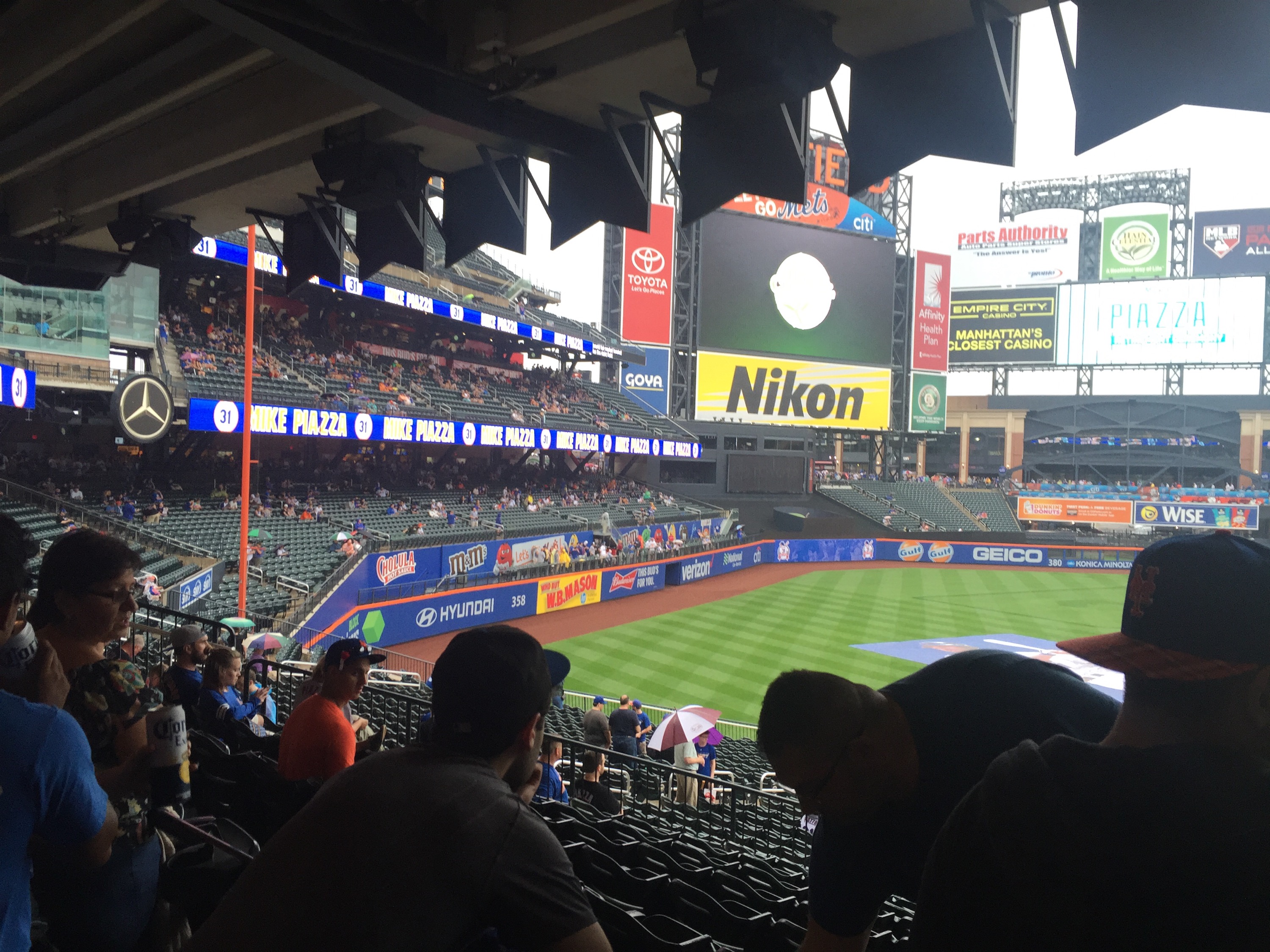
But they weren’t going to call this game as it was the night the Mets were retiring Mike Piazza‘s number 31. With the 31 inside a home plate mowed into centerfield, the Mets were ready, and nothing was going to stop the night.
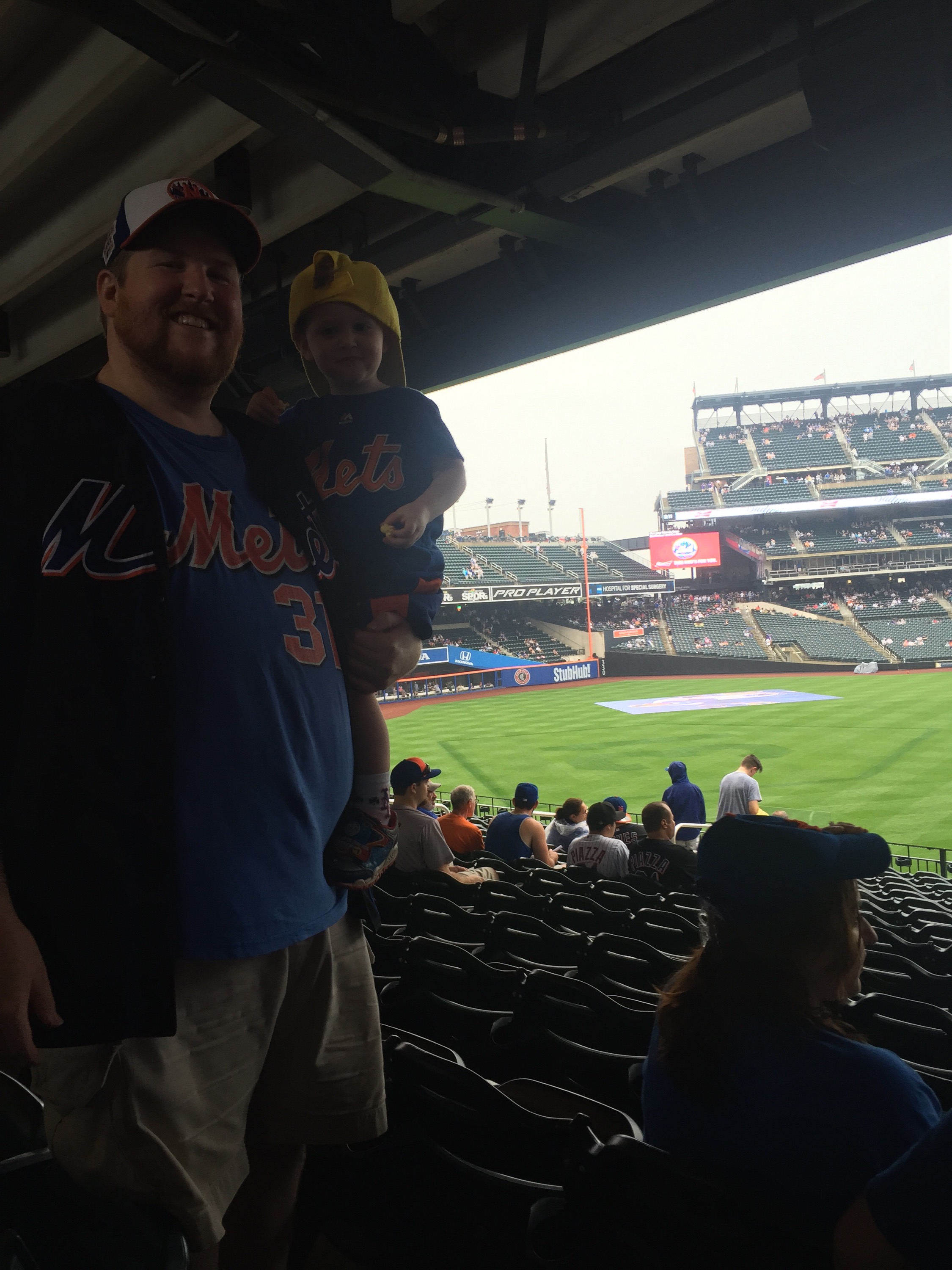
The ceremony was just about perfect with a video featuring Piazza standing at the spot home plate once stood at Shea Stadium
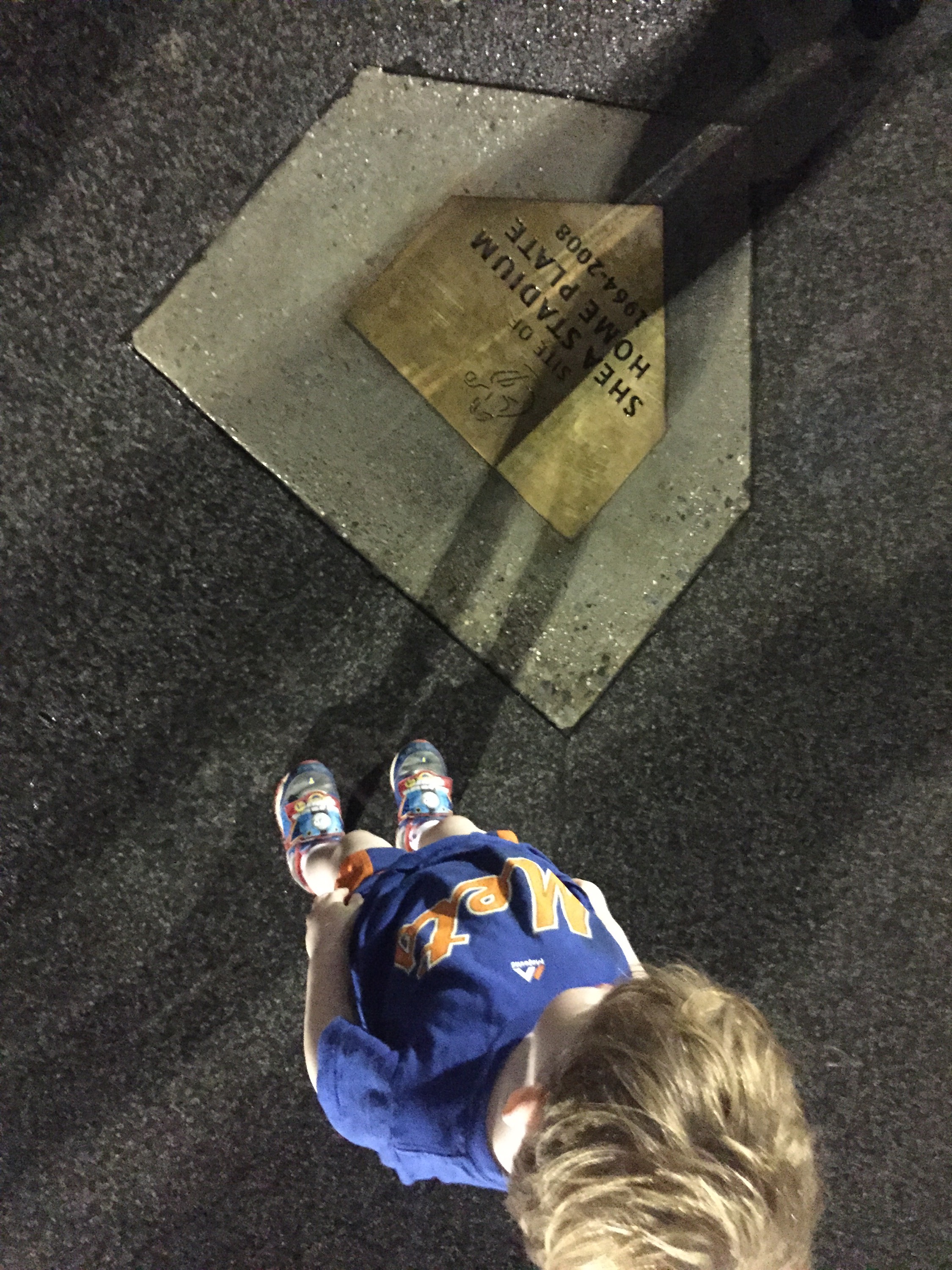
We had to visit it after the game.
Then Piazza would come through the Mets dugout that seemed to have most of the players there, and the crowd erupted.
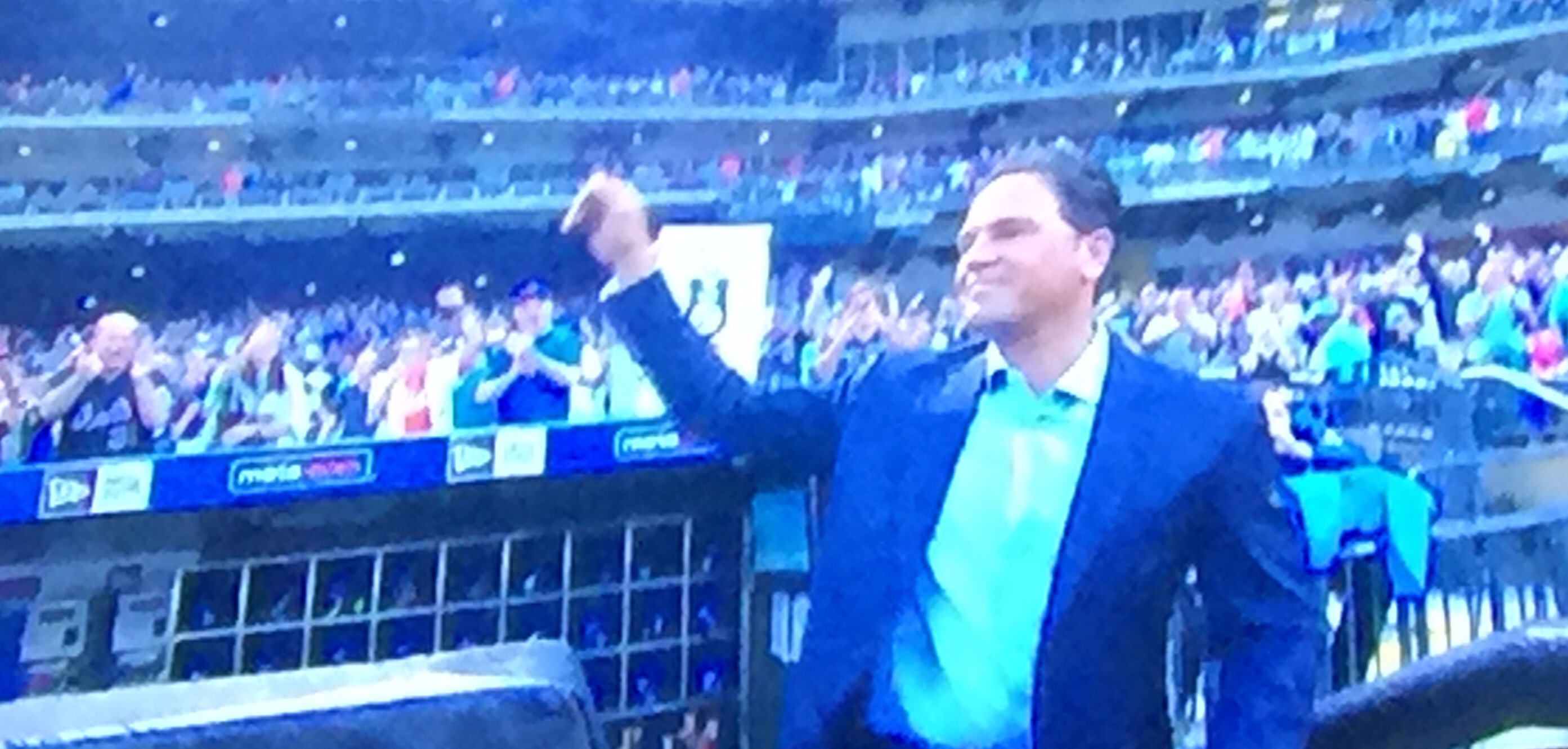
Every little touch was perfect from the aforementioned 31 in centerfield to his 31 prominently featured on the Home Run Apple.
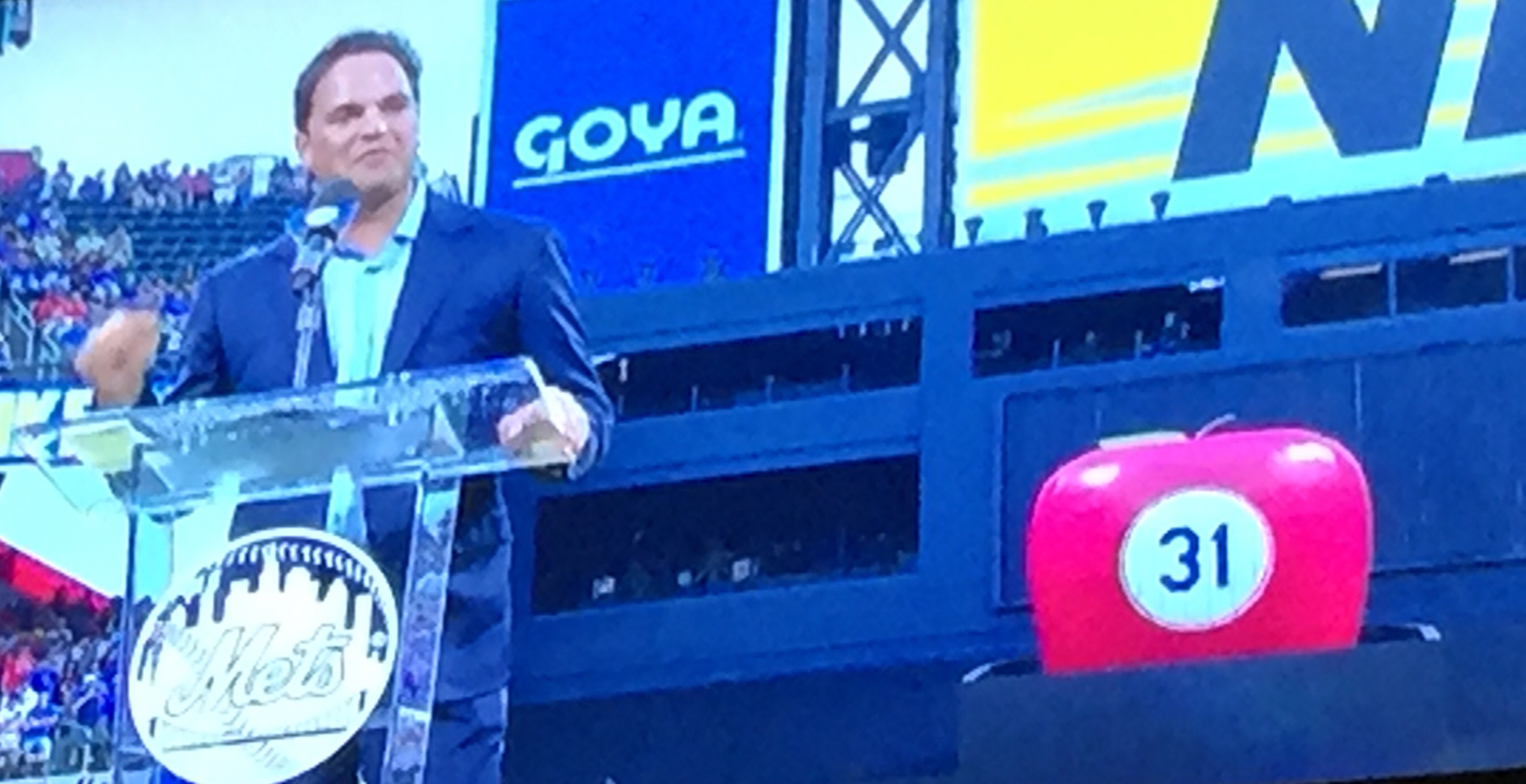
The video introducing him was spot on making sure to put an emphasis on his post 9/11 home run
The only thing missing from the tribute was Mets fans giving him a curtain call after he homered off former teammate and fellow Hall of Famer Pedro Martinez.
Speaking of former teammates, there was some surprise that there weren’t more of his old Mets teammates there. Frankly, I was shocked there was no John Franco, but you don’t know the scheduling issues that would prevent people from coming. For example, you know White Sox manager Robin Ventura would never be able to make it.
You still didn’t notice it too much with who was there. There was old fan favorite Cliff Floyd. The best Mets second baseman of all time Edgardo Alfonzo. The last player there was the first Mets pitcher Piazza ever caught, Al Leiter. Since leaving the Mets, Leiter was never treated properly by Mets fans for how great a Met he was, but on this day, he would be with a loud standing ovation. Then we finally saw the number unveiled:
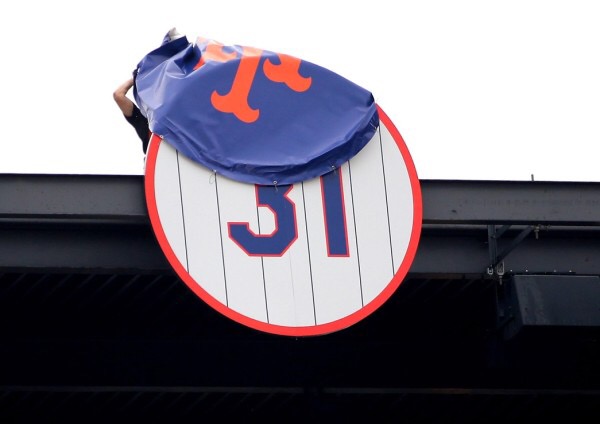 Piazza then had to speak. Many times, he seemed speechless at the outpouring of affection he received. Other times, Mets fans would not even let him speak during his speech:
Piazza honored everyone including the fans. He took in the moment as Mets fans did as well. His induction to Cooperstown was a coronation, but this was a celebration with 42,207 of his closest friends. There would be no roomfor booing as Piazza would remind the fans when he brought up the Wilpons. That’s the power of Piazza – he can get the fans to stop booing the Wilpons.
He gave a poignant speech letting the fans know that for as long as his 31 hangs in Citi Field, he will be with all of us. As he parted, he tried to inspire everyone saying that whenever the team needs inspiration, they need only look up to left field and remember that old Mikey is with them.
After he threw out the first pitch from home plate to Leiter, it was game time
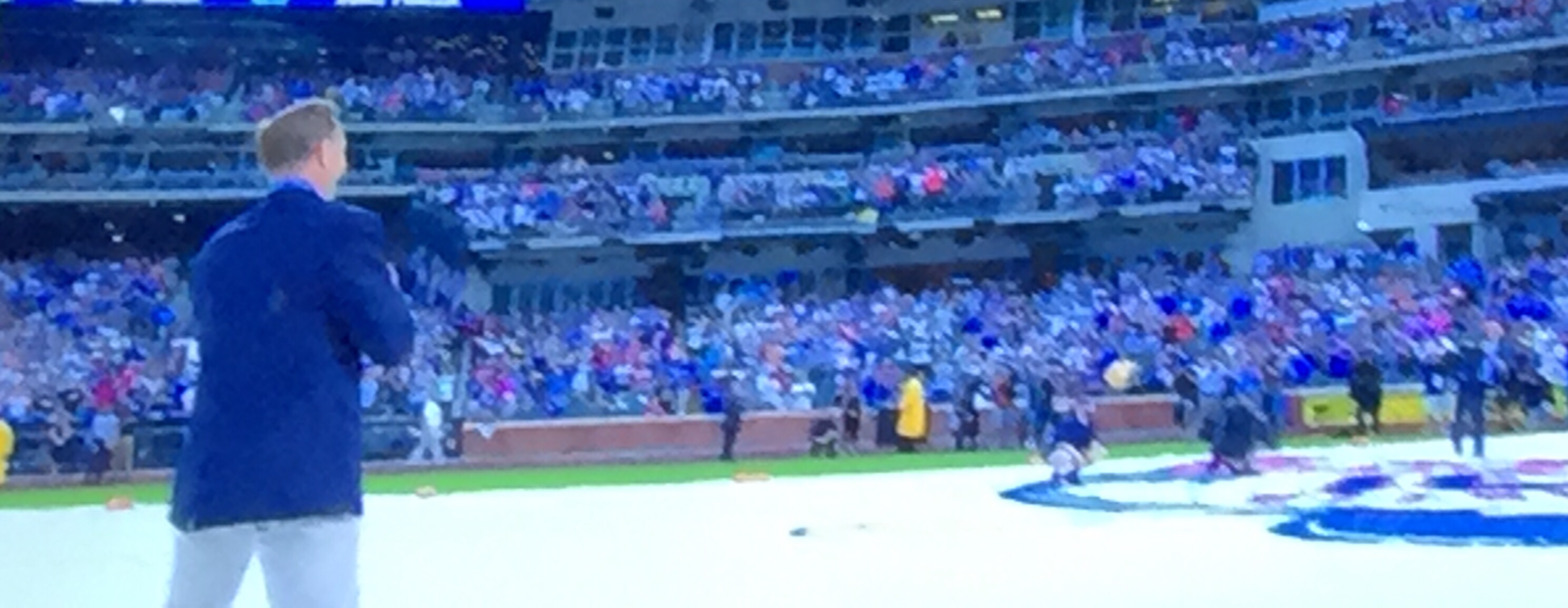
Yes, there were some jokes about Piazza not doing it to Alfonzo at second. The real joke was what followed. The team either didn’t listen or was too undermanned to draw from these inspirational words.
The game itself. It was never going to match the beauty of that ceremony, but it didn’t need to be that ugly. The team never heeded his parting advice.
Given how the Mets have been playing, and the lineup that was put out there, the loss was no surprise. The Mets starter AAA cast-off Justin Ruggiano in center, a reall defensively challenged Kelly Johnson at first, a 43 year old Bartolo Colon on three days rest, and of course Neil Walker. Not even facing the worst starter in baseball Jorge De La Rosa could revive this offense.
It was just a brutal game that saw Terry Collins get tossed in the fourth, and frankly, most Mets fans didn’t stay for much longer than that it a 7-2 loss.
Overall, the only thing worse than the loss was knowing that Tom Seaver was physically unable to attend the ceremony. It was still a great night, and years from now, I will always remember seeing this for the first time.
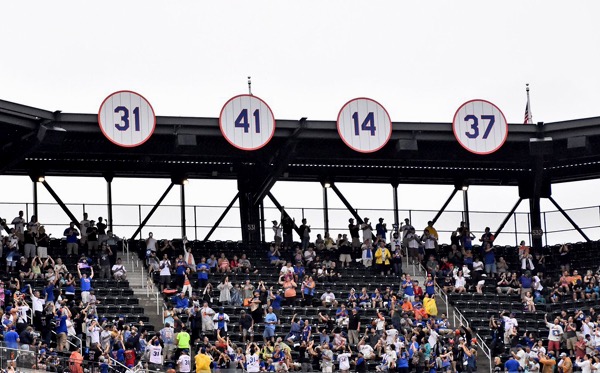
Game Notes: Jose Reyes was put on the DL before the game.
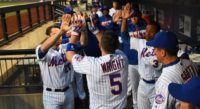
Twenty year old me never would’ve thought I’d say, “Thank God the Mets get to play the Braves 19 times a year,” but here we are. The Mets get to beat up on an awful Braves team 19 times a year. The Mets starting beating up on the Braves immediately:
Yoenis Cespedes‘ and David Wright‘s homers were tattooed.
Back to back! Cespedes saw Wright hit a 106mph homer, so he decided to hit a 106mph homer of his own. pic.twitter.com/bfKert3HWS
— CitiFieldHR (@CitiFieldHR) May 2, 2016
As for Cespedes, his homer was a new Mets record:
Yoenis Cespedes: fastest player to 25 HR with Mets (77 G). Previous fastest? Carlos Delgado: 88 G. via @EliasSports pic.twitter.com/njYSdGDvzg
— ESPN Stats & Info (@ESPNStatsInfo) May 2, 2016
Speaking of Carlos Delgado, this was the first time the Mets hit three homers in the first inning of a game since 2006. How you take that is up to you, but I choose to think of that as a good omen.
Speaking of slugging Mets first basemen wearing the number 21, this was the fourth time this season Lucas Duda was involved in back-to-back homeruns. The Mets have gone back-to-back five times this year.
After the first inning, the Mets bats quieted down a bit. Nothing of note really happened unless you want to count Wright singling off the face of Reid Brignac in the
As for Bartolo Colon, he did what he does best. He beat a really bad team handily. Colon pitched eight shutout innings allowing seven hits, no walks, and seven strikeouts. Colon had only thrown 99 pitches, but Terry Collins pulled him out. Jeurys Familia would pitch the ninth. He allowed a run to spoil the shutout, but would hold on to preserve the 4-1 victory.
Colon put on a show on the mound and at the plate:
BARTOLO EXIT VELOCITY!!!!!!!!!!!!!!!!! pic.twitter.com/tBtpW1Otr4
— Cut4 (@Cut4) May 3, 2016
Yes, this happened again:
#BigSexy, pure concentration. pic.twitter.com/xM2tq4tg6t
— MLB GIFS (@MLBGIFs) May 3, 2016
Congratulations are in order to Colon for his 220th career win. He broke the tie with Pedro Martinez for the second most wins by a Dominican pitcher. Juan Marichal is in first place with 243 wins. For the Mets, it was their 16th of the year and are 4-0 against the Braves.
Game Notes: Eric O’Flaherty is officially a Brave again as he pitched a scoreless seventh. Both he and Kelly Johnson received their NL Championship rings before the game. Neil Walker stole his first base as a Met in the eighth.
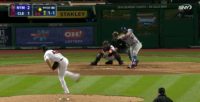
It’s amazing how a well constructed lineup and the offense exploding in one inning can make you feel a lot better about the Mets.
The biggest surprise was seeing Michael Conforto batting third moving Yoenis Cespedes and the rest of the lineup one spot down in the order. Conforto promptly rewarded Terry Collins’ faith by hitting a first inning homerun.
In the game changing fifth inning, the Mets sent all nine batters to the plate, and they would show off their Feats of Strength starting with Alejandro De Aza‘s blast off Indians starter Cody Anderson. The Mets would score five runs off three homers surpassing their 2016 total:
https://twitter.com/bbtn/status/721142046199779328
In addition to De Aza, Cespedes and Neil Walker homered in the fifth. Walker hit his batting right-handed to boot. When Walker’s hitting from the right side, you know it’s a good night.
Right now, Cespedes is just scorching hot. He’s not August 2015 hot, but he’s hot. He was 3-5 with a run, double, homerun, and two RBI. He’s once again showing us all he can carry an offense when he gets hot.
That opposite field ?.
Just one of the reasons we take a 6-2 lead into the bottom of the 7th. #LGMhttps://t.co/ipbOfCK8GD
— New York Mets (@Mets) April 16, 2016
Bartolo Colon was the beneficiary of all these runs. For most of the night, it looked like he would need each and every single one of those runs and more. In the first, Colon gave up what was initially ruled a two run homerun to Carlos Santana. Upon review, it was ruled just foul, and Santana was able to navigate his way out of the first with the game tied 1-1.
That’s how most of the game went for Colon. He was in and out of trouble for most of the night. With that said, he was able to pitch 5.1 innings allowing eight hits, two runs, one walk, and five strikeouts. He was bailed out of the sixth inning jam by Antonio Bastardo, who pitched a perfect 1.1 innings. Hansel Robles pitched a scoreless seventh. Addison Reed pitched a scoreless eighth, and was thrown out there for the ninth with no save situation on the line.
For some reason with a four run lead, Collins still wouldn’t pitch Rafael Montero. After Santana finally got his two run homerun off Reed with two outs in the ninth, Collins tabbed Jeurys Familia to pitch in his fourth straight game and get the save. He struggled with his location and command. Familia allowed consecutive hits, which couple with a d’Arnaud passed ball, made the game 6-5. After walking Uribe, who represented the go-ahead run, Jose Ramirez popped out. Familia somehow managed to preserve the 6-5 win.
With the 6-2 win, Colon not only got his 219th win against the team with whom he broke into the majors, but he also tied former Met and Hall of Famer Pedro Martinez for the second most wins for a Dominican born pitcher. Hall of Famer Juan Marichal has the most with 243.
While Wednesday was a breath of fresh air for just getting off the snide, tonight was a much better night. The Mets offense showed their capabilities by out get together good at bats, collecting hits, and hitting for power.
Game Notes: The Mets had two runners thrown out at the plate. The second was De Aza trying to score from first on a single. De Aza was the surprise starter in CF with Cespedes DHing due to a sore knee from jumping in the stands. Like Colon, it was a homecoming for Asdrubal Cabrera as well. He had a nice night going 1-3 with a walk, strikeout, and hit by pitch. Curtis Granderson had a well hit single in his final at bat, which he desperately needed. Travis d’Arnaud is still struggling going 0-4 with a strikeout. Old friend Juan Uribe went 3-4 with a double and a walk.
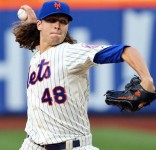
In Jacob deGrom‘s first start of the year, he went out and dominated the Phillies. Normally, this would be reason to celebrate because it’s a sign deGrom is picking up where he left off last season. Unfortunately, there were some real problems with the start.
Most importantly, deGrom left the start with right lat tightness. This was the latest injury deGrom has had this year. During Spring Training, deGrom also a sore thigh and a stiff back. Neither of the latter two injuries prevented him from getting ready for the 2016 season or taking the mound against the Phillies. He’s been nicked up, but as of right now, there is no discussion of putting deGrom on the disabled list.
There’s something important to note here. deGrom is suffering from a TIGHT lat, not a TORN lat like Steven Matz suffered last year. Any discussion of deGrom missing any period of time is very premature.
With that said, you are left to wonder if any one of these injuries, or a combination thereof, has helped cause deGrom’s drop in velocity.
After a 2015 season in which deGrom averaged a 96 MPH fastball, his velocity has noticeably dipped this year. During Spring Training, deGrom was throwing his fastball between 91 – 93 MPH. Despite hopes that he could ramp it up during the regular season, deGrom’s fastball only averaged 93 MPH. So while he ramped it up a bit, we was still three MPH slower than where he was last year.
It’s natural to question if the dip in velocity is due to deGrom getting nicked up here and there. On MLB Tonight, Pedro Martinez presented an alternative theory. He thinks deGrom is dropping his arm when he’s pitching thereby causing the decreased velocity. Therefore, if deGrom improves his mechanics, he should be able to regain his velocity.
Even if deGrom never finds his velocity, he can still be a very effective pitcher. In 2014, deGrom’s fastball averaged somewhere between 93 – 94 MPH. That year, he was 9-6 with a 2.69 ERA in 22 starts. By the way, this was good enough for him to be named the National League Rookie of the Year.
While deGrom’s health and velocity is something to keep an eye on, we do know that deGrom can pitch very effectively even without the 96 MPH fastball. Most likely, deGrom just needs a day or two off to get some rest. Hopefully, he gets it now because once his son is born, he’s not getting any rest or sleep.
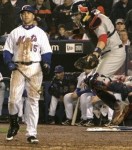
According to WAR, Carlos Beltran is the sixth best Met of all-time. He’s higher ranked than recent Hall of Fame inductee Mike Piazza. He’s a future Hall of Famer. The end of his Mets tenure was the beginning of Terry Collins tenure. When Beltran speaks, he deserves your full attention.
With that said, a person should always pick their spots when to interject an opinion. In his interview with George A. King, III, Beltran offered his opinions on Terry Collins sending Matt Harvey out for the ninth in Game 5 of the World Series. Collins’ decision ranks right up there with Grady Little leaving Pedro Martinez in during Game 7 of the 2003 ALCS. It’ll be talked about for generations. Everyone will have a perspective. For what it’s worth, here was Beltran’s take on Collins sending Harvey back out there:
He was looking down and I felt that he wanted to take Harvey out. But at the same time, Harvey was pitching such a good game and Harvey wanted that moment. He went with what Harvey showed him and not what he was thinking. That’s an experience for him. Later on [taking Harvey out] will happen. He will say,’My friend, I will give you a kiss of I have to, but I have to get my closer.’ It was a bad decision to leave him in, but in his heart I felt that he wanted to make a different move.
It’s a fine and reasonable take, but man, I really don’t want to hear Beltran talking about decision that lead to the end of playoff series. Much like the end of the 2015 World Series, his strikeout at the end of the 2006 NLCS will forever haunt Mets fans. For his part, Beltran said he couldn’t do anything with the pitch. To be fair, it was filthy:
However, with that said, he didn’t try to foul it off. He didn’t try to make a fielder make a play. There would be no little groundball up the first baseline. No, Beltran was beat, and he didn’t go down swinging. This doesn’t change the fact that he was a great Met. It doesn’t mean he shouldn’t be a Hall of Famer. It doesn’t even mean his opinion on Collins sending Harvey back out there was wrong.
No, it just means that when it comes to series altering decisions, Beltran’s opinion is the last one I want to hear.
Editor’s Note: this was first published on metsmerized.com
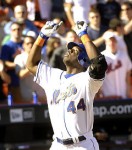
Today is the eighth anniversary of the Johan Santana trade. Over his tenure with the Mets, Santana pitched well to brilliantly when he was able to pitch.
Santana tried to will the Mets into the postseason in 2008. He pitched on three days rest on a bum knee and gave the Mets a brilliant outing, a complete game, three hit, nine strikeout, shut out. It would be the Mets last win at Shea Stadium. It would be his last great season, but not his last great moment. On June 1, 2012, he threw a 134 pitch no-hitter on a surgically repaired shoulder. The first in Mets history. It was effectively the end of his career.
The cost for all of this? Basically, it was Carlos Gomez. Yes, the same one. It’s interesting that it was Gomez because he wasn’t what the Twins initially wanted. They wanted Lastings Milledge.
At that time everyone wanted Milledge. The A’s wanted Milledge in exchange for Barry Zito. The Mets balked in 2006. They balked despite Pedro Martinez‘s injury problems. The Mets thought that highly of Milledge that they were willing to let him possibly stand in the way of a World Series title. He was considered that good. Except, unfortunately, he really wasn’t that good. His stock would go down to the point where he could only fetch Brian Schneider and Ryan Church. That’s a far cry from Barry Zito and Johan Santana.
The lesson here isn’t necessarily that you should always trade prospects. If that’s the case, the Mets wouldn’t have David Wright. No, the lesson is to make sure you are right before trading prospects.
The Mets were wrong about Gomez and Milledge. Most were. Now, Milledge is playing in Japan. Gomez is a two-time All Star. He’s a Gold Glove centerfielder. There are different times the Mets could’ve used him either as an outfielder (possibly avoiding the disastrous Jason Bay signing), or used him as a trade chip. Unfortunately, he wasn’t there because the Mets held onto the wrong prospect.
There are many lessons to learn with Santana, namely about abusing pitcher’s arms. The other lesson is that teams have to be right about their own prospects. By holding onto Milledge, the Mets might’ve lost out on a World Series in 2006. By being wrong about Milledge, the Mets lost out on Gomez’s career.
So whenever the Mets trade a prospect, we should look not just at the return, but also who they didn’t trade. As we saw with the Santana deal, you can still win a trade while still losing out on something else.
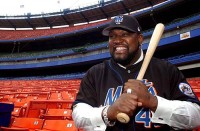
One of the biggest punchlines about Steve Phillips tenure as the Mets GM has been this:
https://twitter.com/metsrewind/status/681155190020554752
Not his personal conduct. No, he’s routinely mocked for the Mo Vaughn trade. To this day, I do not understand the vitriol over the deal. I guess it’s because Mets fans do not realize the Mets won that trade. Seriously.
First, keep in mind the Mets gave up Kevin Appier. That’s it. Yes, the same Kevin Appier the Mets signed after they lost the World Series instead of making big moves to improve the team. Yes, I’m talking about the 2000 offseason, not this one. Appier signed a four year $42 million contract with the Mets.
In his only year with the Mets, Appier was decent going 11-10 with a 3.57 ERA and a 1.185 WHIP. He would then be traded for Mo Vaughn. Appier was good again in 2002. He has a ring despite having a historically bad World Series start. Appier was bad, really bad, in 2003. Despite being owed over $15 million on his deal, he was released. Appier would go back to Kansas City, where he would pitch only 23 innings more between 2003 and 2004 before retiring and putting an end to a very good big league career.
In exchange, the Mets got the impressive batting practice hitter Mo Vaughn (the last Met to wear 42). Say what you will about Mo Vaughn. You’re probably right. His 2002 wasn’t as bad as people remember with Vaughn hitting .259/.349/.456 with 26 homers and 72 RBI. It was good for an OPS+ of 115. It’s more impressive when you consider he missed the 2001 season due to injury. Like Appier, his 2003 was a nightmare. Like Appier, his career was effectively over after the 2003 season.
So why did the Mets win the trade? No, it was not because of this homer:
I was at that game. It was awesome. However, this was Vaughn’s line highlight. In reality, Vaughn’s play had nothing to do with the Mets winning this trade.
No, the Mets won the trade due to Vaughn’s insurance policy. Vaughn’s arthritic knee prevented him from playing again. Like Appier, Vaughn was terrible in 2003, and his career was effectively over. The Angels paid Appier $12 million in 2004 alone to go away. The Mets only owed Vaughn $4.25 million over the next two years. The remainder of the $17 million owed was paid by insurance.
The Mets didn’t do anything with the money found that offseason, but they would invest it the next offseason when they signed Pedro Martinez and Carlos Beltran. So overall, the Mo Vaughn deal was really beneficial to the Mets regardless of whether or not anyone wants to recognize it.
There are still reasons to mock Steve Phillips, but this trade wasn’t one them.