Noah Syndergaard
It’s a process that began with Game 5 of the World Series.
In that game, I saw Terry Collins turn to noted steroid cheat, Bartolo Colon, when the Mets were down in extra innings. The Mets went to him even after he blew Game 1 of the World Series. Why turn to a younger, fresher, and overall better arm like Hansel Robles? No we go to Colon, who blew it again.
I processed the emotions of that loss, and I moved on. Then the Mets bring back Collins, the very same man who managed a horrendous World Series. They brought back Colon because, well, there was no good reason for that. Also, because Sandy Alderson is trying to replicate his late 80’s Oakland Athletics teams (i.e. steroid users), he added Antonio Bastardo to the bullpen mix. That was also after the Mets offered Jenrry Mejia a contract – if you’re not cheating, you’re not trying.
While the Mets made sure to keep their steroid cheats, they got rid of Daniel Murphy, who single-handedly carried the Mets this offseason. I guess if Murphy started a steroids cycle and hit 30 home runs last year, the Mets would’ve given him a legitimate contract.
Think about it. The Mets threw away Murphy, who led them to the World Series, and they kept Lucas Duda, who literally threw away the Mets chances of winning a World Series. If the Mets were really serious about winning, they would keep the players that helped them win, and they would’ve gotten rid of the streaky players that did nothing to help them win anything.
Furthermore, during the offseason, we had to see Matt Harvey flaunt his bedroom prowess on Bravo. We saw Noah Syndergaard take a victory lap at every New York stadium and arena after the Mets lost. He probably should’ve spent that time learning how not to lose a World Series or needlessly throw at batter’s heads.
Even better, the Mets released Ruben Tejada for no reason at all. Tejada was an integral part of this Mets team. It was his injury that galvanized the Mets. Even with a cane, he was able to help the Mets win the pennant. When the Mets released him, they not only got rid of their leader, they had no legitimate backup plan. Eric Campbell has no business being a baseball player, and Matt Reynolds is a complete bust. Seriously, just remember it was Omar Minaya’s players, not Sandy Alderson’s that won the pennant.
I got past all of that and more. However, this Spring Training was the final straw. This Mets team has gone 13 straight games without a win. It’s clear from all of this Spring Training, they’re not taking getting ready for the season seriously.
Well, if this team can’t take winning seriously, I can’t root for this team anymore. I still can’t root for another NL team, and I’ll never root for the Yankees. I’ll be honest. It’s hard to pick another team to root for. I’ve been a Mets fan all my life, and the vast majority of my family (including my Dad and brother) are Mets fans.
Right now, I’m leaning towards the White Sox. Their coaching staff is full of great former Mets like Robin Ventura, Joe McEwing, and Daryl Boston. They’re taking getting ready for this season seriously. They actually addressed their needs in the offseason, and they let Adam LaRoche know they will not let his son be a distraction.
I wish Mets fans the best of luck. It’s been 30 years since the last World Series. I’d like to tell you to hang in there; that’ll happen soon. However, I’ve seen two collapses, Carlos Beltran not swinging, and Mike Piazza fly out to deep center. I know it’ll never happen in my lifetime, especially not with this offseason.
Best of luck to you Mets fans. Go ChiSox!
Ask a Mets fan which team is going to represent the National League in the World Series, and you know what their answer will be. In a clubhouse full of confident guys like Matt Harvey, you know to a man the Mets believe they are returning to the World Series.
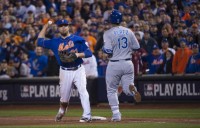
You know who agrees that the Mets will return to the World Series? Eric Hosmer. As Hosmer told Ebenezer Samuel of the New York Daily News:
You can definitely see the Mets being that team to get back on that stage and win on that stage. Not only did they get experience (from the World Series), but they’ve got guys who have established themselves as superstars in the game. I think the future is bright for those fans in New York.
Of course when talking about the reasons why the Mets can return to the World Series, Hosmer invokes the pitching staff, especially Harvey, Jacob deGrom, and Noah Syndergaard. As Hosmer notes, “. . . the hardest thing is to be able to have the quality starting pitching and not only have the quality but to have the depth as well. They have it, and they will be more comfortable in the playoffs.”
What was surprising was in addition to the Mets starting pitching, Hosmer named Lucas Duda as a reason why the Mets could repeat as National League pennant winners. He didn’t name Yoenis Cespedes who electrified the Mets when he joined them after the trade deadline. He didn’t name Michael Conforto, who hit two home runs in a World Series game and who refused to make the last out of the World Series. He didn’t even name Curtis Granderson who hit three home runs in the World Series. He named Lucas Duda whose poor throw home in Game 5 allowed Hosmer to score the game tying run. Why him? Well according to Hosmer, we shouldn’t judge Duda based upon one throw:
The fact that it happened in the ninth inning magnified the situation more, but if you look at what Duda did, he was the one who got multiple RBI hits for them (that game) and got things going. I think that play, it’s a small sample size of what actually happened for him in the World Series.
Hosmer is right, and he should’ve taken it a step further. Duda has been terrific for two plus seasons now, and yet, there will always be a segment of the fan base that will judge him solely for that one throw.
In Duda’s first two full seasons as the Mets first baseman, he has hit .249/.350/.483 with 57 homers and 165 RBI. His OPS+ is 134, and he has a cumulative 6.6 WAR. In the NL East clincher, he hit the grand slam keynote address. He hit another grand slam in the fourth and deciding game of the NLCS. Overall, Duda is as good a first baseman as there is in baseball. He is a legitimate power threat in the middle of the Mets lineup. He gets on base to boot.
So yes, Hosmer is correct in pointing out that Duda is a big reason why the Mets can and will return to the World Series. Overall, between the Mets pitching and hitting from players like Duda, they are good bets to return to and win the World Series.

Going into the 2016 season, there is one fear each and every Mets fan has. We dare not speak its name, but that doesn’t change the fact that it’s still present. That fear is that a pitcher will get seriously injured.
Looking at this year’s list of pitchers who could befall the dreaded “Verducci Effect,” Noah Syndergaard headlines that list. If Syndergaard was to suffer a season ending injury requiring Tommy John surgery? it would greatly hinder the Mets chances of winning not only the World Series, but also making it to the postseason. It’s something that not just Mets fans fear, but as Anthony DiComo of MLB.com reports, Syndergaard fears it also:
I’ve thought about it quite a bit. But I trust myself to put my body in the right situations to be able to perform at a healthy level.
The fear is justified. Syndergaard threw 65.2 innings more last year. He throws over 95 MPH more than anyone in the game. He’s working to add the fabled Warthen Slider to his already dominant repertoire. Name a risk factor for UCL years requiring Tommy John surgery. Syndergaard meets most if not all of them.
One risk factor not readily discussed is the team he plays for. Look at the projected Mets rotation when healthy: Matt Harvey, Jacob deGrom, Noah Syndergaard, Steven Matz, and Zack Wheeler. Put aside Syndergaard for a moment. What do the other four have in common? They are all hard throwing pitchers under the age of 30 who have already had Tommy John surgery.
Go outside this group. Since Warthen took over as the Mets pitching coach, the following homegrown Mets have sustained arm injuries: Jon Niese (shoulder), Dillon Gee (shoulder), Jeremy Hefner (two Tommy John surgeries), Rafael Montero (shoulder), Bobby Parnell (Tommy John), Josh Edgin (Tommy John), Jack Leathersich (Tommy John). There are more, but you get the point.
Now, is this an organizational problem since Warthen took over, or is it just bad luck? Could this all have been avoided? Back in the 60’s and 70’s the Mets developed pitchers like Tom Seaver, Jerry Koosman, Nolan Ryan, and Jon Matlack. These pitchers threw more innings than the pitchers today, and yet, Matlack was the only one of this group that suffered an arm injury.
In the 80’s, the Mets had Dwight Gooden, Ron Darling, Sid Fernandez, Rick Aguilera, Randy Myers and David Cone. Of this group, only Doc and Cone had arm issues. It should be noted that Doc had many other issues as well, and Cone’s problem was an aneurysm later in his career.
In the 90’s, Generation K was a bust, and the Mets haven’t developed the caliber of starting pitchers like they have in the past until now. However, this generation seems to befall injuries far more often than their predecessors. Is it organizational? Is it bad luck? Is it preparation? For his part, Harvey wonders what if:
I think now, there are things I could have done better in high school or in college to maybe prevent it. But I don’t know. I’m not saying [Syndergaard] works that much harder than everybody else, because we all work hard. I think as time progresses, guys pay more attention to stretching the shoulder, strengthening the shoulder. If I could go back — I don’t know if this would’ve prevented me from having [surgery], but if I could go back and really do 20 extra minutes of stretching and arm care, you never know what could happen.
That’s the thing. We really don’t know why one guy suffers elbow and shoulder injuries while others don’t. Is it preparation? Is it good genes? Is it just good luck? Much time, energy, and money has been spent on this issue, and yet pitchers still get injured. Pitchers get injured despite teams doing everything in their power to try to prevent it.
It will help Syndergaard being in a clubhouse with players who have had Tommy John surgery. They each will have advice for him on why they suffered the injury and what they could’ve done differently. More importantly, Syndergaard appears to be a hard worker who takes the health of his arm very seriously. There is no doubt he is doing everything he can do to avoid the dreaded Tommy John surgery.
Based on what we’ve seen, if anyone can avoid it, it’s him.
Editor’s Note: this article was first published on metsmerizedonline.com
The year was 1996. The Mets were supposed to open the season with a trio of pitchers dubbed Generation K. Jason Isringhausen, Paul Wilson, and Bill Pulsipher were all supposed to usher in the next era of great Mets pitching. They were supposed to win multiple Cy Youngs and World Series titles.
It never happened.
Bill Pulsipher
Pulsipher was the first to arrive on the scene. In his first year in AA, a 20 year old Pulsipher pitched 201.0 innings. The prior year he only pitched 139.2 innings. The following year, 1995, Pulsipher would pitch in AAA and get called up to the majors. He threw 218.1 innings. Pulsipher wouldn’t pitch in 1996 as he had a torn ligament in his pitching elbow.
In Pulsipher’s rookie year, he made 17 starts. He never reached that plateau again. His last major league appearance came in 2005 when he was 31 years old. When Pulsipher made those five appearances, it was the first time he pitched in the big leagues since 2001. Pulsipher finished his career going 13-19 with a 5.15 ERA in 46 starts and 60 relief appearances.
Paul Wilson
Unlike Pulsipher, Wilson burst on the scene in 1996. He was the first overall pick in the 1994 draft after dominating at Florida State. In 1995, Wilson pitched his first season of professional ball, and he pitched well in his 186.2 innings. So well in fact, that the Mets called him up to the majors. He went 5-12 with a 5.38 ERA in 26 starts. His season would end as he needed arthroscopic surgery to repair a torn labrum in his pitching shoulder.
Wilson would never pitch for the Mets again. He would be part of a trade on 2000 for a fourth outfielder in Bubba Trammel and a bullpen arm in Rick White. He finished his career going 40-58 with a 4.86 ERA in 153 starts and 17 relief appearances.
Jason Isringhausen
Without a doubt, Isringhausen had the best career of the Generation K pitchers, and he had to go to the bullpen to do it.
Isringhausen burst on the scene in 1995. In 14 starts with the Mets, he went 9-2 with a 2.81 ERA. Even though he only pitched in half a season, he was so impressive that he finished fourth in the Rookie of the Year voting. While he may not have been the most heralded pitcher of Generation K, he had the most success out of all of them when he was first called up. However, that success would not last as like the other two pitchers, Isringhausen’s arm was a ticking timebomb.
In 1994, the year before Isringhausen pitched in the majors, he threw 193.1 innings. The year before? He threw only 90.1 innings. In his career, Isringhausen would need shoulder surgery and three Tommy John surgeries. This doesn’t even include surgery for a broken wrist because he lost a fight with a water cooler.
Isringhausen would eventually make two All Star teams due to his work as a closer. He would record 300 saves. The last seven were with the Mets in 2011 when he came back on a minor league deal. At that point, he served as a mentor to a young bullpen. It was a nice bookend towards the end of his career. The former young hothead with arm troubles became a veteran leader.
Generation K
These three heralded young pitchers were ruined by the Mets organization. They were needlessly pushed beyond their limits in the minors and majors. As a result, they had a series of shoulder and elbow injuries. The heralded trio would never appear in the same rotation.
Epilogue
It’s been four years since Isringhausen has retired, and now people want to interview him when we talk about how prospects should be handled. Here’s what he revealed about how those Mets handled prospects:
Jason Isringhausen: In the minors if we didn't pitch 9 innings, we got a talking to. We didn't watch pitch counts as much as we do today
— MLB Network Radio on SiriusXM (@MLBNetworkRadio) March 3, 2016
Twenty years later, the Mets have a new trio, who for some reason don’t have a great nickname like Generation K. While Jacob deGrom and Matt Harvey have had Tommy John surgery, the Mets handle their young aces much better now. They took better care of their pitchers during the rehabilitation process. Last year, we saw deGrom and Harvey team up with Noah Syndergaard to pitch the Mets into the World Series.
This was supposed to happen 20 years ago. It’s happening now. So next time, the Mets are too patient with a player, or a player or his agent voice concerns over a pitcher’s workload, remember Mets fans were robbed of seeing three aces in one staff due to over usage of the young pitchers.
I’m sure innings limits, six man rotations, and skipped starts will be a story line at some point in 2016. When it does, embrace it because the Mets not using that forward thinking might’ve cost at least one World Series title. Young pitchers are fragile, and they need to he handled as such. If you don’t, the workload could lead to injuries and/or ruined careers. Next thing you know, the window to win a World Series is slammed shut.
I’m not willing to see another chance go by the wayside due to some meaningless starts again.
Last year, the seminal moment of the Spring was David Wright and Bobby Parnell throwing out Noah Syndergaard’s lunch. This year it was Dominic Smith‘s turn to learn a lesson.
This past weekend, Smith got a hold of one, and he thought it was out. He didn’t flip the bat or admire and pose after hitting it. No, he broke right into his homerun trot. He wasn’t hustling out of the box. When the ball hit the wall, Smith wound up with a single instead of a double.
A ten year veteran might get away with it. Not a AA player. It’s why Terry Collins approached him about the moment. For his part, Smith seemed to get it vowing he would never did it again. He said, “there’s no place for me not to hustle out of the box like that. It’s a learning experience.”
Look, this isn’t about taking fun out of the game. He wasn’t chastised for celebrating a homerun. The manager talked to him about a lack of hustle. It was fair for Collins to do so. Smith is a 20 year old kid with a lot of promise. It’s up to Collins in the little time they have together to help point out to Smith what we needs to do to take the next step.
Hustling out of the box is a fair and legitimate concern. It was never an issue for Smith before, and it probably won’t be in the future. However, Collins took advantage of an opportunity to talk to him. Smith will be a better player for it, which is saying something.
Hopefully, this moment will be Thor’s moment. It will be what we will be talking about one day during his rise to greatness.
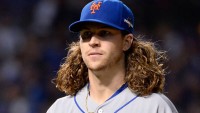
All winter long, Mets fans seemed strangely resolute that neither Noah Syndergaard or Jacob deGrom should cut their hair. Thor had some fun with the fans on the topic:
This offseason neither Thor nor deGrom chopped off their locks. It wouldn’t make sense. Why? As Archie Bunker would say, “The Bible. If you read it, you’d know.”
In the Bible story of Samson and Delilah (Judges 16), we learned that Samson’s great power was due to his hair. Once his hair was chopped, his power was gone. It would lead to his ultimate demise.
As major leaguers say, part of deGrom’s power comes from his hair. Apparently, hitters are having trouble picking up deGrom’s pitches because either they are distracted by his hair or because the hair temporarily hides the ball. With deGrom’s repertoire, the ability to hide the ball, however he does it, makes his pitches all the more dangerous.
I’m not sure if deGrom cutting his hair would lead to his demise. What I do know is that it’s not wise to tempt God. Please don’t cut your hair deGrom.

In honor of Dr. Seuss’ birthday, here is my adapted Mets Dr. Seuss story to read with your little Mets fan.
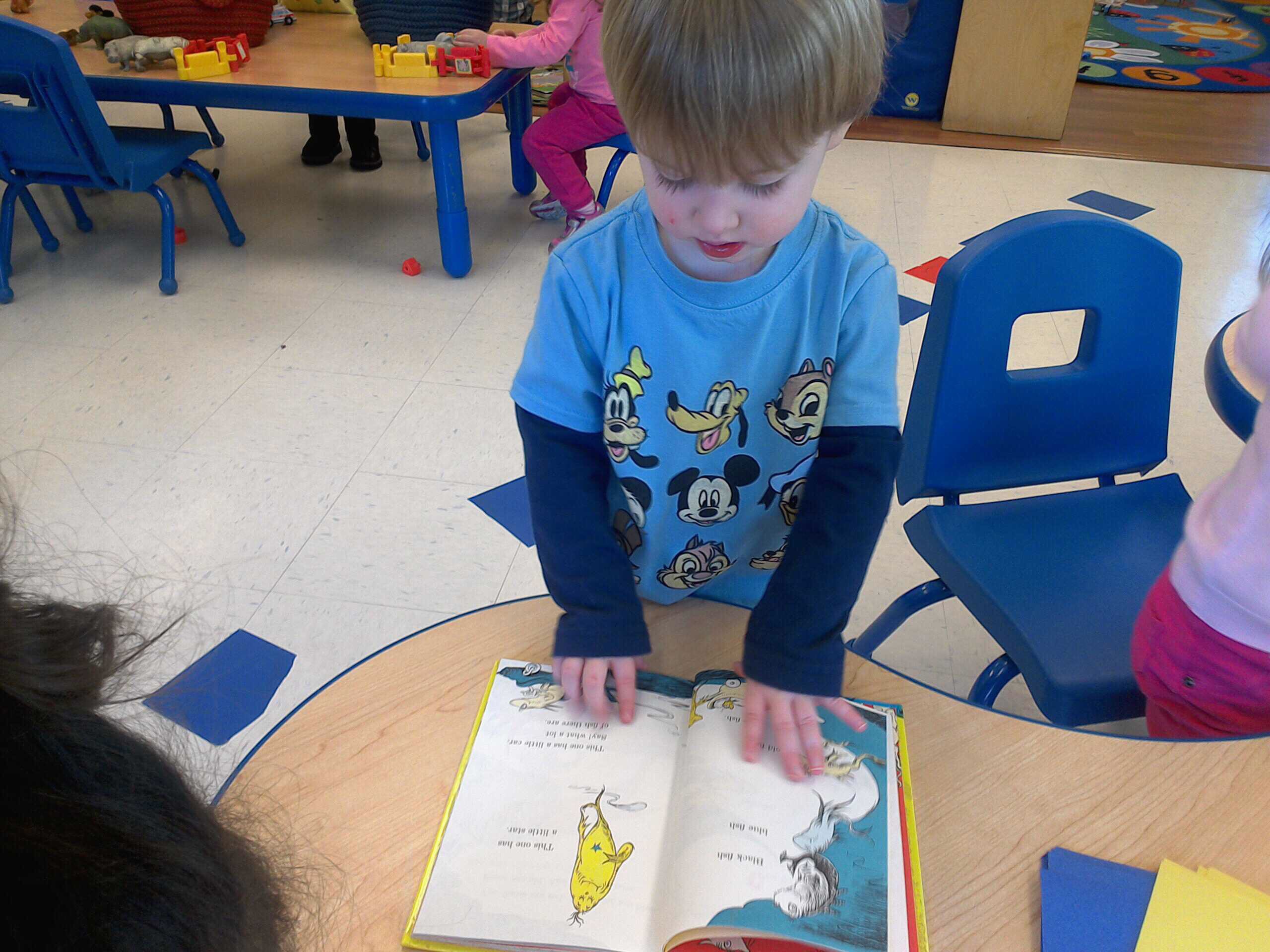
“One Strike, Two Strikes, Three Strikes, You’re Out”
One Strike. Two Strikes. Three Strikes. You’re out.
Yes. Some are curves. And some are fast. Some are slow. Some are from Matz.
Some are from Jake. With strikes batters take. Even if these are batters that rake. Why do batters who rake take pitches from Jake? I do not know. Maybe the pitch did break.
Some pitchers are thin. Colon is fat. The fat one can pounce off the mound with the agility of a cat.
From here to there, from here to there, strikeouts are everywhere.
Some strikes bring heat. The heat is neat and sends batters to their seat.
Oh me! Oh my! Oh me! Oh my! What a lot of strikes go by.
Some are two seamers. Some are four. Some are just mean and batters want no more.
How do they do it? I cannot say. But I bet the pitchers trained very hard along the way.
We see the pitches come. We see the pitches go. Some are fast. And some are slow. Some are high. And some are low. Not one of them is like another. Don’t ask us why. Go ask your mother.
Say! Look at the strikeouts? One, two, three . . . . How many strikeouts do I see? One, two, three, four, five, six, seven, eight, nine, ten. The pitcher has eleven. Eleven! That’s nothing new. The next pitcher will do it too!
Swing! Swing! Swing! You ever see such a thing? Not one swing hit anything. But we know the pitchers have the ball on the string. The string makes the ball do anything. So . . . if you like to Swing! Swing! at anything just swing at the ball on a string and the strikeouts will sting.
Who am I? My name is Thor. When I strike someone out. I want more. It is so good. It is so right. The batters strike out all day and night. And when I strike them out, Oh Dear! The batters have had it up to here!
We like the strikes. We like them in threes. Each strike sets up a hitter, you see. We like the strikes and this is why: the strikes makes outs and batters go bye-bye.
Hello there, Zack. How do you do? Tell me, tell how do you plan your attack? How did you do that? Was the pitch new? Please tell me Zack. I do not like this batter at all. A lot of strikes the umpire did call. A National, a Phillie, a Marlin, a Brave. Oh! He’s out! The strikeout was my fave!
Oh dear! Oh dear! The batter is in fear. How does the pitcher throw that sphere? Why did the crowd just cheer? It seems another strike out is near. Say look! The ball did reappear. But he is out. So you can cheer. Again, cheer for the strikeouts my dear.
The batter is old. The batter is cold. The pitcher has a pitch that is bold. The pitch is off. The batter will fold. The pitch is off. The batter did fold. The pitcher’s pitch was bold. The batter is cold. The batter is old. And now the story of the at bat has been told.
The batter took a look. His confidence is shook. On the pitch, he did look. On the pitch, he did look. It was a hook, and the confidence was shook. We saw him sit and give a look. He took a look at the hook and he shook. The hook did the deed for the pitch the batter just took. SO . . . what good is a look at the hook he just took?
The batters were out, and they’ll lose some sleep. But not even counting sheep will help them sleep. By the light of the moon, by light of the star, they struck out all night on pitches near and far. They would never walk. Sitting in the dugout they are.
I do not like this ump so well. All he does is yell, yell, yell. This game is turning into a route. When the Mets strike all the batters out. The batters are quiet as a mouse. All they can do now is rouse.
At our house, we have stands. Those stands are full of fans. With two strikes, the fans give the pitcher a hand. Hands from fans is very good. Have you heard a hand from fans? You should.
I like to play. How I like to play! So, if I may, I play everyday. In May, I play everyday. I play everyday in May.
It is fun to win if you win with a grin. I grin and win with pitchers who do everything. I grin wide, and the batters heads hang low, their swings were so bad, and too slow.
This batter I think will blink. His strikeout will be written in ink. He really does stink. He hates to stink, and stink, and stink. The stink makes his face turn pink. The pink from the stink is after a pitcher’s wink. The batter hates the stink, the pink, and the wink. SO . . . if you really stink, the pitcher will give you a wink, after the strikeout is written in ink.
Hop! Hop! Hop! The batter went plop. Familia likes to hop from batter flop to batter flop. Familia hops from the mound and then . . . Hop! Hop! The ball goes from the catcher to third and around. Familia likes to hop all day and night from mound to ground and ground to mound. Why does he hop, hop, hop? The rally did stop.
Shush! Shush! Shush! Shush! Groan! Groan! Groan! Groan! Pitchers have fans making hitters shush and groan. All batters who shush and groan will have better luck when they return home.
Who is this Met? Say! He doesn’t break a sweat. You may never yet met a Met, I bet, who will let a batter make him sweat.
Did you ever make a batter see red? Did you ever strike a batter out and send them to bed? Did you ever have a batter shaking his head wondering how? Well, Mets pitchers can do it. They know how. If you ever did, you should. These things are fun and fun is good.
Hello! Hello! Are you there? Hello? You’re up to bat, hello! I said hello. Can you hear me Joe? Oh no. I can not hear you at all. I did not hear your call at all. I was not paying attention; want to know why. I’m not willing to face a Mets pitcher. Good-bye!
From near to far, from here to there, the Mets are striking batters out everywhere. These young Mets are called aces. They strike out the batters each one faces. Their pitches are fast . . . so fast, they say, they strikeout batters everyday.
Who am I? I’m the Dark Knight. I throw the ball with great might. My slider has bite and the spin is real tight. When I pitch to strikeout a batter without much fight, I pitch the ball at the right height. Then I say, “You have no fight against a slider that will bite!” And I give batters great fright as they strike out all night. So . . . if your plight is my might all night, you might swing with fright at the pitches from the Dark Knight.
Our house is a place called Citi. During each game all we feel for batters is pity. Would opponents like to play against our pitchers in a game? Come down! There’s only one great pitching staff in town.
Look at we did in the park in the dark. We only win at home. A visitor’s chances of winning are stark. We will win at our house. The win totals will grow and grow. All of baseball will take notice. Our pitching prowess will you will soon know.
And now good night. It is time to sleep. Our pitchers will soon put you to sleep as the hole you’re in is too deep. Today is gone. Today was fun. Tomorrow is another one. Every day, from here to there, Mets pitchers are striking out batters everywhere.
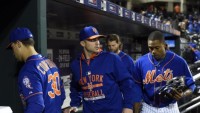
It is surreal to think it was only 12 years ago that David Wright was walking into Mike Piazza‘s clubhouse. Now, with Piazza being retired, it’s now Piazza’s turn to walk into Wright’s clubhouse:
For the Twitter folks: David Wright welcomes Mike Piazza to #Mets camp on Sunday morning: pic.twitter.com/Yq9k7jLkxz
— Adam Rubin (@AdamRubinMedia) February 28, 2016
Back then, everyone on the team knew how good Wright was going to be. They saw him as their best chance of ever winning a World Series. They all took him under their wing.
Piazza mentored Wright how to handle New York and how he should listen to his body. In he following Spring Training, Carlos Beltran took Wright with him for extra workouts to show him the type of off-the-field work is needed to succeed in the major leagues. Cliff Floyd took him under his wing. Not only did he have Wright carry his luggage, he also showed him how to be a big leaguer.
It’s now Wright’s turn to return the favor. Seeing the Noah Syndergaard lunch incident last Spring, he appears ready, willing, and able. Now, it worked with Syndergaard because he was a player that wanted to get better.
There are still plenty of young Mets players who could learn a lot from Wright. Each of these players should be glued to Wright’s hip learning as much as they possibly can from him. Like Piazza, Beltran, and Floyd, Wright can teach these players how to handle New York, how to listen to your body, how to prepare for a season, and how to be a big leaguer. The one player who j think can most benefit right now from Wright’s wisdom is Michael Conforto.
Conforto is in the same spot Wright once was. He’s on a team with great players. Success in the majors seemingly came easy to him in his first half season. If the Mets do anything going forward, it’s going to be his bat that’s going to be a big part of it. He’s also still young with a lot to learn.
Like David Wright all those years ago, we all see greatness in Michael Conforto. Wright should be helping Conforto prepare himself not just for this season, but for his entire career. Helping Conforto could be the key to Wright getting that elusive World Series ring. Listening to Wright could be the key to Conforto having a long and successful Mets career. They need each other.
Who knows? Maybe 12 years from now, we will get to see Conforto welcoming a retired Wright into his clubhouse.
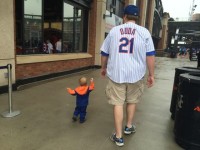
Last night, my son wanted to watch baseball. Fortunately, YouTube has about every game you could want to watch. For various reasons, I picked Game Three of the 2015 World Series.
What was interesting is that I never saw the telecast because I was at the game. It would not only be the first time I watched the game on TV, it would also be the first time I got to watch it with my son. From what my wife told me, he loved that game. It was great to watch it with him.
My favorite moment wasn’t him celebrating the David Wright or Curtis Granderson homeruns. It wasn’t even his the game inspired him to take out his teeball set. Surprisingly, it wasn’t even when he hit a line drive clear across the living room with him screaming “HOMERUN!” No, it was sinpler than that. It was when Lucas Duda came to bat.
My son looked up at the TV, waived and said, “Hi Duda!”
When I confirmed it was Duda by waving and saying hi to him as well, my son began saying hi to the players he remembered. At one point, I got him to scream:
I was impressed when he recognized Michael Conforto (his new favorite player) and told me he played leftfield. When I called over to my wife to let her know, her response was, “Of course he knows, you’ve been drilling it into his head.”
In any event, on what was a beautiful Spring-like day, I was never more prepared for baseball. My son is prepared too. Hopefully, he will get the chance to say, “Hi Duda” to him at Citi Field this year.
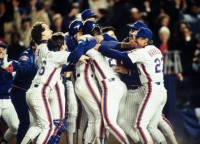
I remember back in 2000, the stories were that Bobby Valentine needed to make the World Series in order to keep his job. The amazing thing is he actually did it.
Just think about everything that had to happen that year for the Mets to make the World Series. First, the Mets had an overhaul of its outfield during the season. On Opening Day, the Mets outfield was, from left to right, Rickey Henderson–Darryl Hamilton–Derek Bell. At the end of the year, it was Benny Agbayani–Jay Payton-Derek Bell. Agbayani was only on the Opening Day roster because MLB allowed the team to have expanded rosters for their opening series in Japan.
On top of that, Todd Zeile was signed to replace John Olerud. Zeile had to become a first baseman after playing third for 10 years. Edgardo Alfonzo had to adapt from moving from the second spot in the lineup to the third spot. The Mets lost Rey Ordonez to injury and first replaced him with Melvin Mora for 96 games before trading him for the light hitting Mike Bordick. More or less, all of these moves worked. Then came the postseason.
A lot happened in the NLDS. After losing Game One, the Mets faced a quasi must win in Game Two. They were leading before Armando Benitez blew a save. I know. I’m shocked too. The Mets regained the lead, and they won the game when John Franco got a borderline third strike call against Barry Bonds. In Game Three, the Mets won on a Agbayani 13th inning walk off homerun. This was followed by Bobby Jones closing out the series on a one-hitter.
The Mets were then fortunate that the Braves lost to the Cardinals in the other NLDS series. The Mets tore through the Cardinals with new leadoff hitter Timo Perez. We saw all that luck run out in the World Series. We watched Zeile’s potential homerun land on top of the fence and bounce back. On the same play, Perez was thrown out at home. In the same game, Benitez blew the save. Unfortunately, there were no more heroics.
We saw this repeated in 2015. The epically bad Mets offense had to have its pitching hold things together until help came. Part of that required the Nationals to underperform while the Mets were fighting tooth and nail just to stay in the race.
In the NLDS, the Mets were on the verge of elimination. They weren’t eliminated because somehow, some way Jacob deGrom pitched six innings with absolutely nothing. The Mets then needed Daniel Murphy to have a game for the ages. He stole a base while no one was looking, and he hit a big homerun. It was part of an amazing run through the postseason for Murphy. Like in 2000, it came to a crashing halt in the World Series.
No matter how good your team is, it takes a lot of luck to win the World Series. Look at the 86 Mets.
In the NLCS, they barely outlasted the Astros. In Game Three, they needed a Lenny Dykstra two run homerun in the bottom of the ninth to win 6-5. In Game Five, Gary Carter hit a walk off single in the 12th to send the Mets back to Houston up 3-2. It was important because they didn’t want to face Mike Scott and his newfound abilities. With that pressure, they rallied from three down in the ninth, blew a 14th inning lead, and nearly blew a three run lead in the 16th inning.
Following this, the Mets quickly fell down 0-2 in the World Series before heading to Boston. After taking 2/3 in Boston, the Mets had to rally in the eighth just to tie Game Six. There are books that can be written not only about the 10th inning, but also Mookie Wilson‘s at bat.
First, they had to have a none on two out rally with each batter getting two strikes against them. For Calvin Schiraldi to even be in the position to meltdown, he had to be traded by the Mets to the Red Sox heading into the 1986 season. In return, the Mets got Bobby Ojeda, who won Game Three and started Game Six. John McNamara removed Schiraldi way too late and brought in Bob Stanley. His “wild pitch” in Mookie’s at bat allowed the tying run to score. You know the rest:
By the way, keep in mind Bill Buckner wasn’t pulled for a defensive replacement. Also, the Mets had to rally late from 3-0 deficit just to tie Game Seven.
We need to keep all of this is mind when setting expectations for the 2016 season. Terry Collins is right when he says World Series title or bust is unfair. We know way too much can happen between now and the World Series. Right now, the only goal should be winning the NL East. If the Mets do that, they have met their reasonable expectations. After that, the Mets are going to need a little luck to win the World Series.
Fortunately, the Mets are carrying a four leaf clover in the form of Matt Harvey, Jacob deGrom, Noah Syndergaard, and Jeurys Familia