Musings

In judging players, managerial moves, and the like, sometimes we forget that players are human beings. It was something I was again reminded of when I read about Jon Niese‘s statements in the Pittsburgh Post-Gazette about the 2016 season:
I should never have played that game. It [stunk] that I wasn’t there at the hospital. That’s when it all went downhill. I think that’s the thing guys don’t really realize with sabermetrics. If I wouldn’t have pitched in that one game, I probably would have stayed the course, stayed in a rhythm, but that just kind of knocked me off.
Now, Niese has a history of making excuses for his poor performances. However, he may not be off-base here.
Niese had a rough May, but he was turning things around. In June, he had a 3.00 ERA. Including the aforementioned start, Niese had a 2.87 ERA in the month of July. In that July start, he pitched three innings allowing six earned on eight hits. Looking at his stats, he’s right. His 2015 season went completely off the rails at that point.
After his son was born, he made 10 starts. He had a 4.99 ERA. Batters were tattooing him hitting .282/.344/.418. With Steven Matz returning from the DL, he was put in the bullpen. To his credit, it was a move Niese wanted to make.
There are several legitimate reasons why Niese had a terrible 2015. He claims it was being taken out of his rhythm. It’s possible. It’s also possible that it all had to do with the birth of his first child. I’m sure he was racked with guilt for not being there for his child’s birth. He had to do what he could do to help his wife when she was in another state.
Being a new parent is hard. It’s got to be even more difficult when you are so far away. You’re unable to see your child, to hold him, to see that little hand grab your finger.
This is what Niese was dealing with last year. A player who was renown for being a head case had even more on his plate. He then went on to have an absolutely miserable August and September. He was adjusting to life as a new father.
Niese is now in Pittsburgh. He’s with a new, perhaps better, pitching coach. His new pitching coach had shown he can work well in getting pitchers to resurrect their careers, to be better than they ever were before. He’s primed to have a much improved 2016.
By being in Pittsburgh, he’s also closer to his family. Things are settling down more at home. It’s bound to put him in a better frame of mind. It might be all Niese needed.
He’s only human after all.

Terry Collins grew up watching baseball in an era when you had batting average, homeruns, and RBI to judge hitters. There was W-L record, ERA, and strikeouts to judge pitchers. Back then, utilizing the eye test was justifiable as there was no way to really quantify all you are seeing.
It’s important to keep this in mind when analyzing Terry Collins’ opinions on advanced statistics:
It’s become a young man’s game, especially with all of the technology stuff you’ve got to be involved in. I’m not very good at it. I don’t enjoy it like other people do. I’m not going to sit here and look at all of these [expletive] numbers and try to predict this guy is going to be a great player. OPS this. OPS that. GPS. LCSs. DSDs. You know who has good numbers? Good [expletive] players.
This quote reminds me of when I talk baseball with my Dad. He’s actually two years older than Terry Collins.
Whenever I talk to my Dad about baseball, I sometimes refer to advanced statistics. I will refer to WAR, FIP, UZR, etc. When I refer to them, he looks at me incredulously. He doesn’t know what they are. He doesn’t understand them. He asks me how to calculate them. I will give him a cursory explanation, but I can’t give him the exact formula. He can’t sit down and calculate it with his calculator. He’d rather talk about the statistics in which he’s more conversant.
The strange thing is I became interested in part due to my Dad. Growing up, he always told me to take W-L record with a grain of salt. He told me OBP was more important than batting average. He told me this in the 80’s! Back then merely suggesting that was heresy.
Now, we’re well beyond OBP and ERA being the advanced statistics to analyze. In many ways, Terry Collins is right. The game of baseball has passed them by. These newfangled statistics really are for a younger generation. Yet, we can all still enjoy baseball in our own way.
We don’t really need advanced statistics to tell us Matt Harvey is a really good pitcher. Yes, advanced statistics will support that conclusion. I love sitting there and watching games with my Dad. I remember in 2013 when he said that he expected Matt Harvey to throw a no-hitter every time he goes out to pitch. One night, we were there when it almost happened.
I love hearing my Dad tell me about how impossibly great Tom Seaver was. I love hearing him tell me that despite that he wanted Jerry Koosman on the mound for a big game.
So yes, how we analyze the game has changed since my Dad was a kid. Not to mention that teams are even trained differently from the days of old, with new technology and tools like the baseball swing trainer V2 and others available for anyone who aspires to be a solid player. It still doesn’t mean he doesn’t know a great player when he sees one. It doesn’t mean he doesn’t have a wealth of knowledge when it comes to the game of baseball. It doesn’t mean I don’t love talking baseball with him.
There will come a time when there are new statistics I won’t understand. I’ll be too old and set in my ways to learn the new ones. My son will roll his eyes at me when I refer to someone’s WAR or UZR. There’s going to be new statistics that will make all I think I know obsolete. That’s fine as long as we’re talking baseball (hopefully about his career). That’s all that matters.
No matter what happens, no matter what new statistics arise, the game never passes you by. As long as there are fathers and sons talking baseball, the game will belong to each and every generation. It will be a shared experience.
With that said, hopefully one day, my son will be able to explain to me what LCS and DSD is before I begin ignoring all thess newfangled statistics.

There are legitimate reasons why you would say the Mets will not win the NL East. Fangraphs used its projection system to predict the Mets will finish behind the Nationals in the NL East.
Agree or disagree, at least we know Fangraphs has a rationalization for its conclusions. On the other hand, USA Today proudly flaunts they have no such projection formula. They just use the “human element” necessary in such projections to proclaim not only that the Nationals will win the NL East, but also that the Mets will miss the playoffs altogether.
Mets Aging Offense
One reason why USA Today sees the Mets falling behind the Nationals is an aging lineup with “six regulars on the wrong side of 30.” For what it’s worth, here’s a look at the Mets 2016 Opening Day starters:
- Travis d’Arnaud (27)
- Lucas Duda (30)
- Neil Walker (30)
- David Wright (33)
- Asdrubal Cabrera (30)
- Michael Conforto (22)
- Yoenis Cespedes (30)
- Curtis Granderson (35)
If we adhere to the axiom that a player’s prime is between 27-32, another way of saying what USA Today said was six of the eight Mets regulars are in their prime. Another way of saying what USA Today said is six of the eight Mets regulars are 30 and younger.
To put this in perspective, lets look at the Nationals 2016 projected lineup:
- Wilson Ramos (28)
- Ryan Zimmerman (31)
- Daniel Murphy (30)
- Anthony Rendon (25)
- Danny Espinosa (28)
- Jayson Werth (36)
- Ben Revere (27)
- Bryce Harper (23)
Three of the Nationals players are “on the wrong side of 30.” The average age of the eight Nationals regulars is 28.5. The Mets is 29.6. According to USA Today, that extra year is an indication that the Mets are in decline and the Nationals are on the rise.
Bartolo Colon: Fifth Starter
Personally, I am not the biggest Bartolo Colon fan. With that said, I can’t think of him making around 15 starts next year as a reason why the Mets will miss the playoffs.
Last year, Colon had an ERA+ of 89, and an FIP of 3.84. This makes him a below average starter. Keep in mind, he will only be in the rotation until July when Zack Wheeler has completed his rehab from Tommy John surgery.
The Nationals counter-part? Tanner Roark Roark is thrust into the starting rotating from the bullpen as the Nationals lost their second best starting pitcher, Jordan Zimmermann, to free agency. Roark had an ERA+ of 92 and a 4.70 FIP. In theory, Roark is keeping the spot warm for uber-prospect, Lucas Giolito. However, it should be noted Giolito has not yet pitched above AA.
Considering which statistic you choose, you can argue Roark is either just as bad or worse than Colon. As such, Colon is not a reason to say the Mets will finish behind the Nationals.
Thor’s Innings
One factor USA Today cited in saying the Mets should finish behind the Nationals is the scary prospect of Noah Syndergaard having to throw 50% more innings.
This is plain wrong. Last year, Syndergaard threw 150.0 innings in 24 major league starts. In the minors, he threw 29.2 innings in five starts. Does USA Today reay believe Syndergaard will throw 359.1 innings next year? The last pitcher to throw over 300 innings was Steve Carlton, and that was 36 years ago. The last pitcher to throw over 350 innings was Wilbur Wood in 1973.
No, Syndergaard threw 179.2 innings in 29 starts. If he averages roughly the same 6.1 innings per starts next year, and he makes 32 starts next year, he will only throw 19 more innings or 10% more innings.
Instead of Syndergaard’s innings, USA Today should’ve focused on Nationals starter Joe Ross. Last year was Ross’ first year in the majors. He made 13 starts with three relief appearances throwing 76.2 innings. In the minors, Ross made 14 starts and threw 76.0 innings. Between the two stints, he made 27 starts while pitching 152.2 innings. Next year, he will see a much greater percentage work increase than Syndergaard will.
Overall, if the increased workload is an issue for Syndergaard, it’ll be a bigger issue for Ross.
Matz’s Durability
Another factor mentioned for the Mets apparent downfall is the fact that Steven Matz has never thrown more than 140 innings in a season.
Well that is true. You know what else is true? In his entire pro career, Matz has a 2.25 ERA, including a 2.27 ERA in six starts with the Mets last year. Keep in mind, this is the Mets fourth starter and a favorite in the Rookie of the Year race.
Overall, USA Today is throwing cold water on the Mets rotation while ignoring the Nationals rotation issues. There are the aforementioned problems with Roark and Ross. Additionally, the Nationals saw Gio Gonzalez being to regress with a 1.423 WHIP last year. That’s an ugly number for a guy who has a reputation for struggling with command. Furthermore, he just hit that dreaded age 30 season.
Also, while Max Scherzer had an outstanding year last year, it should be noted it wasn’t perfect. Scherzer went 10-7 with a 2.11 ERA in the first half of the year. In the second half, he went 4-5 with a 3.72 ERA. Also, at age 31, he’s “on the wrong side of 30.”
Dusty Baker is a Magician
Last year, Matt Williams was worse than Jimmy Dugan was before he got into that fight with Dottie Henson as to whether or not Marla Hooch should bunt. Note, Jimmy Dugan was right. It very rarely makes sense to have a position player lay down a sac bunt.
Baker had earned the right to be a well regarded manager. However, he’s not a miracle worker.
He doesn’t make Anthony Rendon healthy for a full year as USA Today suggests. He also doesn’t make Steven Strasburg completely fulfill his potential making him a Cy Young winner. He doesn’t make Zimmerman or Werth healthy and productive. Yes, he can get the most from this admittedly talented Nationals team, but no, his presence alone doesn’t help this team overcome all of its issues. The only thing I would hazard a guess at is he would probably prevent Jonathan Papelbon from choking anyone in the dugout.
Picking Nits
Overall, USA Today has teams having a combine record of 2347-2430. Since baseball has no ties, any projection system should have teams as a whole with a .500 record. It’s an error. We all make them. With that said, with the decidedly one-sided analysis of the NL East, I believe it shows the attention to detail provided.
Conclusion
I’m not the typical Mets fan. The Nationals do scare me. You can concoct many a scenario in which the Nationals win the division. I just don’t think the one-sided analysis USA Today did was one of them.
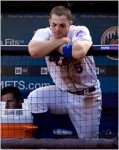
Today, the Mets officially report to Spring Training. With the 2016 season unofficially starting, David Wright begins his most important year as Captain of the New York Mets.
Back in 2007, Wright was a 24 year old superstar. His team was coming off a shocking loss in the NLCS, and yet going into 2007, many believed the Mets were the best team in the National League, if not all of baseball. With Wright and Jose Reyes, the Mets were seen not only as a win-now team, but also as a team that was built for the long haul. It worked out that way for exactly 145 games.
Not that Tom Glavine finds it devastating or anything, but the Mets collapsed over the final 17 games. There are a number of things we can point to as the reason the Mets collapses. Over those final 17 games, Brian Lawrence, a 23 year old Mike Pelfrey, and Philip Humber received starts with the Mets going 1-3 in those games. You can point to players like Reyes not hitting down the stretch. Speaking of Reyes, many point to him dancing in Game 161 as the reason.
After the Mets were swept by the Phillies, they had 14 games remaining against sub .500 teams. These teams had a combined .457 winning percentage. This includes a Cardinals team that had to come to New York to play a make-up game. They shut the Mets out. After the Phillies swept the Mets, there was every reason to believe the Mets would win the division, or at the absolute worst, the Wild Card. They did neither. There really is no excuse for what happened.
We saw it again in 2008. The Mets had a lead in the division up until the 149th game of the season. The Mets then lost the division lead. Again, the Mets season was on the line on the final game of the season. Again, they lost at home to a bad Marlins team.
Sure you can point to a myriad of things in 2008. Billy Wagner was injured leading to a revolving door at closer. Again, it’s excuses. The Mets had a different manager and pitching coach at the end of the season. Willie Randolph and Rick Peterson were the fall guys for 2007 in getting fired one game into a West Coast trip.
At the end of the day, it wasn’t the manager or the coaches. It was the team. There just was something missing. One player that wasn’t a problem? David Wright.
In 2007, Wright hit .352/.432/.602 with six homers and 20 RBI over the final month of the season. In 2008, Wright hit .340/.416/.577 with six homers and 21 RBI in the final month of the season. While Shea was burning, Wright was playing his best baseball. While there was a problem with those 2007-2008 teams, Wright wasn’t one of them.
Now, Wright is the only player that remains from those teams.
Wright is now 33 years old. He’s a leader on the team. He’s the Captain. Once again, he’s on a Mets team that has a chance to return to the postseason. He’s once again playing for a team that is a legitimate World Series contender.
This may be Wright’s most important season as the Captain. He can share with the team all the things that went wrong in 2007 and 2008 to help prevent any of these issues arising with this Mets team. If problems do arise, he can help guide the team. He can share with them whatever it was within him in 2007 and 2008 to play his best when the team seemed to be at their worst.
In 1986, the Mets had a de facto team captain in Keith Hernandez that showed the team how to win. Thirty years later, the Mets have a Captain that can show the team how not to lose.
Hopefully, with another Mets captain leading the way, the Mets will once again win the World Series.
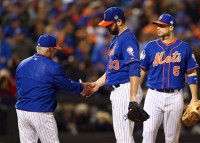
One of the many topics of this offseason has been about how all the Mets players love the team and how they want to stay here. Jacob deGrom said he would sign an extension. Now, it’s Matt Harvey‘s turn:
Matt Harvey said extension talk has never come up with the #Mets, but he hasn't "shied away" from it.
— Adam Rubin (@AdamRubinMedia) February 15, 2016
No, it’s not exactly a ringing endorsement. However, to me it’s a clear sign that he really is willing to sign an extension. Following Harvey’s career, there is no reason to believe otherwise.
Long before Harvey was drafted and became a part of the Mets organization, he was drafted by the Angels right out of high school. His association with Scott Boras raised questions about his signability. It caused him to slip to the third round. He informed the Angeld he would not sign unless he had a $2 million signing bonus. He would not accept $1.99 million. Accordingly, he would not accept the $1 million the Angels ultimately offered. Harvey rejected it despite his father telling him to take it, and he enrolled at the University of North Carolina.
Reading this, you may be led to believe that Harvey is just doing whatever Boras tells him to do. That premise should’ve been disproven after last year.
In 2012, Stephen Strasburg returned from Tommy John surgery, and he was famously shut down prior to the postseason. That decision was made when Scott Boras and GM Mike Rizzo agreed to Strasburg’s inning limits. Once Strasburg hit those limits, he was shut down. Boras tried to similarly intervene with Harvey.
As the timeline shows, Boras tried to get the Mets to limit Harvey to 180 innings. The main hurdle to that was it wasn’t what Harvey wanted to do. Instead of working with Sandy Alderson and Scott Boras, Harvey talked with his manager. It was Harvey and Terry Collins together that decided what Harvey needed to do. Harvey pitched more in September than the Mets, or Boras for that matter, thought he would pitch.
For better or worse, Harvey has always been in charge of his own career. It seems that on the field, he wants to compete at the highest level. For these actions, Harvey wants to be paid what he thinks he’s worth and not one penny less. That’s why Boras is his agent. He hired the guy who has a reputation of getting teams to pony up top dollar for the players he represents.
As noted by Adam Rubin today in his Morning Briefing, the belief that Boras’ clients don’t sign extensions prior to their hitting free agency is not entirely true. As Rubin notes, twenty-four of Boras’ clients have signed extensions with their teams before reaching free agency. Ironically, one of them was Jered Weaver, who signed an extension with the Angels; the same Angels who couldn’t find an extra million to sign Harvey.
So yes, it’s entirely possible the Mets can sign Harvey to an extension prior to his hitting free agency. Prior to this offseason, I would’ve been extremely pessimistic about the possibilities. However, this offseason the Mets re-signed Yoenis Cespedes thereby proving anything is possible.
I don’t know the Mets chances of re-signing Harvey. The only thing I do know is that Harvey is not going to accept one penny less than what he thinks he’s worth no matter what his family or his agent says.
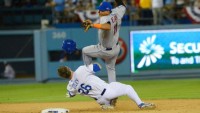
Next year, Chase Utley is going to be a utility player. He going to be a utility player because he’s 37 years old, and he has diminishing skills. He could retire, but he decided to hang around for another year or two. He’s not in this situation because someone injured him.
Last year, Ruben Tejada was not the starting shortstop on the Opening Day roster for the first time in his career. No, last year, the job was given to Wilmer Flores. Tejada was going to be a utility player to start the season. Then something strange happened. For all the years of the Mets just handing him the job, and him failing to hold onto it, Tejada finally rose to the challenge the year the job wasn’t just handed to him.
Last year, Flores had his offensive and defensive struggles. The Mets team was decimated by injuries. Tejada got some regular playing time. He then got some time at shortstop. He showed that while he had less range than Tejada, he had a steadier hand. More importantly, he began to hit:
- July .287/.330/.347
- August .235/.381/.294
- September .297/.357/.406
He entered the postseason as the Mets starting shortstop over Flores. He earned that right. Then with one dirty play Chase Utley took it all away. Tejada broke his leg. In the offseason, while he was hobbling around with a walking boot, the Mets signed Asdrubal Cabrera to take his place.
Utley reportedly reached out to David Wright to apologize to Tejada. He reportedly sent Tejada some things in the offseason. For his part, Tejada says all he wants is an apology.
Up until now, Utley has gone on and on about how he was playing hard and that he was playing the right way. However, his actions at least show remorse. The reason for this is he broke an unwritten rule, perhaps the most important rule amongst all players in all sports. You don’t injure other players with dirty, or even borderline plays. You don’t ruin another player’s career. Utley did that.
Utley took away Tejada’s job with one dirty play. Like Utley, Tejada is now a utility player. For what it’s worth, Tejada is not letting this hold him back:
I’m going to keep working hard, you never know what’s going to happen here. I want to stay focused all the time.
In 2015, Tejada was a utility player to start the season, and he finished the year as the starting shortstop. Utley put him back in that position this year. I’m not counting out Tejada this year, especially with dirty players like Utley out there.

The general consensus as to why Hall of Famer Walter Johnson was so dominant was the saying, “You can’t hit what you can’t see.” In analyzing MLB’s Statcast data, that saying could now be applied to the young New York Mets pitching staff.
As the article notes, the Mets threw more pitches than any other team over 95 MPH. Nearly a thousand more. The main reason for this was the trio of Matt Harvey, Jacob deGrom, and Noah Syndergaard. Harvey’s two-seamer averaged 95.4, and his four seamer averaged 95.3. deGrom’s two seamer averaged 95.6, and his four seamer averaged 96.0. As all Mets fans know, Syndergaard led the pack. His two seamer averaged 98.3, and his four seamer averaged 98.4. Amongst starting pitchers Symdergaard threw the fastest.
This trio of hard throwing righties kept the Mets afloat in 2015 while the offense spluttered. When the team then assembled a major league capable offense, these pitchers led the Mets to the World Series. In 2016, it’s only going to get better.
Last year, the Mets had innings limits, skipped starts, and at times, six man rotations. Syndergaard wasn’t called up until May. In 2016, the Mets have said innings limits and the like will not be an issue. As such, all three of the Mets aces should be expected to make 32 starts and throw over 200 innings. This means more 95+ MPH fastballs. Again, batters will have trouble hitting the pitches they can’t see.
If that wasn’t enough, it gets even better. Steven Matz should start the year in the rotation. According to Brooks Baseball, Matz’s fastball averaged 94.57 MPH. Prior to Matz’s lat injury, his fastball averaged 94.90 MPH. With a full season of a healthy Matz, the Mets will further increase the amount of fastballs throw over 95 MPH.
In addition to a full season of Matz, the Mets can expect a half a season of Zack Wheeler. In Wheeler’s career, his four seamer averaged 95.87 MPH, and his sinker averaged 95.50 MPH. All told, upon Wheeler’s return, the Mets will feature a starting rotation that has five pitchers bringing the heat at over 95 MPH. That is just incredible.
However, why does it matter? Well, as FiveThirtyEight showed last year, it is just harder to hit a fastball that’s thrown 95 MPH and above. In total, batters swung and missed at pitches thrown this fast 22.8% of the time. That’s about 5-10% more frequent than pitches thrown slower.
More importantly, as we saw in last year’s NLCS, the Cubs are more likely to swing and miss at these pitches than any other team in baseball. Heading into the 2016 season, it appears that yet again it will be the Cubs standing in the Mets way. The pitching staff the Mets have constructed is not only effective against the Cubs, but also every single team in baseball.
The Mets 2016 pitching staff is the single best argument why any team in baseball will go to and win the World Series. The Mets young starters brought the heat last year. Next year will be more of the same.
Good luck to the National League next year because you can’t hit what you can’t see.
Editor’s Note: this article first appeared on metsmerizedonline.com

Major League Baseball and the Players’ Association should be commended for creating the best steroid testing policy and penalty system in all of professional sports. With the Collective Bargaining Agreement expiring after this season, it’s time to reevaluate the steroid policy and make some changes.
After seeing the saga of Jenrry Mejia, I believe there is some room for improvement.
The first issue is that Mejia came back at all in 2015. While Mejia was serving his first suspension, he again tested positive. Mejia got to pitch in seven games before the second suspension was finally levied. At this time, the Mets and Nationals were separated by two games and were about to head into the All Star break. Mejia had an impact on a pennant race even though he tested positive for steroids. Overall, there was no reason why he should’ve played.
Baseball should implement a rule that a player cannot return from a steroid suspension unless they pass a steroid test.
Now, in the case of Mejia, he never would’ve pitched in 2015. That would’ve been a good thing. It would’ve prevented a steroid user from having any impact upon a pennant race.
Keep in mind, this is a slight tweak of the current testing policy. Under the current policy, a player who tests positive is subjected to increased testing over the course of the year. However, it calls for increased random testing, not time specific testing. Rather than do completely random testing, there should be a blood and urine test right before the players is scheduled to return. When and only when the player passes that test, the player can then return.
The next issue to be addressed is what to do with these players if they test positive on their reinstatement test. Under the current policy, these players would receive an additional suspension. As we saw with Mejia, he pitched all of seven games in the 2015 season before his career was done.
Research seems to indicate that anabolic steroids, like the ones taken by Mejia, are addictive in nature. An abuser of anabolic steroids can experience depression, and worse, may become suicidal. Now, I can’t tell you Mejia is depressed or suicidal. What we can see however is that Mejia showed signs of addictive behavior. Mejia continued to use steroids even though it was to his detriment.
Now, if Mejia had been caught using cocaine or another “drug of abuse,” Mejia would’ve been placed in a treatment program. However, because Mejia used steroids instead of heroin, the treatment program was not an option, at least as the drug policy is currently written. It’s very well possible Mejia needed help, and it was not available to him.
Don’t misunderstand me. Mejia is a cheater. He deserved his first suspension. No one ever forced him to take Stanozol. However, if he truly became addicted to steroids, there should be measures in place the help Mejia rather than just throw him out of baseball. Therefore, the penalties for steroid use should be changed to address this issue.
For the first offense, a player should still be suspended for 80 games. However, I believe that should become a minimum suspension. If a player cannot pass the aforementioned reinstatement steroid test, the treatment program provisions of the “drugs of abuse” should come into effect. The 80 game suspension should then become an indefinite suspension. It should not trigger the 162 game penalty at that time.
Under this new plan, a player who tests positive the first time could effectively be suspended longer than 80 games, 162 games, or possibly more. It really is up to the player. If a player is addicted, and needs help, the avenues should be there for them. If the player continues to test positive, and refuses to accept treatment, the “drug of abuse” treatment providions should apply:
- First failure to comply: 15-25 game suspension;
- Second failure to comply: 25-50 game suspension;
- Third failure to comply: 50-75 game suspension; and
- Fourth failure to comply: one year suspension and whatever additional penalties the Commissioner sees fit.
Essentially, the goal should be to get the addicted players the help they need. If they fail to comply, the refusal to seek treatment penalties should apply instead of the 162 game penalty. Once the player has completed their program and can pass a reinstatement test, they should then be allowed to return to baseball.
If, after all of that, a player tests positive a second time, that player should receive the 162 game suspension. After a second suspension, the player should automatically be enrolled in a treatment program. After the 162 game suspension, the player should again be subjected to a reinstatement test. Additionally, that player should not be reinstated until they pass that test.
If a player fails a third test after all of this, that player should then receive the lifetime suspension.
Right now, there is a 26 year old reliever who may have a substance abuse issue. It was his fault for starting in the first place. With that said, baseball failed to put steps in place that could have helped him. The second and third suspensions might have been prevented. If he used cocaine like Josh Hamilton, he would still be in baseball.
Mejia cheated and deserved his suspension. After that, he was penalized because he was addicted to steroids instead of cocaine. It’s time baseball got steroid users the help they may need.
It’s that time of the year when we get that warm and fuzzy feeling. It’s a time when you feel even closer to what you love. I am of course referring to Pitchers and Catchers reporting to Spring Training this week.
As the Mets report, they are trying to do something that only Bobby Valentine’s Mets have ever done. They are trying to go to the postseason for consecutive years. It’s still amazing to think that in the 54 year history of the Mets, they have only e been in consecutive postseasons only once. Gil Hodges couldn’t do it. Davey Johnson couldn’t. Willie Randolph came agonizingly close.
No, the only one to do it was Bobby V. He did it with a core of Mike Piazza, Edgardo Alfonzo, Robin Ventura, and Al Leiter. He had a terrific bullpen of Armando Benitez, John Franco, Turk Wendell, and Dennis Cook. Each year, he had drastically different outfields and rotations. Yet, he was still able to make it work. He got the most out of these teams. The Mets made consecutive NLCS appearances, and they were close to winning a World Series.
This now is the task set forth for Terry Collins. For the first time in 16 years and the second time in Mets history, he is tasked with leading a Mets team to consecutive postseason berths. Like Bobby V, he has a strong core of players. Unlike Bobby V, he has not had much turnover in the roster.
Overall, the one thing uniting Bobby V’s Mets and Terry Collins’ Mets is hope. Mets fans hope and believe in this team. We all believe this is our year even after a heartbreaking loss. And yes, as this is Valentine’s Day, Mets fans love their team.
So remember on this the coldest of Bobby Valentine’s Day, Spring is in the air, and we will soon be reunited with the team we love.

Tomorrow is Valentine’s Day. If you haven’t gotten your wife, fiancée, or girlfriend something, you have less than 24 hours to get something. Good luck on such short time constraints.
Now, if you didn’t send the woman in your life something yesterday, you still have time to do something special. At least from my experience, my wife loves getting flowers at work. It’s a bigger deal around Valentine’s Day because there is usually a parade of flowers coming into the office. You don’t want your significant other to be the person that received nothing:
Luckily, with Valentine’s Day being on a Sunday, you have an out. You can have flowers sent on Monday and pretend it was the plan all along.
Now, I know the main issue with sending flowers this time of year. It’s incredibly expensive. It’s more expensive having them delivered. The price will go up when you consider you’re ordering them at the last minute. There’s a way to dramatically reduce the cost.
Go pick up the flowers yourself. You can get them from a florist or a grocery store. By picking them out yourself, you have the added benefit of making sure the flowers are in good shape. Trust me, these places will send out whatever they have in stock. The only thing worse than sending nothing is sending out garbage. Sending nothing means you forgot. Sending awful flowers embarrasses her. This prevents that.
Once you have the flowers,drive to your significant other’s job and drop it off at the front desk or security. They will deliver the flowers to your significant other’s desk. Trust me. It will have the same effect as the flowers being delivered by a florist or 1-800 Flowers. Remember, the idea is not to spend a lot of money. The idea is to make her happy.
I hope this helps. Good luck and enjoy your Valentine’s Day.