Musings
Currently, MLB and many of their full season affiliates are either at or have already had their All Star Break. At each and every level, the Mets had a minor league hitter named to their level’s All-Star Game. Listed below is a synopsis of the Mets’ organizations leaders at the break:
Class A – Columbia Fireflies
- AVG: David Thompson (.294)
- OBP: Vinny Siena (.435 – League Leader)
- SLG: David Thompson (.474)
- OPS: Vinny Siena (.834)
- R: Vinny Siena (53)
- H: J.C. Rodriguez (71)
- 2B: Dash Winningham (23)
- 3B: Kevin Kaczmarski (7)
- HR: Jeffrey Diehl (9)
- RBI: David Thompson (58 – League Leader)
- SB: J.C. Rodriguez (14)
- All-Stars: Vinny Siena, David Thompson
- Promotions: Vinny Siena, David Thompson, Kevin Kaczmarski
Class A Advanced – St. Lucie Mets
- AVG: Wuilmer Becerra (.319 – League Leader)
- OBP: Kevin Taylor (.386)
- SLG: Tomas Nido (.471)
- OPS: Kevin Taylor (.833)
- R: Champ Stuart (49)
- H: Amed Rosario (82)
- 2B: Wuilmer Becerra (17)
- 3B: Amed Rosario (8 – League Leader)
- HR: Kevin Taylor (7)
- RBI: Amed Rosario (40)
- SB: Champ Stuart (25)
- All-Stars: Amed Rosario, Wuilmer Becerra, Tomas Nido
- Promotions: Amed Rosario, Phillip Evans, Champ Stuart
AA – Binghamton Mets
- AVG: Matt Oberste (.290)
- OBP: Derrik Gibson (.366)
- SLG: Dominic Smith (.436)
- OPS: Dominic Smith (.777)
- R: Derrik Gibson (44)
- H: Dominic Smith (85)
- 2B: Matt Oberste, Dominic Smith (17)
- 3B: L.J. Mazzilli (5)
- HR: Dominic Smith (10)
- RBI: Matt Oberste (34)
- SB: Derrik Gibson (8)
- All-Stars: Matt Oberste
- Promotions: Niuman Romero
AAA – Las Vegas 51s
- AVG: T.J. Rivera (.348 – League Leader)
- OBP: Brandon Nimmo (.409)
- SLG: Travis Taijeron (.564)
- OPS: Travis Taijeron (.953)
- R: Travis Taijeron (61)
- H: T.J. Rivera, Travis Taijeron (96)
- 2B: Travis Taijeron (35 – League Leader)
- 3B: Brandon Nimmo (7)
- HR: Johnny Monell (14)
- RBI: Travis Taijeron (69)
- SB: Roger Bernadina (12)
- All-Stars: T.J. Rivera, Travis Taijeron, Wally Backman (manager)
- Promotions: Brandon Nimmo
Organizational Leaders
- AVG: T.J. Rivera LV (.348)
- OBP: Vinny Siena COL & STL (.413)
- SLG: Travis Taijeron LV (.953)
- OPS: Travis Taijeron LV (.953)
- R: Travis Taijeron (61)
- H: Amed Rosario STL & BNG (107)
- 2B: Travis Taijeron LV (35)
- 3B: Amed Rosario STL & BNG (11)
- HR: Johnny Monell LV (14)
- RBI: Travis Taijeron LV (69)
- SB: Champ Stuart STL & BNG (26)
* stats are updated through July 13, 2016
Editor’s Note: this was first published on metsminors.net
Currently, MLB and many of their full season affiliates are at the All Star Break. At each and every level, the Mets had a minor league pitcher named to their level’s All-Star Game. Listed below is a synopsis of the Mets’ organizations leaders at the break:
Class A Full Season – Columbia Fireflies
- Wins: P.J. Conlon (8)
- Saves: Alex Palsha (14)
- Strikeouts: Joe Shaw (88)
- ERA: P.J. Conlon (1.84 – League Leader)
- WHIP: P.J. Conlon (1.00)
- Games: Alex Palsha (28)
- Starts: Kevin Canelon, Chase Ingram (16)
- Innings: Kevin Canelon (97.2)
- Holds : Tyler Bashlor (4)
- All-Stars: P.J. Conlon, Alex Palsha
- Promotions: P.J. Conlon, Alex Palsha
Class A Advanced – St. Lucie Mets
- Wins: Ricky Knapp (8)
- Saves: Corey Taylor (13)
- Strikeouts: Chris Flexen, Corey Oswalt (63)
- ERA: Ricky Knapp (2.01)
- WHIP: Ricky Knapp (1.08)
- Games: Corey Taylor (28)
- Starts: Chris Flexen (17)
- Innings: Chris Flexen (95.1)
- Holds: Robert Coles (5)
- All-Stars: Alberto Baldonado (DNP – promoted)
- Promotions: Alberto Baldonado, Casey Delgado, Kevin McGowan, Tim Peterson
Double-A – Binghamton Mets
- Wins: Tyler Pill (6)
- Saves: Beck Wheeler (6)
- Strikeouts: Tyler Pill (88)
- ERA: Rainy Lara (3.98)
- WHIP: Tyler Pill (1.21)
- Games: Beck Wheeler (28)
- Starts: Tyler Pill (17)
- Innings: Tyler Pill (107.2)
- Holds: Tim Peterson (5)
- All Stars: Logan Taylor, Tyler Pill
- Promotions: Robert Gsellman, Beck Wheeler, Josh Zeid
Triple-A – Las Vegas 51s
- Wins: Sean Gilmartin, Gabriel Ynoa (9)
- Saves: Paul Sewald (9)
- Strikeouts: Sean Gilmartin (77)
- ERA: Gabriel Ynoa (4.19)
- WHIP: Sean Gilmartin (1.32)
- Games: Chasen Bradford, Josh Smoker (38)
- Starts: Gabriel Ynoa (18 – League Leader)
- Innings: Gabriel Ynoa (109.2)
- Holds: Josh Smoker (9)
- All-Stars: Gabriel Ynoa
- Promotions: Seth Lugo
Organizational Leaders
- Wins: P.J. Conlon COL & STL (10)
- Saves: Alex Palsha COL (14)
- Strikeouts: Joe Shaw COL, Tyler Pill BNG (88)
- ERA: P.J. Conlon COL & STL (1.97)
- WHIP: P.J. Conlon COL & STL (1.03)
- Games: Chasen Bradford LV, Josh Smoker LV (38)
- Starts – Gabriel Ynoa LV (18)
- Innings – Gabriel Ynoa (109.2)
- Holds – Josh Smoker LV (9)
* stats are updated through July 13, 2016
Editor’s Note: this was first published on metsminors.net
Last year, when it was apparent he was not going to be a part of the postseason rotation, Jon Niese volunteered to go to the bullpen. As it turned out, he became a valuable part of the Mets postseason bullpen.
In five of Niese’s six postseason appearances, he did not permit a run. He was nearly perfect over 4.1 innings allowing just two hits while striking out five batters. He got a big strikeout of Anthony Rizzo in Game Two of the NLCS:
He kept the Mets alive in Game One of the World Series with two huge scoreless innings in the 10th and 11th innings. He bailed Steven Matz out of a tight sixth inning while seemingly being the only Mets pitcher to get Eric Hosmer out in a big spot. In a do-or-die Game Five, he pitched a scoreless tenth. Overall, Niese was terrific in big spots, and he came through when the Mets needed him most. It really was shocking given his well-earned reputation as a head case.
In the offseason, the Mets traded him for Neil Walker, and even under the tutelage of arguably the best pitching coach in the game, Niese has been terrible going 7-6 with a 5.13 ERA, 1.574 WHIP, 80 ERA+, and a 5.49 FIP. These are easily the worst stats of his career, and as a result, Niese finds himself back in the bullpen.
Somewhat surprisingly, the Mets are interested in a reunion with Niese. They’re possibly interested with Logan Verrett failing to recapture the magic he had as a spot starter last year. The Mets have to at least contemplate Niese as Sean Gilmartin and Gabriel Ynoa have pitched poorly over the past few months. Furthermore, the Mets do not seem inclined to stretch out Seth Lugo and give him a chance to start.
Certainly, you can understand the Mets interest in Niese. However, it is still hard to imagine Niese is a better option for the rotation than the Mets internal candidates. It may be one of the reasons why the Mets are more interested in improving the bullpen than by adding Niese to the rotation. Given his performance last postseason, perhaps Niese could be the bullpen answer.
There is some evidence from this season that Niese could be a useful bullpen piece. In his first two innings of work, he has a 2.50 ERA. In his first inning of work, batters are hitting .234/.269/.375. In his second inning of work, batters are hitting .217/.308/.406. With runners in scoring position batters are hitting .250/.332/.352. When there are two outs and runners in scoring position, batters are hitting .093/.170/.140.
Looking at these numbers, it’s fair to conclude that Niese has started games well but has fallen apart from the third inning on. These numbers should improve with Niese being reunited with Dan Warthen and with him maxing out for an inning or two. If Niese were to move to the bullpen, he could have a career renaissance similar to Oliver Perez, who was another unpopular Mets lefty starter who faltered.
With that in mind, Niese could be the exact pitcher the Mets are looking to add. Once he’s in the fold, the Mets can then figure out what to do for the last spot in the rotation.
Last year, the Mets had released Kirk Nieuwenhuis after he had hit .079/.125/.132 with no homers and two RBI in 27 games. Nieuwenhuis would go to the Angels where he would be similarly ineffective causing them to release him. The Mets then jumped on the chance to bring him back due to injuries and the ineffective play of players like Darrell Ceciliani.
Now, a year later the Mets are facing a similar situation with Jon Niese. According to Marc Carig of Newsday, the Mets are internally debating whether or not the Mets should reunite with Niese.
This move speaks more about the Mets options than Niese’s performance as Niese is 7-6 with a 5.13 ERA, 1.574 WHIP, 80 ERA+, and a 5.49 FIP. He’s performed so poorly he recently lost his spot in the rotation and caused his General Manager Neil Huntington to quip, “In hindsight, maybe two fringe prospects [in exchange for Neil Walker] and trying to figure out how to reallocate the money might have been a better return.” Even with all this is mind, the Mets are still deliberating over whether they should bring back Niese to take Matt Harvey‘s spot in the rotation.
He is a consideration as Logan Verrett is 1-4 with a 5.64 ERA and a 1.649 WHIP as a starter this year. Sean Gilmartin has had a 6.17 ERA and a 1.447 WHIP in his last 10 starts with one relief appearance. Gabriel Ynoa has a 6.65 ERA and a 1.630 WHIP in his last eight starts.
As for now, the Mets plan on starting Verrett tonight against the Phillies. Furthermore, the team intends to prioritize pursuing a right-handed reliever who can pitch the seventh inning before turning their sights onto Niese.
Editor’s Note: this was first published on metsmerizedonline.com
Except for the Jerry Manuel experiment in 2010, Jose Reyes has spent the vast majority of his career as a leadoff hitter. Throughout his career, he’s been the prototypical leadoff hitter. He was the guy that got on base and would wreck havoc on the basepaths. He’d score from first on a double. He’d steal second and score from second on a single. He’d steal third and he would either score on a sacrifice fly or get a pitcher to balk him home. This is why Reyes has lead off his entire career, and this is why Terry Collins made him the leadoff hitter when Reyes played his first game with the Mets on July 5th.
However, Reyes isn’t the same player anymore. He’s gone from a .341 OBP and averaging 37 stolen bases a year with the Mets to a player with a .334 OBP who averages 27 stolen bases a year. Last year, he had a .310 OBP and 24 stolen bases while playing in two of the best hitter’s parks in all of baseball. Simply put, Reyes is no longer the same player, which means he shouldn’t be treated as such. It might be time for him to be moved out of the leadoff spot.
The leadoff spot should return to Curtis Granderson. The same Curtis Granderson who was the leadoff hitter that went to the World Series last year. The same leadoff hitter that needed just a little over one season to match Reyes’ team record for home runs leading off a game. This is the same Granderson who has a higher career OBP than Reyes and who had a .364 OBP for the Mets last year. After a tough May, Granderson has returned to that form with him hitting .276/.386/.496 with six homers and 11 RBI.
Overall, Granderson is a better hitter than Reyes is right now. He’s a better hitter than what Reyes has been the past few seasons. The Mets were at their most successful with Granderson leading off. It’s time to restore him to to leadoff spot.
After heading into the All Star Break losing three straight to the Nationals and falling six games back in the division, many Mets fans were left in despair. Those feelings were only exacerbated by Matt Harvey‘s season ending surgery, Noah Syndergaard leaving a game with a dead arm, and having Yoenis Cespedes go on the shelf with an injured right quadriceps. It was a first half in which the Mets under-performed and suffered many injuries. Still, what is lost in all of that is the fact that the Mets are currently tied with the Miami Marlins for the second Wild Card spot. Even with everything having gone wrong, this is still a playoff caliber team.
They are a playoff caliber team that is going to have their own fate in their own hands.
Right now, the Mets have 74 games left on the schedule. The winning percentage of the teams currently remaining on the Mets schedule is a combined .486. This includes 25 games against the Atlanta Braves, Cincinnati Reds, Arizona Diamondbacks, San Diego Padres, and Minnesota Twins, who are the five worst teams in all of baseball heading into the All Star Break, and that is before these teams start trading off their better players heading towards the trade deadline. These games make up about one-third of the Mets remaining schedule. This is a great opportunity to make some headway in both the Wild Card and divisional races by beating up on the weaker teams in baseball.
The Mets will also have an opportunity to make some headway in the Wild Card race as well. The Mets have 10 games remaining against the Miami Marlins and six games remaining against the St. Louis Cardinals. If the Mets were to do well against these two opponents, they will be able to not only solidify their position as the Wild Card, but they will also be in a position to knock one of these two teams out of the Wild Card race. Also, keep in mind the Wild Card leader, the Los Angeles Dodgers have Clayton Kershaw on the disabled list, and the Dodgers are not sure when he will be able to return. The Dodgers are 37-38 in games not started by Clayton Kershaw. If Kershaw remains out for an extended period of time, the Dodgers will fall out of the race.
Of the remaining 41 games, the Mets only have 16 additional games against teams that are currently over .500. This includes tough teams like the Chicago Cubs, who the Mets most recently swept, and the San Francisco Giants, who the Mets have taken two of three games against so far this year. Overall, the Mets biggest challenge is going to be the six games they have remaining against the Nationals.
The other 25 games not previously discussed is against teams .500 and under. With so many games against average to bad baseball teams, the Mets second half schedule is very favorable. With 16 games against Wild Card opponents and six games against the Nationals, the Mets are in a position to beat the teams they are competing against for the Wild Card and National League East. Overall, the Mets could not ask for a better schedule to both win games and prove they are worthy of making the postseason. The only thing left for the Mets to do is to win those games and return to the postseason.
This past week, Carlos Beltran became just the second player to appear in an All Star Game for both the Mets and the Yankees. Can you name the other player? Good luck!
\
On July 2nd, my family was able to attend a Brooklyn Cyclones game courtesy of Nicco Blank. With him getting called-up, he was able to leave us tickets to attend a Cyclones game while he left seats for Taylor Swift for the Columbia Fireflies game. Overall, it was a great experience, and my family is grateful that Blank was able to arrange for my family to get tickets to the game.
For those that have never attended a Cyclones game, MCU Park is located at the end of the Coney Island boardwalk.

The Original Nathan’s Famous is within walking distance if you want to get a pre-game meal, and you very well might as there is no outside food allowed in the boardwalk. Security does check. Also, it should be noted that most of the concessions located within the ballpark is cash only. It should also be noted that MCU Park charges major league prices at their concession stands. Once you have had your pregame meal, it is time to head over to the ballpark.
Right outside MCU Park is a statute of the moment where Pee Wee Reese put his arm around Jackie Robinson.
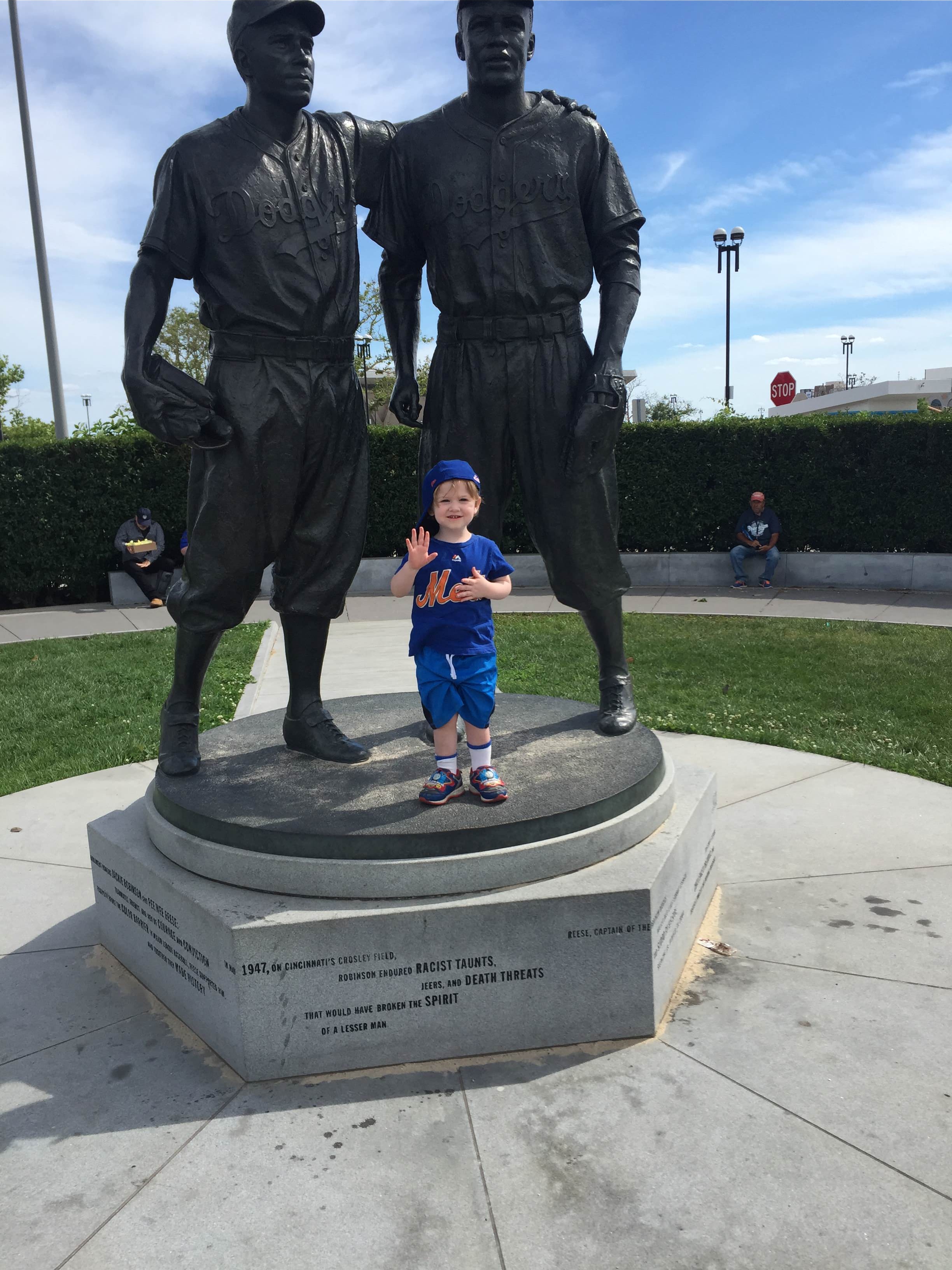
It is quite fitting this statue is in Brooklyn as this is the city in which Robinson broke baseball’s color barrier. The particular moment, whether or not it actually happened, is quite fitting as it symbolizes not just Robinson being accepted by his teammates, but also by all of baseball. This area is a good meeting spot and place to sit in the relative shade until the balllpark opens.
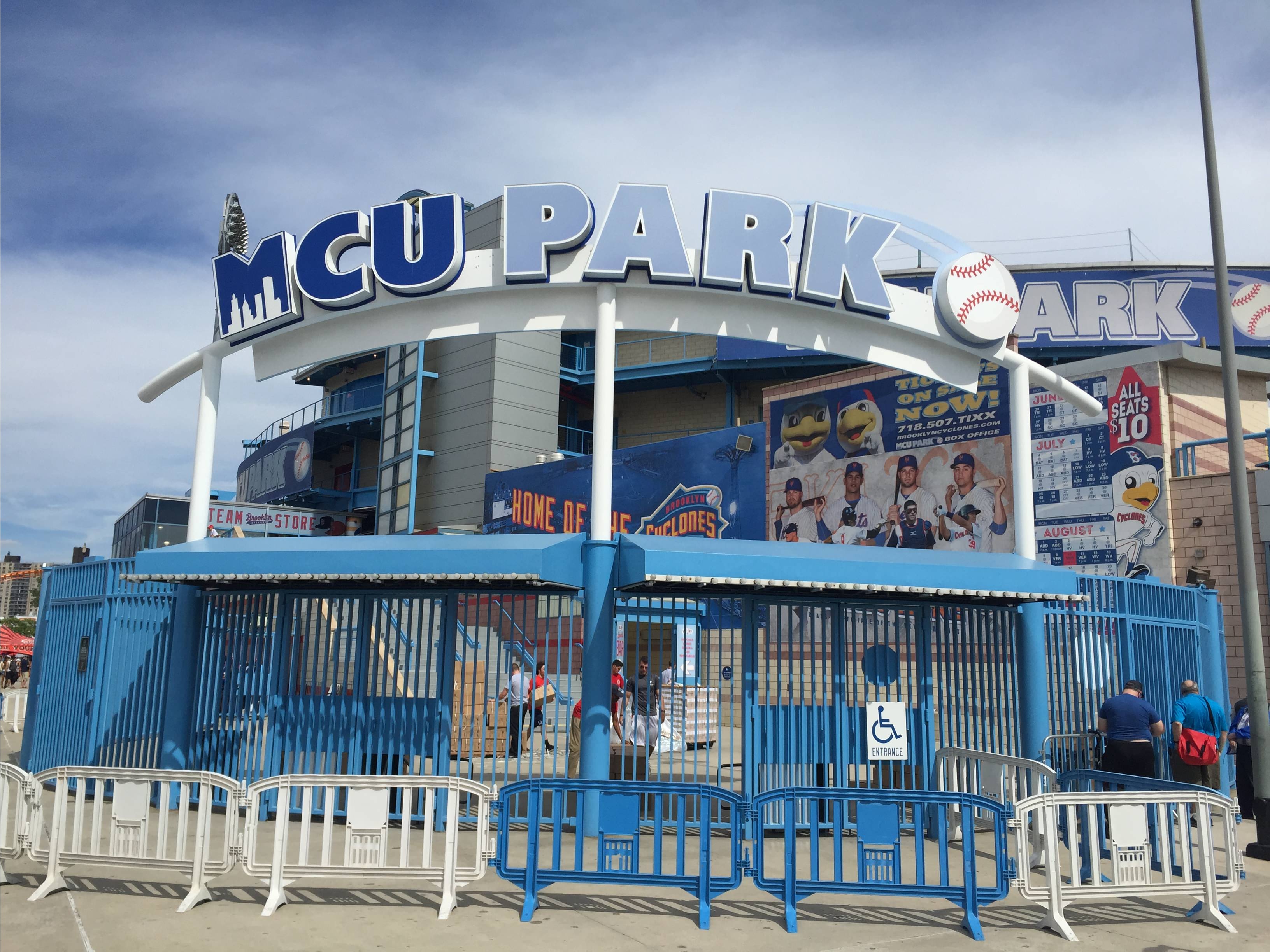
Similar to Citi Field, the ballpark opens an hour and a half before first pitch. Season ticket holders are given priority entrance, and once they are squared away, they will open the gates for general admission. Typicall, the promotion or theme night for that date will dictate whether or not there is much of a line outside the stadium. As we attended Seinfeld Night II, there was quite a line to get into the ballpark:


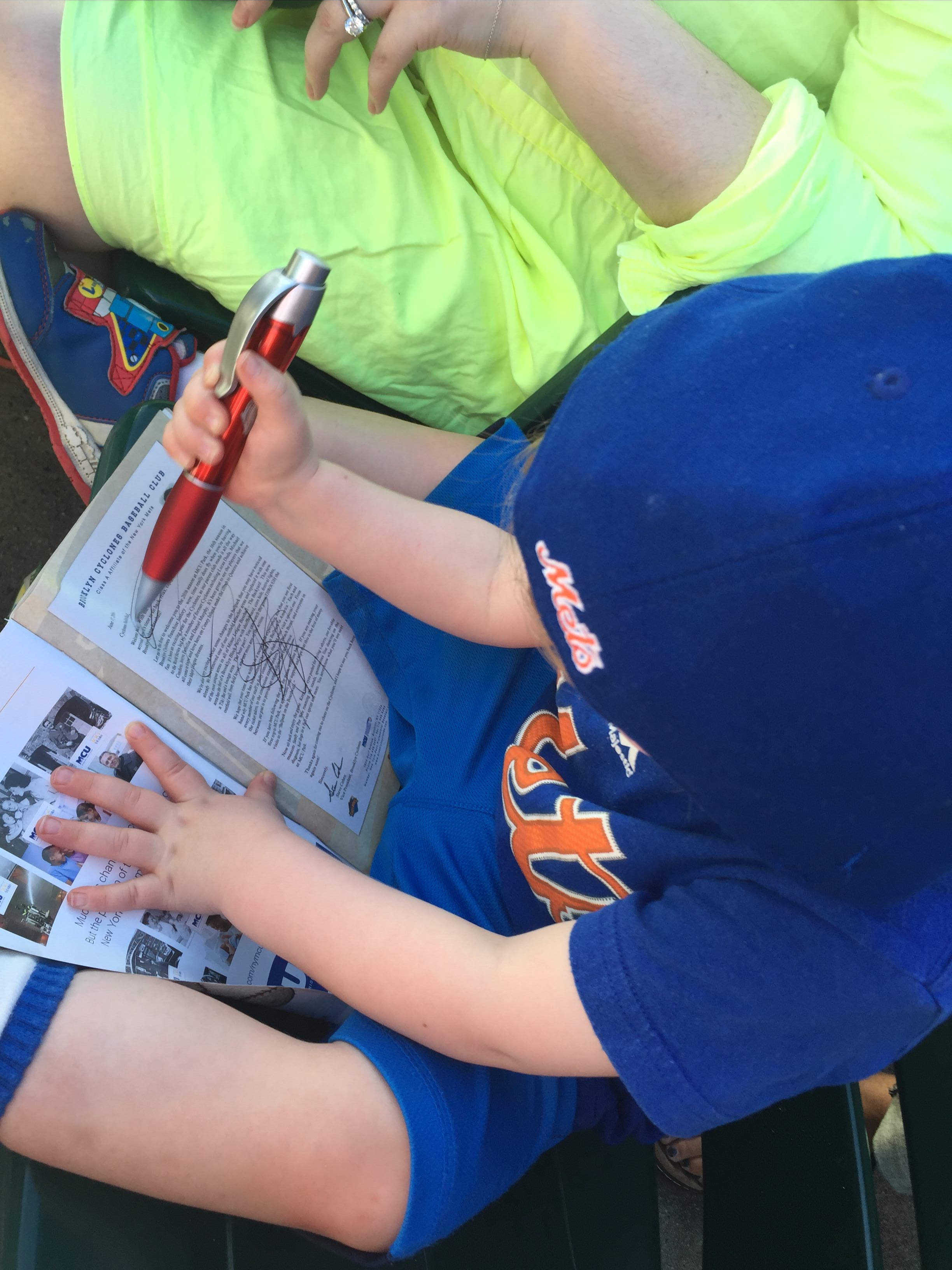
Other than these giveaways, the Cyclones hand-out programs to everyone that attends the game. For fans like me that like to keep score and buy the programs at games anyway, this is great. If you don’t have anything on hand and you want to get autographs, this works out great as the players can autograph either the cover or the inside where their player profiles are located. Finally, if you got to the game early and need to keep your toddler entertained, you can give it to him with the $4.00 pen he had to have from the gift shop to keep him entertained before first pitch:
Tickets to the ballpark range from $12.00 – $19.00, which would similar to the cost of Promenade seating at Citi Field. However, due to the fact that this is a minor league ballpark and there is only 7,000 seats, your seats are going to be much better than the seats you would get at Citi Field.
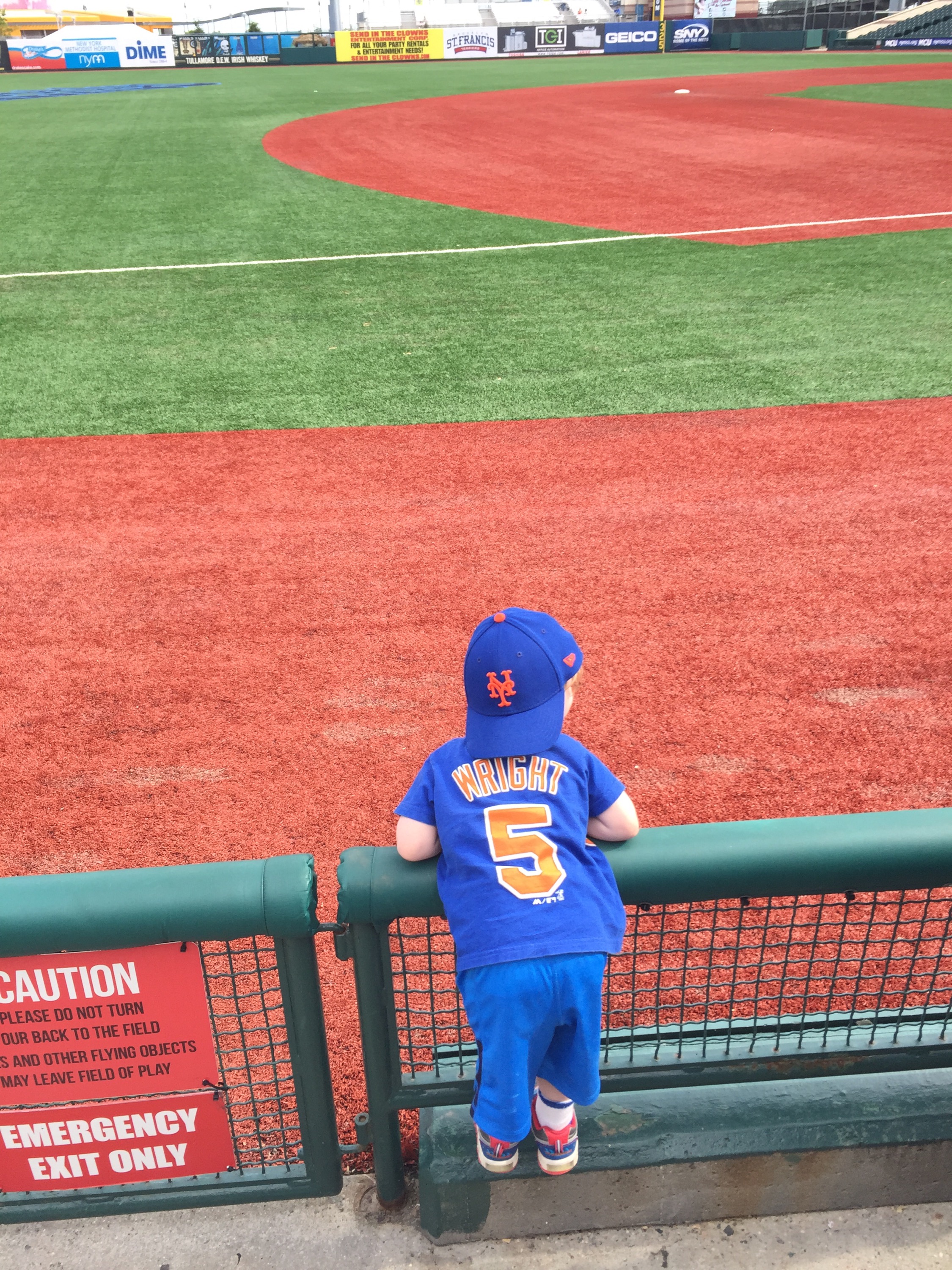
Fortunately, we were able to sit very close due to the generosity of Nicco Blank.
One of the benefits of being so close and being at a minor league park is you are close enough to get autographs seemingly no matter where you are sitting. Most, if not all of the players, are ready, willing and able to provide autographs. My son was quite fortunate as many Cyclones players, including Colby Woodmansee, Darryl Knight, Harol Gonzalez, Blake Tiberi, and others, signed my son’s Cyclones pennant. In particular, Knight stood out in his efforts to sign autographs for everyone despite the fact that his left arms was in a sling. Personally, I was hoping to snag an Edgardo Alfonzo autograph, but that was not in the cards for the day.
Another benefit is that since you are sitting close no matter where you sit, the chances are very likely that you are going to catch a foul ball. The one I caught was courtesy of Blake Tiberi:
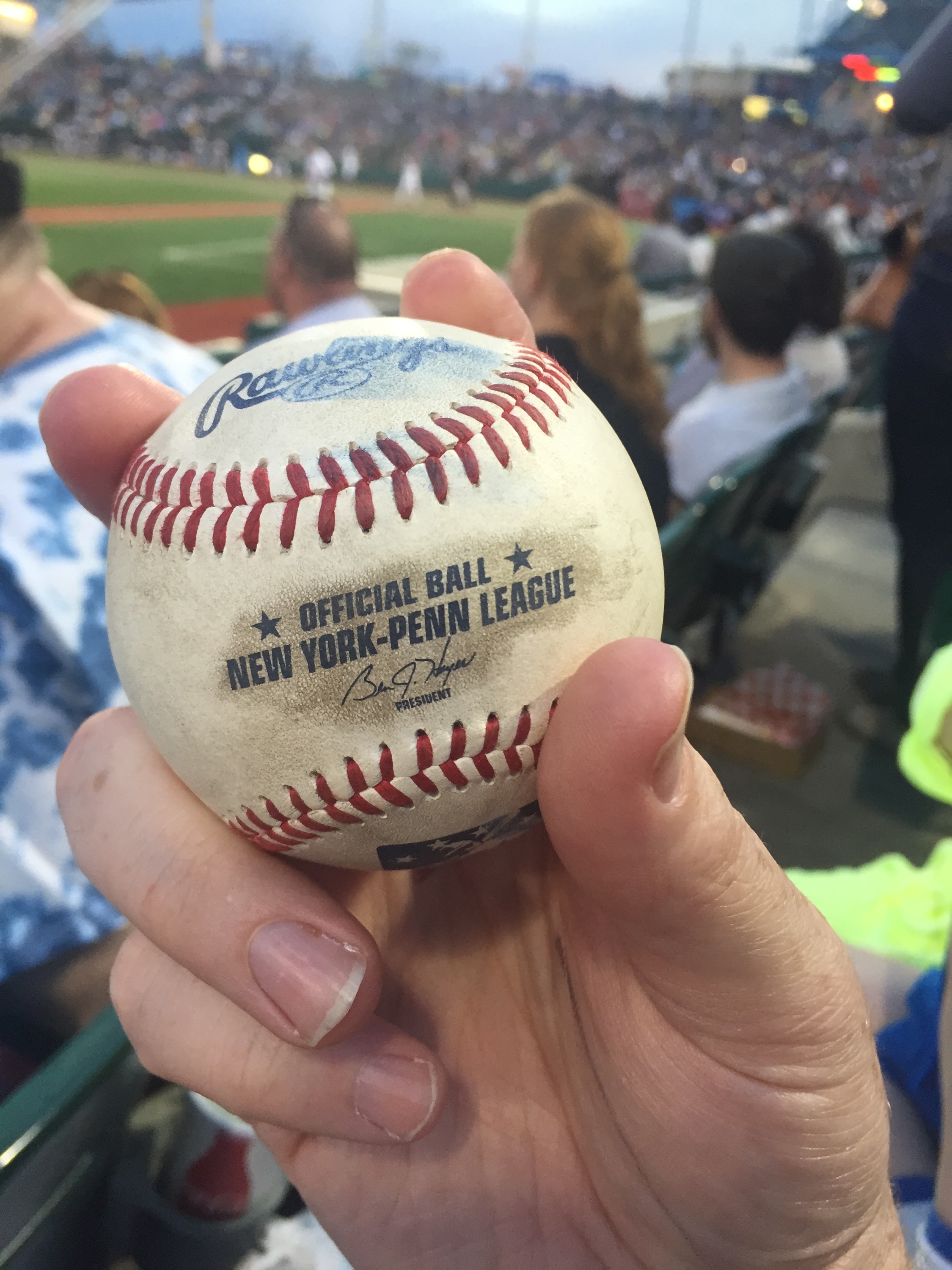
I should mention that my son took all the credit for catching the ball (and yes, we did have the quick panic moment of him thinking about throwing the ball back onto the field):
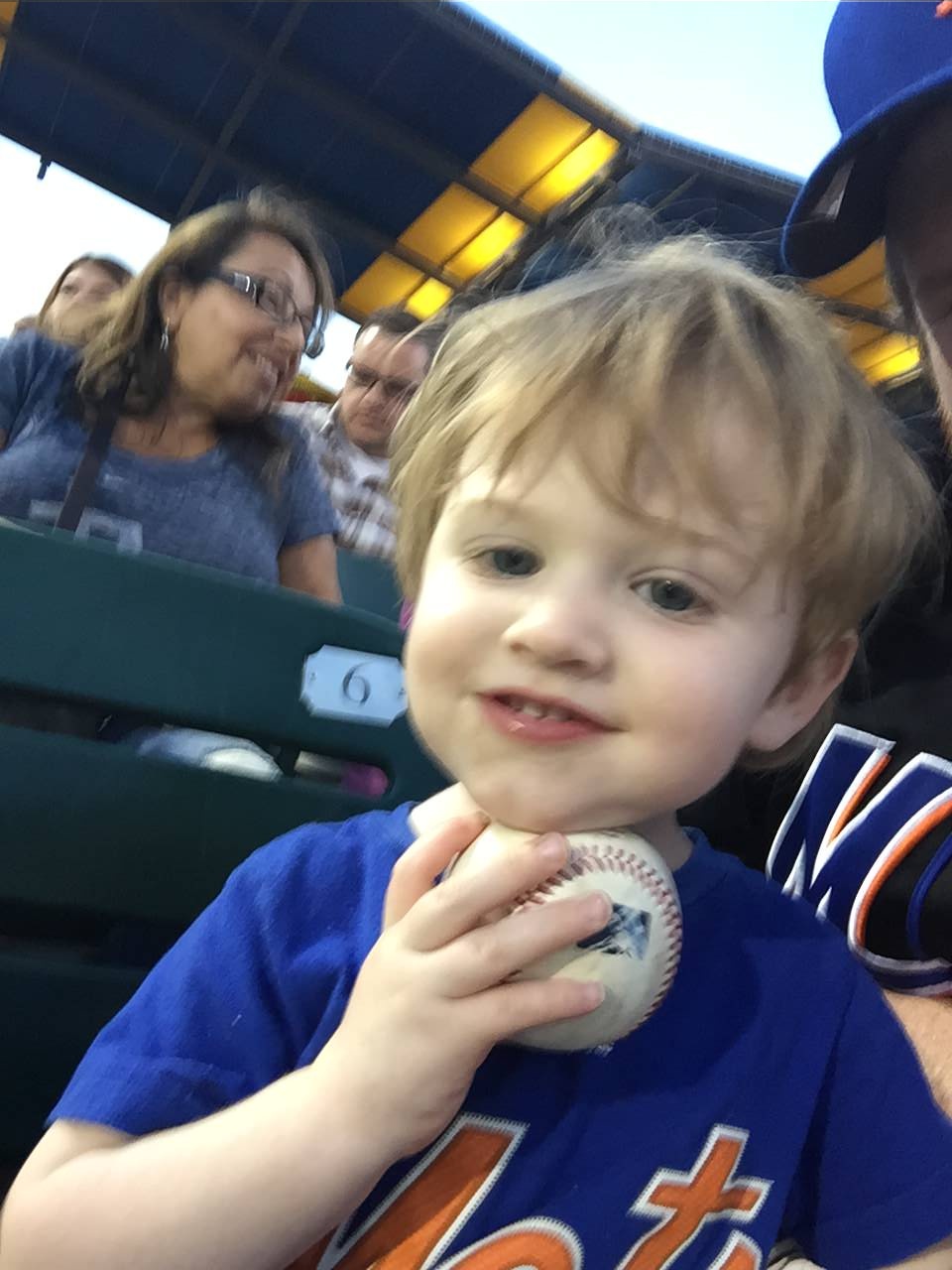
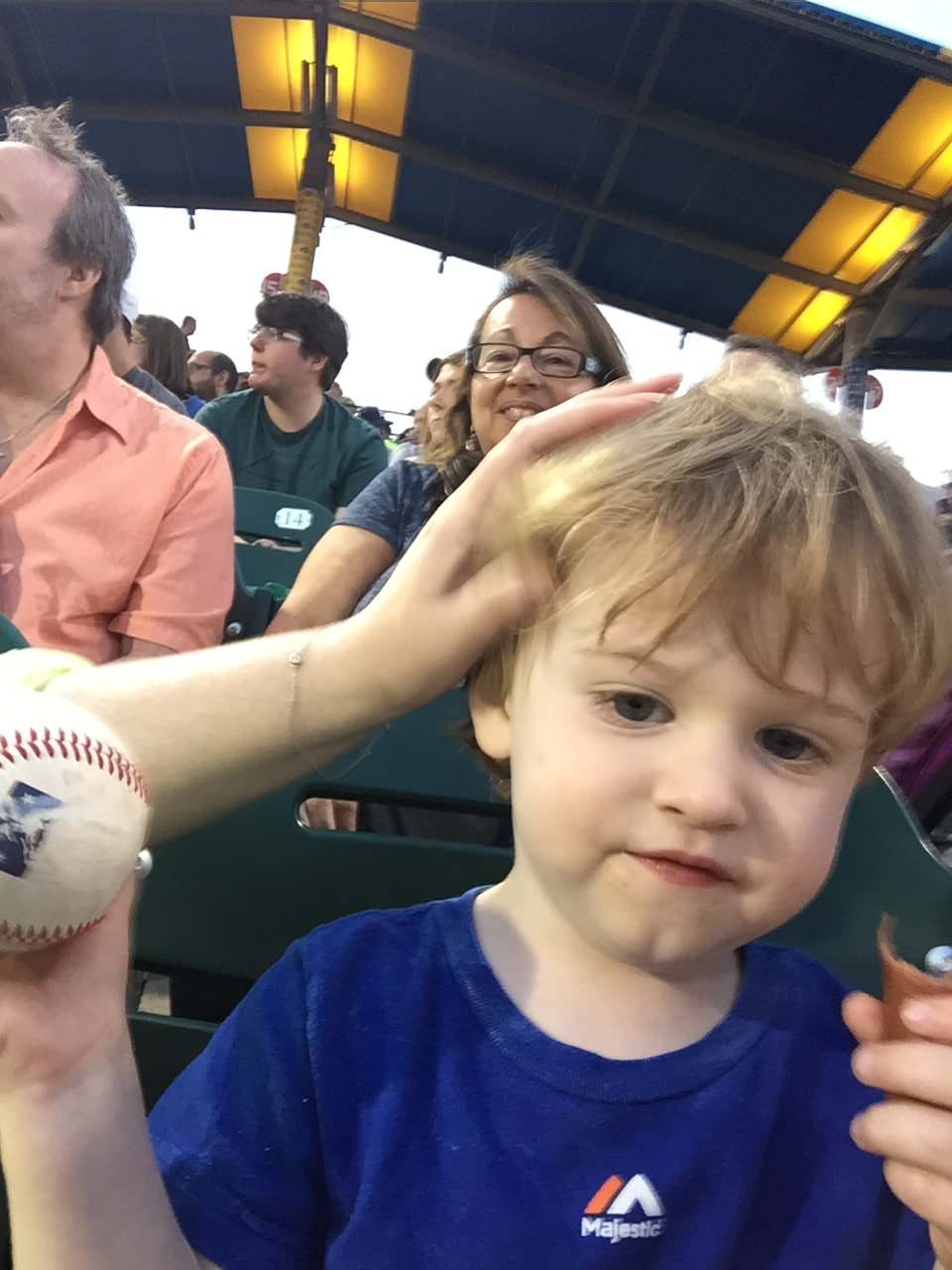
I will say that it was nerve wracking at times being that close to the field with a two year old. While my son is good and will sit to watch a game, his attention span does wander at times because he wants to see what’s happening as all two year olds do. Considering how fast the foul balls were coming in, I did take some time to go around the ballpark to see if there were other things for my son to do.
Right outside the left field stands was a pitching game. For just $2, you were given three balls. If you were able to hit the catcher’s mitt, you were given a Cyclones hat:
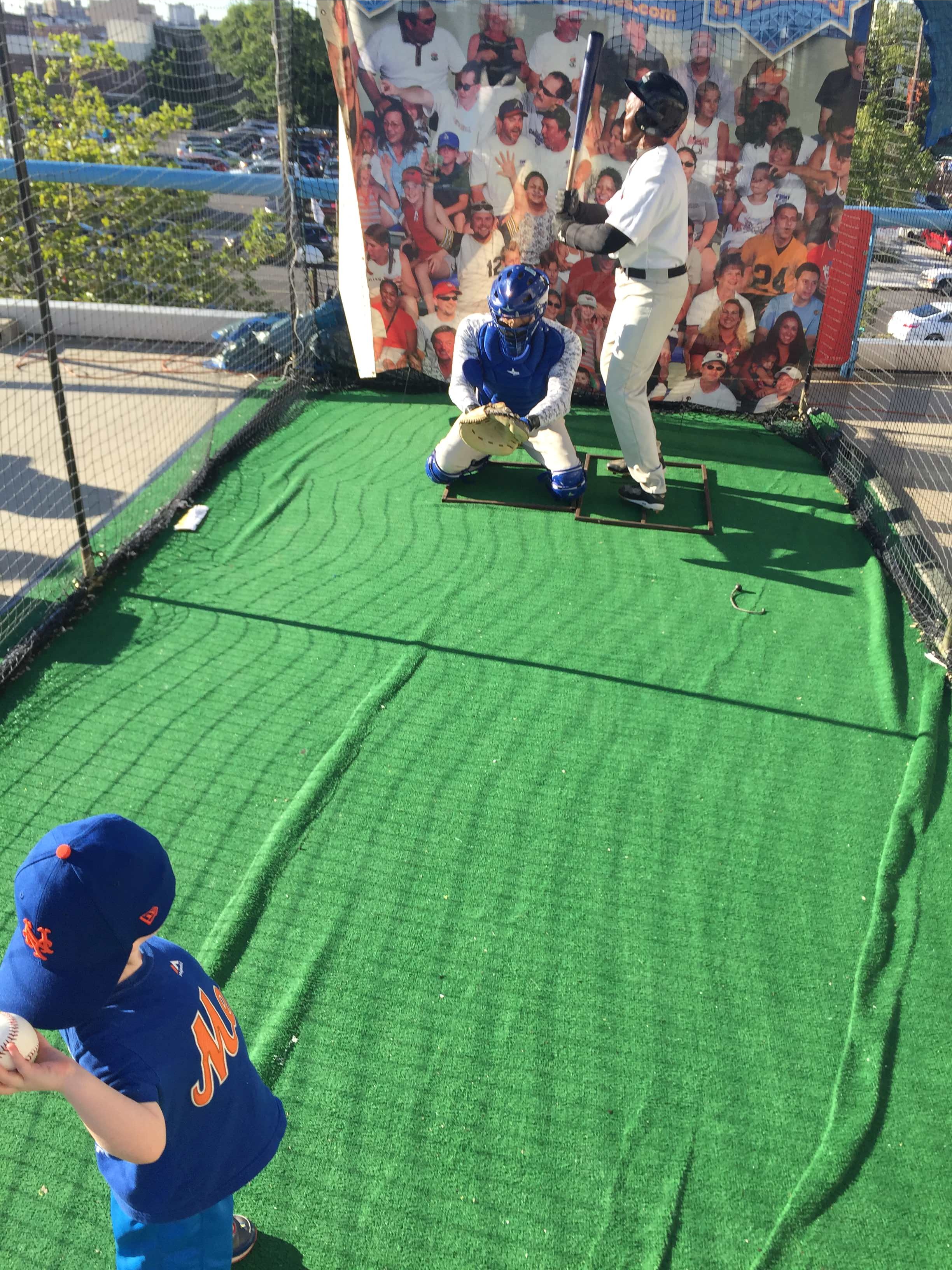
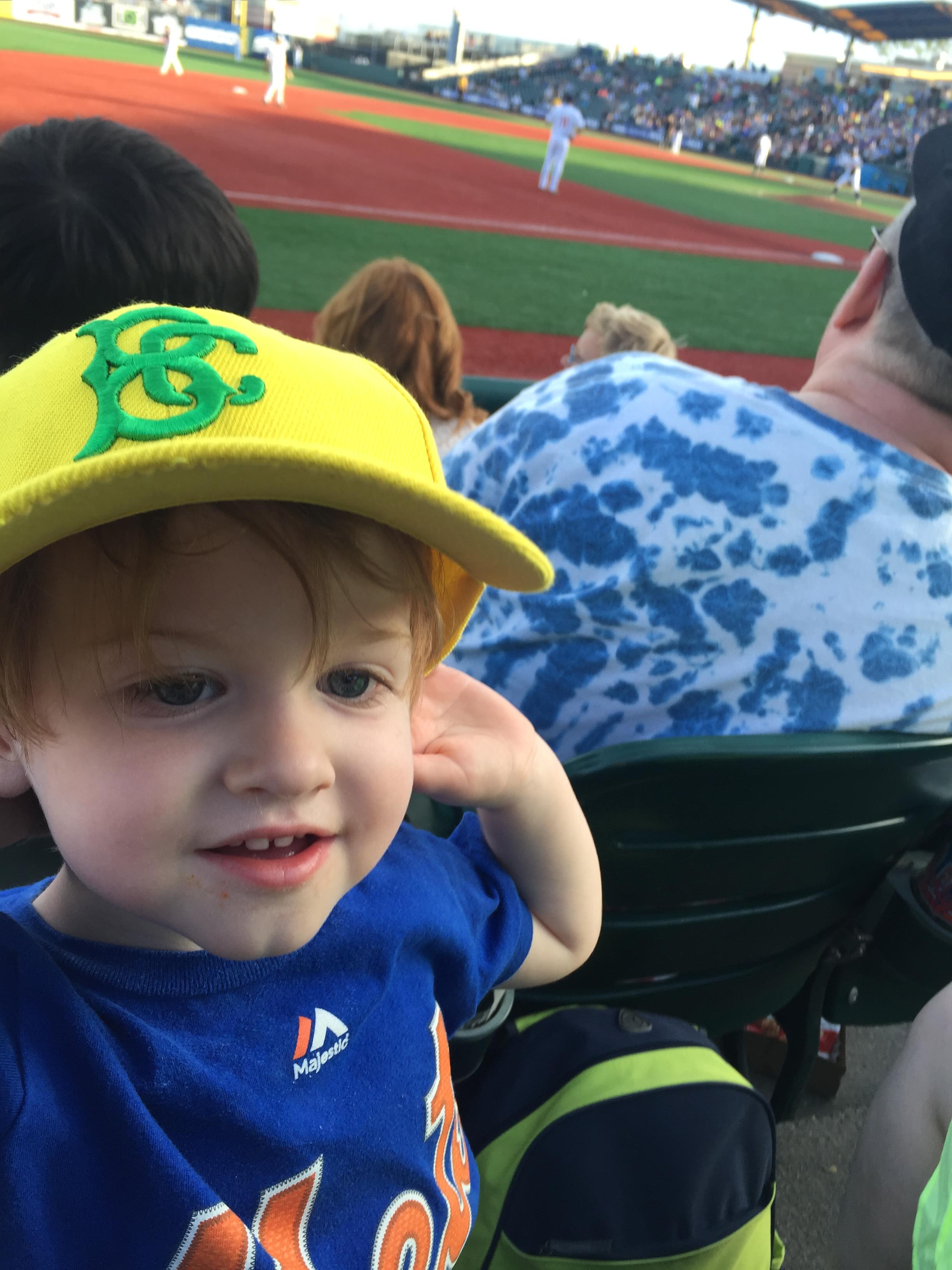
Considering, I spent $4.00 on a pen, the $2 hat was a welcome surprise.
In addition to the Cyclones game and the pitching game, the other main attraction for the fans is Sandy the Seagull, who my son was just dying to meet:
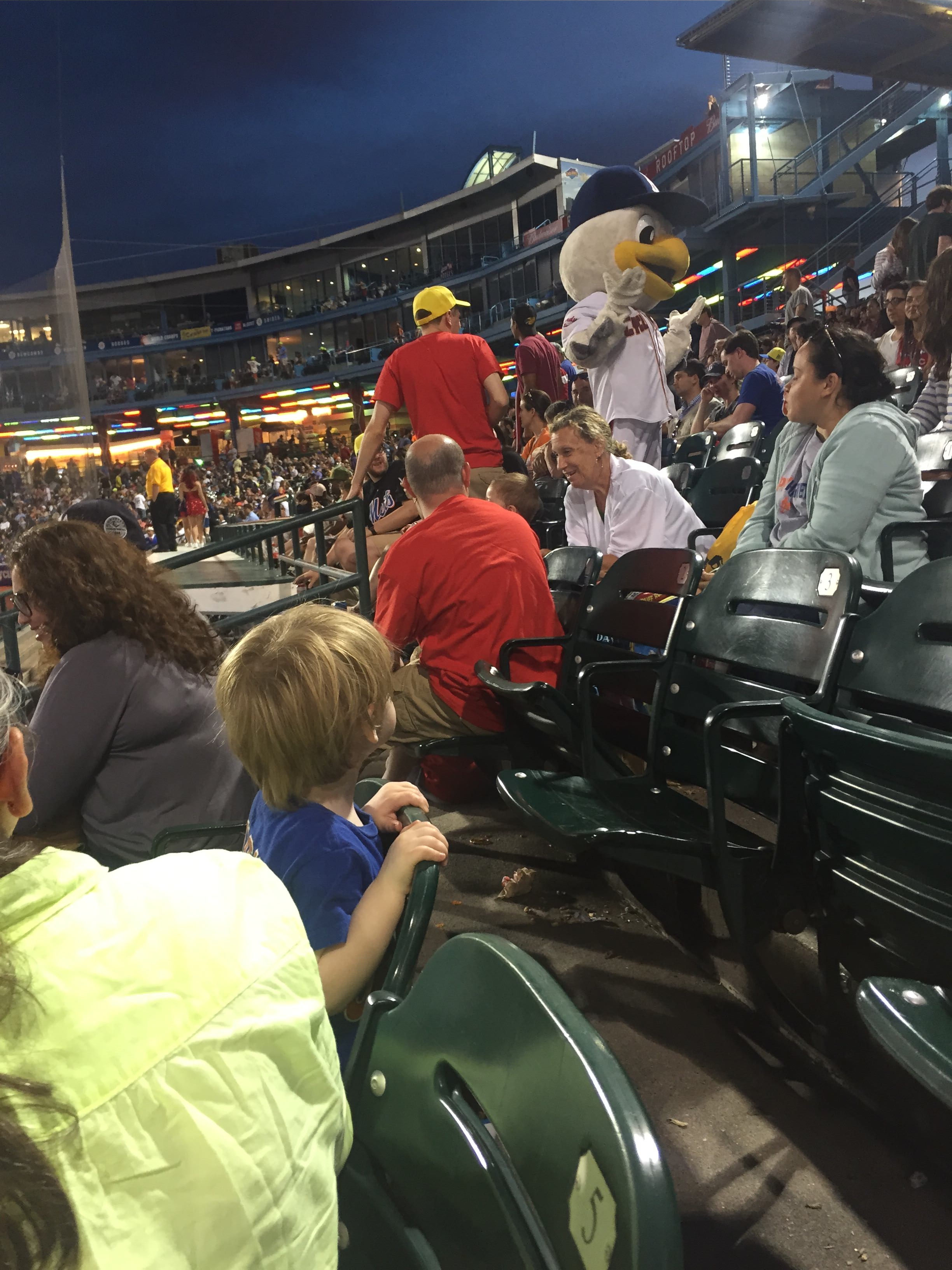
Eventually, as the game ended Sandy made his way down to where we were sitting much to the excitement of my son:
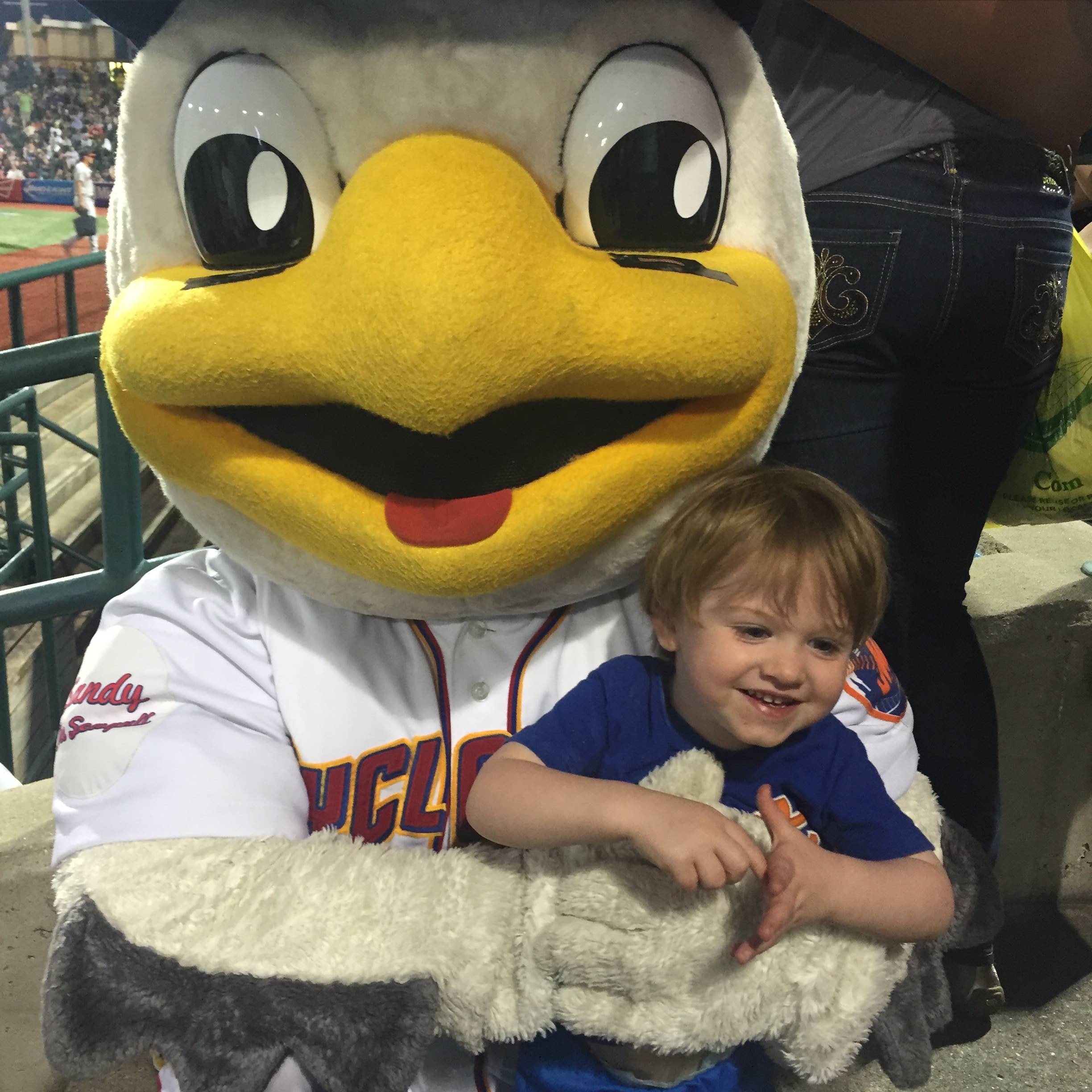
Honestly, I’m not sure if this, winning the hat, or catching the foul ball was the highlight of the night for my son. But that’s the thing about attending a Cyclones game with your children – it’s a fun experience. Everyone, Taylor Swift included, should go out and see a Cyclones game to enjoy a great night at the ballpark. We enjoyed every minute of it, and we thankful to the Cyclones for creating such a family friendly atmosphere and to Nicco Blank for giving us the tickets.
As the trade deadline approaches, every team usually states that they need bullpen help, and those that are true contenders usually add an extra arm or two to the bullpen. For example, back in 1999, one of the biggest strengths for a Mets team fighting for the NL East and the Wild Card was their bullpen. Armando Benitez had taken over the closer role much earlier than anticipated. Turk Wendell and Dennis Cook were having excellent seasons. Pat Mahomes was a revelation as the long man in the bullpen. Ex-closer John Franco was expected to return form injury to help with the playoff push. Greg McMichael was having an off year, but he had previously been a valuable bullpen arm in a pennant race from his days with the Atlanta Braves. On top of that, the Mets had some young promising arms to go to down the stretch with Jason Isringhausen and Octavio Dotel (even if Bobby Valentine thought they were better suited and belonged in the rotation). Overall, the point being is the Mets did not need bullpen help.
Even with that being the case, a Mets team that was very active during the trade deadline made sure to acquire another arm for the bullpen by sending McMichael and Isringhausen for Billy Taylor. It turns out Billy Taylor was washed up, and he would not even be on the postseason roster thereby forcing the Mets to make do with the already good bullpen pieces they had. The Mets find themselves in a similar position than the 1999 Mets did.
The Mets bullpen is led to Jeurys Familia who is the best closer in the game. When needed, Familia can pitch two innings to get the big save that the Mets need. The primary eighth inning set-up man has been Addison Reed, who is only sporting a 2.26 ERA and a 0.912 WHIP. This duo has only lost one lead that has been given to them this year in 32 attempts. Behind them is Hansel Robles who has done everything the Mets have needed in the bullpen. He can come out and bail the Mets out of a bases loaded no out jam or pitch 3.2 terrific innings to save a Mets bullpen from a first inning injury to a starting pitcher. Jerry Blevins has been an extremely effective LOOGY allowing lefties to hit .210/.269/.310. By the way, he has been even better against righties limiting them to a .107/.188/.214 batting line.
Behind these pitchers are some very solid options. There is Jim Henderson, who was great before Terry Collins abused his arm. Henderson is currently in AAA on a rehab assignment. Seth Lugo has been absolutely terrific out of the bullpen in his two appearances. However, it is only two appearances, and there still remains a (remote) chance that he may wind up in the starting rotation with the Matt Harvey injury. There is Erik Goeddel, who even despite one poor performance this season, still has a career 2.75 ERA and a 1.054 WHIP. There is still Sean Gilmartin, who was an essential part of the Mets bullpen last year. He is a starter in AAA, but if the Mets are that desperate for major league relief help that they will swing a trade, they should pull up a known quantity to help the team where he is needed.
If the Mets will consider calling up players from the minors, there are some good options in AAA. Josh Edgin has a 2.45 ERA in the hitter friendly Pacific Coast League. Paul Sewald has taken over as the closer, and he has recorded nine saves. There is always the alluring Josh Smoker, who is having a down year but still sports a mid-nineties fastball.
Finally, in addition to all of these players, there is still Antonio Bastardo, who is going nowhere. It is doubtful a rebuilding team will want to add him into the mix with his high salary and poor production. The Mets are stuck with him, and they are going to be stuck with him for the full season, regardless of whether they make another move to add a reliever or not. In essence, Bastardo is the reason why people mistakenly believe the Mets need bullpen help. With that in mind, the best thing the Mets can do is to find a way to get Bastardo back on track. That will help the Mets bullpen more than them adding another reliever.
Overall, the Mets bullpen is in fine shape with four outstanding relievers and plenty of good options behind them. The Mets do not need a reliever. They need to fix Bastardo since he’s going to be here whether or not the Mets make a trade. With that in mind, the Mets should leave the bullpen as is and turn their attention to the teams other needs at the trade deadline.