Todd Zeile
The things we are willing to tell ourselves as fans can sometimes be quite outlandish. Back in 1997, if you polled Mets fans, they would probably tell you they would rather have Todd Hundley than Mike Piazza. Why not?
The two were the same age. Both were All Stars in 1996 and 1997. In those two years, Hundley had hit 71 homers to Piazza’s 76. Hundley had 198 RBI to Piazza’s 229. Hundley’s 53 doubles surpassed Piazza’s 48. In fact, Hundley’s 127 extra base hits were actually two more than Piazza’s 125. On top of that, Hundley was a switch hitter and a much better defensive catcher. He was the homegrown Met that was afan favorite with his very own Todd Squad cheering section at Shea Stadium. Hundley’s career was taking off, and he was seen by Mets fans as a newer version of Gay Carter. When he returned from his elbow surgery in 1998, he was expected to once again be the slugging defensive minded catcher who was going to lead the Mets to the postseaon for this first time in a decade. If you took a poll of Mets fans, they may begrudging admit Piazza was the better player, but overall, they would also state their belief that they would rather have Hundley as he was their guy. It was all a moot point anyway because there was no way the Dodgers would ever get rid of Piazza.
Until they did. There wasn’t a baseball fan alive in 1998 that was utterly shocked when Piazza was traded to the Florida Marlins along with future Met Todd Zeile for a package that included future Met Gary Sheffield and former/future Met Bobby Bonilla. Once Piazza was a Marlin, the world over knew the team that sold everything except the copper wiring after winning the 1997 World Series was going to trade the impending free agent Piazza. All of a sudden, the very same Mets fans who loved Hundley, desperately wanted Piazza. Myself included.
It was certainly possible. In that offseason, the Mets had acquired Al Leiter and Dennis Cook. There was a reporte there. Even with those trades, the Mets still had a good farm system headlined by Mookie Wilson‘s stepson, Preston Wilson, who could justifiable headline a Piazza trade. Without Hundley, the team was languishing around .500, and they needed a shot in the arm if they were ever going to earn a postseason berth. You could tell yourself that when Hundley got back he could either play left field in place of the struggling Bernard Gilkey or in right in place of another fan favorite, Butch Huskey. At least, that is what you told yourself.
Amazing, it actually happened. On May 22, 1998, the 24-20 Mets actually pulled off a trade to acquire Piazza. Perhaps just as a amazing, when the Mets activated Hundley from the disabled list on July 22nd, they put him in left field. Very rarely in life does things happen exactly as you imagined it would. This did.
Except it didn’t. While Piazza was originally greeted with a hero’s welcome, he would then become roundly booed by the very same fan base who was desperate to acquire him. Hundley would be a disaster in left field. As uncomfortable as he was in the field, he was equally uncomfortable at the plate hitting .162/.248/.252 with only one home run. He eventually forced Bobby Valentine‘s hand, and he became the backup catcher to Piazza. In retrospect, how could it have ever worked? Piazza was a star in Los Angeles, which is nowhere near the hot bed New York was. Hundley was a catcher out of the womb as he was taught the position by his father Randy Hundley.
But then on a September 16th game in the old Astrodome, it all worked according to plan. In the top of the ninth, with the Mets trailing 3-1, Piazza, who had been 0-3 on the night, stepped in the box against Billy Wagner with two on and two out. He would launch a go-ahead three run homer. After Cook blew the save in the ninth, Hundley would be summoned to pinch hit in the top of the 11th. He would hit a game winning home run. It would be the first and only time Piazza and Hundley would homer in the same game. In fact, it was Hundley’s last homer as a Met. At that point, the Mets seemed to have control of the Wild Card, but they would eventually fall apart, thanks in LARGE part to Mel Rojas, and they would just miss out on the postseason.
Going into that offseason, the Mets had to make a choice. Do you stick with your guy Hundley behind the plate, or do you bring back Piazza. To everyone’s delight, the Mets made Piazza the highest paid player in the game giving him a seven year $91 million dollar contract. When the Mets re-signed him, the Mets seemed assured of returning to the postseason.
And they did with the help of both Piazza and Hundley. With Piazza back in the fold, the Mets had to move Hundley. That spurned two shrewd moves by Steve Phillips that helped build a supporting cast around their superstar. Hundley was traded for Roger Cedeno and Charles Johnson, the same Johnson who was traded by the Marlins to acquire Piazza. Cedeno would spend 1999 being tutored by Rickey Henderson, and he would set the then Mets single season record for stolen bases while manning right field. Phillips would then flip Johnson for Armando Benitez, who would become a dominant closer out of the bullpen.
Piazza was dominant that year. He hit .301/.361/.575 with 40 homers, a Mets right-handed batter single season record, and 124 RBI, which is the Mets single season record. He led the Mets throught the play-in game and into the NLCS. His seventh inning opposite field home run off John Smoltz in Game Six of the NLCS tied the game at 7-7. In a game they once trailed 5-0 and 7-3 and a series they had trailed three games to none, it seemed like the Mets were on the verge of pulling off the impossible. With a Kenny Rogers walk, they didn’t. The Mets came so close to making the World Series, but they fell short. Even with as much as Piazza gave them, they would need more in order to make it to their first World Series since 1986 and to play in consecutive postseasons in team history.
Amazingly, Piazza had another gear. He would hit .324/.398/.614 with 38 homers and 113 RBI. It remains the highest slugging percentage in team history. The 78 homers and 237 RBI over two years stands as the team records over a two year stretch. He would tie the Mets single season record with three grand slams. In 2000, the Mets would go to the World Series, and they would fall agonizingly close as his shot to center field fell just short of tying the game.
It was a start to an amazing Mets career and part of a Hall of Fame career. Before Piazza left the Mets after the 2005 season, he would hold many records. He would have the most home runs by any right-handed Mets batter and second most all time to Darryl Strawberry. He would also be second to Strawberry in team RBI. He would be passed by David Wright in those catergories. However, Wright wouldn’t pass Piazza in some other catergories. Piazza has the third highest team batting average, and he has the highest slugging percentage in Mets history. He would also hit the most home runs all time by a catcher surpassing Johnny Bench. It was one of many memorable home runs in Piazza’s time with the Mets, which included the June 30, 2000 home run capping a 10 run eighth inning rally that saw the Mets overcome an 8-1 deficit against the Braves, and the most important home run he would ever hit:
Now, Piazza is going to be a Hall of Famer. He is going to be a Hall of Famer in a Mets uniform. It never seemed possible.
Years ago, Mets fans would’ve picked Hundley over Piazza. Almost twenty years later, Piazza chose us when he chose to enter the Hall of Fame as a New York Met joining Tom Seaver as the only Mets in the Hall of Fame. It was an incredible ride that has seen Piazza become perhaps the most beloved Met to ever wear the uniform. He deserves that love and much more. He deserves every congratulation and accolade the Mets, Mets fans, and all of baseball can throw his way.
Thank you Mike Piazza.
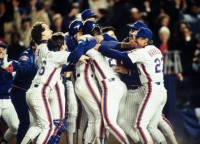
I remember back in 2000, the stories were that Bobby Valentine needed to make the World Series in order to keep his job. The amazing thing is he actually did it.
Just think about everything that had to happen that year for the Mets to make the World Series. First, the Mets had an overhaul of its outfield during the season. On Opening Day, the Mets outfield was, from left to right, Rickey Henderson–Darryl Hamilton–Derek Bell. At the end of the year, it was Benny Agbayani–Jay Payton-Derek Bell. Agbayani was only on the Opening Day roster because MLB allowed the team to have expanded rosters for their opening series in Japan.
On top of that, Todd Zeile was signed to replace John Olerud. Zeile had to become a first baseman after playing third for 10 years. Edgardo Alfonzo had to adapt from moving from the second spot in the lineup to the third spot. The Mets lost Rey Ordonez to injury and first replaced him with Melvin Mora for 96 games before trading him for the light hitting Mike Bordick. More or less, all of these moves worked. Then came the postseason.
A lot happened in the NLDS. After losing Game One, the Mets faced a quasi must win in Game Two. They were leading before Armando Benitez blew a save. I know. I’m shocked too. The Mets regained the lead, and they won the game when John Franco got a borderline third strike call against Barry Bonds. In Game Three, the Mets won on a Agbayani 13th inning walk off homerun. This was followed by Bobby Jones closing out the series on a one-hitter.
The Mets were then fortunate that the Braves lost to the Cardinals in the other NLDS series. The Mets tore through the Cardinals with new leadoff hitter Timo Perez. We saw all that luck run out in the World Series. We watched Zeile’s potential homerun land on top of the fence and bounce back. On the same play, Perez was thrown out at home. In the same game, Benitez blew the save. Unfortunately, there were no more heroics.
We saw this repeated in 2015. The epically bad Mets offense had to have its pitching hold things together until help came. Part of that required the Nationals to underperform while the Mets were fighting tooth and nail just to stay in the race.
In the NLDS, the Mets were on the verge of elimination. They weren’t eliminated because somehow, some way Jacob deGrom pitched six innings with absolutely nothing. The Mets then needed Daniel Murphy to have a game for the ages. He stole a base while no one was looking, and he hit a big homerun. It was part of an amazing run through the postseason for Murphy. Like in 2000, it came to a crashing halt in the World Series.
No matter how good your team is, it takes a lot of luck to win the World Series. Look at the 86 Mets.
In the NLCS, they barely outlasted the Astros. In Game Three, they needed a Lenny Dykstra two run homerun in the bottom of the ninth to win 6-5. In Game Five, Gary Carter hit a walk off single in the 12th to send the Mets back to Houston up 3-2. It was important because they didn’t want to face Mike Scott and his newfound abilities. With that pressure, they rallied from three down in the ninth, blew a 14th inning lead, and nearly blew a three run lead in the 16th inning.
Following this, the Mets quickly fell down 0-2 in the World Series before heading to Boston. After taking 2/3 in Boston, the Mets had to rally in the eighth just to tie Game Six. There are books that can be written not only about the 10th inning, but also Mookie Wilson‘s at bat.
First, they had to have a none on two out rally with each batter getting two strikes against them. For Calvin Schiraldi to even be in the position to meltdown, he had to be traded by the Mets to the Red Sox heading into the 1986 season. In return, the Mets got Bobby Ojeda, who won Game Three and started Game Six. John McNamara removed Schiraldi way too late and brought in Bob Stanley. His “wild pitch” in Mookie’s at bat allowed the tying run to score. You know the rest:
By the way, keep in mind Bill Buckner wasn’t pulled for a defensive replacement. Also, the Mets had to rally late from 3-0 deficit just to tie Game Seven.
We need to keep all of this is mind when setting expectations for the 2016 season. Terry Collins is right when he says World Series title or bust is unfair. We know way too much can happen between now and the World Series. Right now, the only goal should be winning the NL East. If the Mets do that, they have met their reasonable expectations. After that, the Mets are going to need a little luck to win the World Series.
Fortunately, the Mets are carrying a four leaf clover in the form of Matt Harvey, Jacob deGrom, Noah Syndergaard, and Jeurys Familia
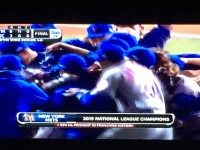
My favorite Mets team was the 1999 team. I loved everything about that team from Bobby V to Mike Piazza to Edgardo Alfonzo to Robin Ventura to John Olerud. It was my first real taste of a pennant race and the playoffs. I was lucky to be there for Pratt’s All Folks and the Grand Slam Single. I look back on the year with melancoly because of this:
In 2000, the Mets got Mike Hampton. The season became World Series or bust. A strange feeling for a Mets fan. Hampton would deliver. He was the NLCS MVP. The Mets then had to face the Yankees in the World Series. It was a cruel series with Todd Zeile‘s ball landing on the wall and falling back into play. Timo Perez didn’t run and didn’t score. Roger Clemens threw a bat at Piazza and wasn’t ejected. The series then ended in the most heartbreaking way possible:
The Mets would be terrible for the next few years, but everything came together in 2006. Our homegrown stars, Jose Reyes and David Wright, we’re becoming superstars. They were joined by the two Carloses: Carlos Beltran and Carlos Delgado. It was a team that ran roughshod over the National League. Beltran was the best baseball player on the planet that year (who somehow didn’t win the MVP). The Mets had momentum in Game Seven with Endy Chavez’s catch. Here’s how that season ended:
In 2007, the Mets reloaded and were primed to go back to the World Series. They were up 7 with 17 to play. On the final game of the season, they sent future Hall of Famer Tom Glavine to the mound with his 300 wins. He wouldn’t be devastated when he got out of the first, but we would:
In 2008, the Mets diagnosed their problem, and much like 2000, they went out to get it. The Mets brought in Johan Santana, and he delivered. they needed him in a strange year that saw Wille Randolph fired after a win on the first game of a west coast trip. The interim manager threatened to cut Reyes if he didn’t come off the field after pulling up lame, and people acted like it was a good thing. Through all of that, the Mets were collapsing again, and yet an injured Santana took the ball on three days rest. He saved the season, but only for a day:
The last three were the most difficult for me because I was there. It got more difficult because Citi Field was initially a disappointment. It got worse because the product on the field was bad.
Then Matt Harvey came up and was an All Star. Jacob deGrom came from seemingly nowhere to become a Rookie of the Year and an All Star. They were joined by Noah Syndergaard. The Mets made a flurry of trades including one for Yoenis Cespedes. Daniel Murphy had an out of body experience. Then this happened:
All that pain. All that suffering. We know what it’s like to be Mets fans. There’s pain and suffering. However, there are moments of pure joy. It’s all the losing that makes nights like last night all the more special.
We’re Mets fans. We were there for all of this. There are older fans who experienced more pain, but also more joy. There are younger fans who only know losing. Now, we’re all Pennant Winners. It’s like the 80’s again when the Mets are the best team of baseball. We’re “Back in the New York groove!”
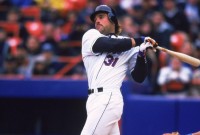
Whether people in Los Angeles know it, these two franchises will forever be linked. As many of you younger Mets fans (I can still call myself that, right?), many of our fathers grew up as a Brooklyn Dodger fan. They became Mets fans because the Dodgers left town.
The Mets came into existence as a result of the Dodgers moving from Brooklyn. The Mets owners won’t quite let the Dodgers go. The teams have also shared stars.
From Gil Hodges to Mike Piazza, former Dodger stars have found their way to the Mets. These Dodger stars have been important parts of Mets postseason runs:
You know what’s insane about that play? You know other than it happened. Former Dodger Shawn Green relayed the ball to former Dodger Jose Valentin, who threw the ball to former Dodger Paul Lo Duca. The first runner tagged out was former Met Jeff Kent. It seems that J.D. Drew wasn’t supposed to be part of this play at all.
In any event, rather than go on about how much I hate the Dodgers (don’t worry, that’s coming tomorrow) I thought it would be fun to name the best players who have played for the Mets and Dodgers.
Some ground rules. I want someone who played well with the Mets and Dodgers. Using a Giants example, I’m not picking Willie Mays for CF even though he could be the greatest CF in MLB history. I want someone like Piazza, who was great (or at least good) with both teams. So, here’s my list:
P – Bobby Ojeda
C – Mike Piazza
1B – Eddie Murray
2B – Jeff Kent
3B – Todd Zeile
SS – Jose Vizcaino
LF – Danny Heep
CF – Brett Butler
RF – Darryl Strawberry
Honestly, I thought this team would be better. The main problem was the derth of left fielders. Another problem was someone like Zeile. He played 3B for the Dodgers, but he mostly played 1B for the Mets. As you can tell, I leaned towards the player who was better as a Mets. If there are any suggestions, I’ll be happy to update this list.
As we know, the Dodgers and Mets have a complicated history. The next chapter begins tomorrow night. Lets Go Mets!
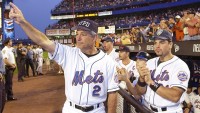
After the horrors of 9/11, it was time for baseball to return. We were all shaken and needed a return to some normalcy. As the National Pasttime, baseball was set to return.
When it came time to return, the Mets, lead by Todd Zeile made a statement. They tossed their Mets caps aside, and wore the First Responders caps. They wore caps honoring the NYPD, FDNY, EMS, and Port Authority Police Department. It was a memorial to the heroes who lost their lives trying to save the lives of others.
Zeile wouldn’t let MLB rip the hat off his head. On September 17, 2001, the Mets took the field wearing these caps. It was emotional watching John Franco earning the win wearing an FDNY cap knowing he lost someone close to him on 9/11, who was a firefighter. When baseball returned to New York, the Mets took to the field wearing these first responder caps. It was the second most moving thing that happened that night:
After the 2001 season, it was time to move on. However, we would never forget. By we, I’m not including MLB. They have allowed the Mets to wear the caps since. Even when David Wright tried to wear it in the dugout, MLB took it away from him.
Four years ago, in honor of the tenth anniversary, the Mets petitioned MLB to wear the caps again. They were denied by MLB. Worse yet, they threatened to heavily fine players who elected to wear them. While Wright was once strong enough to wear a cap in the dugout, he became callow when it came to wearing the cap on the field stating he had to follow the rules. Bud Selig was the only one angry over the issue, and that is because the issue became public.
I don’t spend other people’s money. However, Wright is a leader. He needs to lead on the issue. He can’t go halfway like he did in the past. I’m assuming MLB will once again allow the Mets to wear the cap pregame only, you know, when no one can see it on TV. Instead when you turn on the TV tonight, you’ll see this:
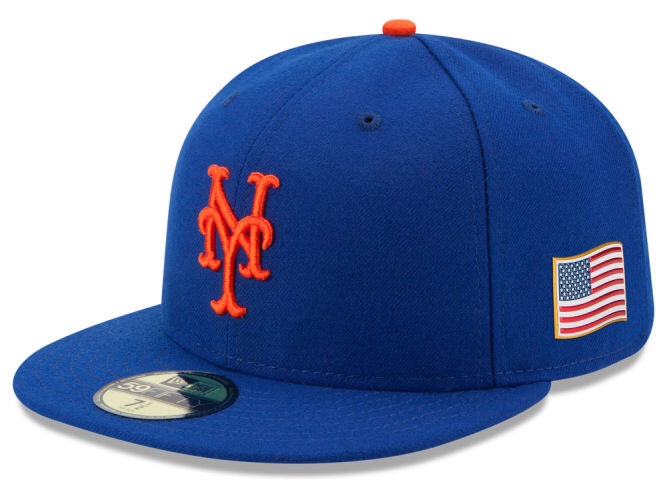
Guess what? You can buy it at Lids for $37.99. It’s the same price on MLB.com. Note, there are no notations anywhere as to whether there will be any donations made to any charities. It’s a money grab.
The Mets had a strong locker room in 2001, and they stood up and did what was right. Wearing the First Responder caps is the right thing to do. People are still getting sick. Families continue to suffer. I know wearing the caps doesn’t change that.
However, it would be nice to know MLB and the Mets still remember. The slogan after 9/11 was never forget. If the Mets don’t wear the caps, it’s a sign they forgot.
UPDATE: they have forgotten and it’s embarrassing:
https://twitter.com/jareddiamond/status/642428830393737216