Christian Scott
Let’s go back to 1973, the New York Knicks beat the favored Los Angeles Lakers to win the NBA title in five games There can be parallels drawn to the 2026 team, but at the end of the day, we are still celebrating this Knicks team winning for the first time in 53 years.
When the 1973 Knicks won, the New York Mets were having a forgettable season. On August 20, they were 55-67. We can talk about them being seven games out, but in reality, they were 12 games under .500 and in sixth place.
Well, in 2026, the Knicks won the title, and the 2026 Mets are having a forgettable season. In fact, they were sellers at the trade deadline. Now, entering play on August 20, they are 58-70 sitting 10 games out of a postseason spot.
The same 12 games under .500. The same disappointment after a Knicks championship. Why not see history repeat itself?
Yes, there’s no Tom Seaver on this team. Then again, the 1973 Mets didn’t have a player at the level of Francisco Lindor (with all due respect to the late Rusty Staub).
These Mets are playing inspired baseball with Carson Benge making a late Rookie of the Year push. With Benge, A.J. Ewing, and Luis Robert Jr., the Mets quite possibly have the best defensive outfield in baseball.
Lindor is back to his old self looking like he did in 2024. Bo Bichette is getting better at third and is driving in runs.
Nolan McLean is rounding back into form. Christian Scott and Zac Thornton look like the real deal. Sean Manaea is once again pitching like their tribal leader.
Even with the bullpen sell-off, their bullpen remains terrific. Suddenly, Kodai Senga is a closer with a better entrance than Edwin Diaz. Don’t argue this point.
Eddie Van Halen >>>>>>>>>>>Timmy Trumpet.
The Mets have been 11-6 in August. They’re playing better baseball against better teams. The hard part of the schedule is almost over.
If this team can somehow position themselves to be within striking distance, they end the season with the Texas Rangers and Washington Nationals. No Miami Marlins to block their way.
Plus, at some point, Juan Soto comes back. Let him come back to a team in contention, and there can be real magic here.
This happened in 1973. We can see it happen again. You just gotta believe.
Pop Quiz: Why did the 2026 New York Mets falter? While people want to blame things like losing Pete Alonso, the truth is the 2026 Mets faltered due to injuries.
Francisco Lindor’s injury was devastating, especially with no real Plan B available at the position. Juan Soto’s keg injuries hurt the lineup. Clay Holmes broken leg killed the rotation.
There are more, but that’s the point. There’s only so many injuries a team can sustain before faltering. However faltering one year doesn’t necessitate faltering the next.
Right off the bat, the Mets rotation looks to be in good shape. Here are the promising young arms set to pitch in 2027:
That’s 3/5 of the rotation figured out. The renaissance of Sean Manaea puts them in better shape, and they can always look to bring back Holmes are sign another veteran.
Their outfield from left to right will be Soto – A.J. Ewing – Carson Benge. That’s an all under 30 outfield with speed and power. It’s a very impressive group.
At catcher, the Mets have Francisco Álvarez and Luis Torrens. Alvarez seems to finally becoming the power bat behind the plate he’s always promised to be. Torrens is a great defensive back-up with a bit of a clutch gene.
The infield is a bit of a problem. They’re at least secured on the left side with Lindor and Bo Bichette, who will likely opt in for the rest of his contract.
We know Brett Baty is not part of a solution. Marcus Semien probably isn’t either. Now, if the Mets pick up Luis Robert Jr’s option, Ewing could slide to second. Let’s see how he finishes the season before we go here.
The Mark Vientos and Jorge Polanco injuries leave 1B and DH unsettled. Long story short, the Mets need to rebuild the first side of the infield. Hopefully, one of them takes off giving us some peace of mind heading into next year.
The Mets are having open tryouts for the 2027 bullpen. We also know David Stearns has been adept at building bullpens making this a little less of a concern.
All told, the Mets are very good in most spots. There is a good foundation here with money to spend. Rather than be doom and gloom, Mets fans should focus on the very good pieces here.
The Mets can now see who can be a part of the 2027 team and beyond. They have the means to address their deficiencies. They will contend in 2027.
Until August 3, the New York Mets are in a somewhat precarious spot. They need to be showcasing their potentially movable players while making sure their young stars stay in the lineup.
Short of a needed day off, Carson Benge and A.J. Ewing have to play. Benge is the right fielder and should never play another position.
As for Ewing, it’s complicated a bit. He’s looked like the center fielder of the future. He has elite speed and can cover a lot of ground.
The problem is when he’s in center Luis Robert Jr. won’t be. Right now, Robert needs to be in center to showcase him for the trade deadline. It’s better to move him now than lose him for nothing when they will have to decline his $20 million team option.
Fortunately, Ewing is versatile. He can play second base. There’s a problem there because the Mets also need to try to showcase Marcus Semien.
Look odds are no one wants Semien and his horrendous contract. Semien isn’t hitting or playing defense. However, if he gets hot, maybe, just maybe, the Mets can get someone to take him.
It’s a delicate balancing act, but the Mets absolutely have to have Ewing in the lineup everyday. They have to do that while simultaneously getting as much playing time for Robert and Semien as possible.
It’s a near impossible situation.
That situation is complicated by the Mets insistence on playing Brett Baty and Jared Young.
Baty has a career 84 wRC+. He has a 75 wRC+ this season. He’s a poor fielder with a poor arm. Looking at his stats, he looks like a non-tender candidate, not a lineup mainstay.
But, he never comes out of the lineup. It’s at the point where he played right field in place of Benge. Baty would misplay a routine fly ball. As a result, Christian Scott couldn’t escape the jam and would eventually lose the game.
Being fair, Baty is 26. It’s possible a team could overvalue Baty’s 2025 outlier season and try to trade for him. If that’s a reason to keep playing him, fine. It’s justified.
Just keep him at first because it’s not like anyone is blocking him there.
The Mets are enamored with Jared Young at first. He plays there everyday. It’s completely bizarre.
Young is 31. He has a career 107 wRC+. He’s a platoon bat. He’s been solid at first with a 2 OAA with zero recorded scoops.
It’s fine having Young on the roster. He serves a purpose. He’s a platoon bat with some pop. He just can’t play right now. Playing him is completely and utterly pointless. Worse yet, it’s detrimental.
Benge and Ewing have to play everyday. The Mets need to hope Robert and Semien get hot and attract someone to at least take the contract. Hopefully, the Mets get lucky, and someone takes Baty.
No one is chasing down Young. Even if they’re interested, the Mets are not getting any value for him. Playing him more works counter to the Mets objectives.
Playing Young before August 3 is malpractice. It leads to Benge in left and Baty in right. It’s dumb and counterproductive. It needs to end now.
Let’s start with two premises. The first is you can never have enough pitching. The second is the New York Mets starting pitching completely fell apart in 2025.
With that out of the way, we need to assess what the Mets have and act accordingly. Remember, just because things were bad last year, it doesn’t mean they’re automatically bad the next.
Right off the bat, Nolan McLean looked like a future ace. He burst onto the scene like Jacob deGrom did in 2014, and the hope is McLean improves in year two in the same way deGrom did (no one is saying McLean will be the Cy Young version of deGrom . . . yet).
Behind McLean is Kodai Senga. When healthy, he’s been untouchable. Before Pete Alonso’s throw, he was 7-3 with a 1.47 ERA while averaging nearly six innings per start.
He just wasn’t right after he returned from injury. We don’t know what happened, but the fair assumption is he can get back to the pitcher who has pitched at a near ace level in his career.
It was a tale of two halves for David Peterson. He went from an All-Star to a mess. Lost in last season was the fact he pitched far more innings than he ever had as a Major Leaguer.
In 2024, Peterson pitched 121.0 innings, which was a then career high. Through 127.0 innings in 2025, he was 7-4 with a 2.83 ERA. With him being so good, and the other pitchers either injured or unable to go deep into games, Carlos Mendoza pushed him during this stretch.
After that 127.0 mark, Peterson was 2-2 with an 8.42 ERA averaging under five innings per start. It’s fair to assume there was some fatigue involved. Certainly, we should expect him to be fresh to start the year, and with closer attention to his workload, he should be able to get through the year better.
Sean Manaea was injured to start 2025, and he never got fully healthy, and he never built up his stamina. After 25 pitches, his K/9 went from 10.00 to 5.25.
He didn’t have a spring training, and he rushed back to help the team. He pitched through pain, and he faltered. Fortunately, he’s feeling healthy now.
Whether he gets back to being the top of rotation pitcher who led the Mets to the 2024 NLCS remains to be seen. Still, he should be able to give you five quality innings at the back end of the rotation.
Then, there is Clay Holmes in his second year as a starter. He actually held up well through his first 17 starts going 8-4 with a 2.99 ERA even if his 4.42 FIP indicated a regression was coming, which did come.
After those 17 starts, Holmes was 4-4 with a 4.23 ERA. He does deserve credit for a big time start his last outing of the year. All told, we should see more stamina from him in 2026.
Right there, the Mets have a viable five man rotation.
- McLean
- Senga
- Peterson
- Manaea
- Holmes
That’s now where the pitching stops. Next up is Brandon Sproat. There were some positives in his four starts with a 2.80 FIP. His first two starts with the Mets were very good. He should start the year in Triple-A, and we will likely see a better version of him when needed.
The same can be said for Jonah Tong. He had some flashes but mostly struggled. Still, he has the stuff and the highest ceiling of any of the three Mets prospects called up at the end of last year.
Speaking of Mets young pitching, we all forgot about Christian Scott. He’s fully recovered from Tommy John, and he appears ready to go for spring training. He showed flashes in 2023 while dealing with a torn UCL, and we can hope he can take a step forward in 2026.
At the moment, that puts the Mets Major League ready pitching depth at eight starters. That increases to nine with the team signing Carl Edwards Jr. to a minor league deal.
Edwards has had success in the majors out of the pen, and he’s recently transitioned to a starter. He did have some success as a starter in the Mexican Leagues last season making this an interesting gamble.
Top pitching prospect Will Watson will likely start the year with Double-A Binghamton. That puts him closer to making it to the majors. With a breakout season, he may very well force his way there.
Same goes for Jack Wenninger. He pitched better than Watson in Double-A and appears much closer to the majors. It’s very possible we see him in Queens next year.
We saw Jonathon Pintaro make his Major League debut next year, and he could be among the first called up next year. We could see a Zach Thornton or Jonathan Santucci pop in 2026.
Point is, there’s real pitching depth here without the Mets making one move to add a starter this offseason. It’s prudent and practical to add more pitching because as we saw in 2025, you can never have enough pitching.
That said, despite the narratives being pushed on Mets fans, they have starting pitching. They’re very well poised to be successful in 2026, and we should see the starting pitching be a driving force of the 2026 season.
Heading into 2024, the New York Mets made it clear they weren’t rebuilding. It was a retooling. Even in that reset, they expected to make the postseason.
The decision made sense. They were paying for contracts like Max Scherzer and Justin Verlander. There were young players they needed to get a real look at the Major League level to see if they were part of the future.
Even if the Mets did not make the postseason, the 2024 season should’ve been considered successful because they found out a lot about their team.
Brett Baty wasn’t the third baseman of the present, and now, he won’t be the third baseman of the future. Thats fine because Mark Vientos was, and he was the best hitter at the position at the Major League level.
David Peterson finally emerged to be the starter the Mets thought he could be. Jose Butto and Dedniel Núñez emerged as very good relievers.
Even though he needed Tommy John and will be lost for 2025, Christian Scott looks like a real rotation piece in the future.
That’s similar to what happened to Ronny Mauricio. He went from 2024 second baseman to a man potentially without a spot. For the Mets, they saw something in him and have interest to see if it’s still there.
Speaking of second base, Luisangel Acuña helped save the Mets season when Francisco Lindor injured his back. Is he the Opening Day second baseman? He did enough to put himself in the mix.
Of course, Acuña has defensive versatility. He could be in the mix at center or third depending on a number of Mets offseason moves. He’s not the only player with defensive versatility.
Jett Williams is the Mets best prospect. He could be the second baseman, shortstop, or center fielder of the future. He might’ve gotten a look last year if not for injuries, and we may well see him in 2025.
The same can be said for Drew Gilbert. He was arguably the prize of the 2023 trade deadline. If not for injuries, he might’ve been up last year.
He’s one of several knocking on the door at Syracuse. Dom Hamel, Blade Tidwell, and Mike Vasil are awaiting their chances to see if they’re the next Butto or Peterson.
That’s nothing to say of the Double-A talent. For years, the Mets kept trying to draft Brandon Sproat, and when they finally got him, we all saw why they desperately wanted him. His battery mate, Kevin Parada, has struggled, but you never know when he finally figures it out.
There is a lot of young talent here waiting to help lead the Mets like we just saw Vientos do. That makes David Stearns job all the more challenging.
Who is the player you trade to try to get that big pitcher like Garrett Crochet? Who is untouchable? Who do you try at all costs not to block at the Major League level?
Certainly, none of these players impact the decisions on Juan Soto or bringing Pete Alonso back. However, there are other quality free agents out there who could forever block a Gilbert or a Vasil.
When making those decision, the Mets better be right. This is why this is still a retool and reset than need to go all-in.
The Mets already have enough. There is so much on the way. They don’t need a lot of help. They just need the right help.
The New York Mets gambled last season offering Luis Severino a one year $13 million contract. The deal could not have gone better for either side.
Severino made 31 starts for the Mets pitching 182 innings. He had a 101 ERA+ and a 4.21 FIP. He wasn’t the All-Star caliber pitcher he was with the New York Yankees before all the injuries, but he proved he could be durable enough to last a full season.
Severino stopped tipping his pitches. He occasionally flashed brilliance. His first two starts of the postseason were very good. The work with Driveline and Jeremy Hefner paid off, and Severino was entering free agency poised to truly cash in.
The Mets opted to gamble again and extended Severino a qualifying offer, which is $21.05 million. If he accepts, that’s a nice pay raise for Severino albeit with some risk.
Last offseason, with his injuries and top pitching, Severino needed a one year deal to rebuild his value. In 2024, he accomplished that and appeared in line for a multi-year deal.
That was at least until he was given a qualifying offer. With that, there are going to be teams who will not pursue Severino. Severino was good in 2024 but probably not good enough to justify losing a draft pick and/or international bonus pool money.
For Severino, that puts him in a bad spot. At 31, does he want to try to find a multi year deal in an already limited market? Would such a deal be worth passing on $21.05 million? Certainly, his AAV would look more like his 2024 salary than the QO.
For the Mets, they need starters, and Severino as a mid rotation guy would be perfect. This buys time for Christian Scott to return from Tommy John. It also buys time for prospects like Blade Tidwell and Brandon Sproat.
Mostly, it gets a key part of their rotation locked in as the Mets look to take the next step in 2025. Doing that while not over leveraging into the future is the best case scenario.
That’s Severino accepting the QO. It’s the best case scenario. It strengthens the 2025 rotation while mitigating the risk he doesn’t have any durability after pitching 100 more innings in a year.
Severino returning on a QO is a best case scenario. It would be a great start to the offseason. It’s the first step towards the Mets winning the 2025 World Series.
The New York Mets have a lot of decisions to make at the trade deadline. With Kodai Senga out for the season and Christian Scott dealing with a UCL issue, they have to decide just how much they can go in on this season.
There are some big options available that could change the dynamics of the Mets this year and the ensuing years. We see former Cy Young Award winner Blake Snell on the market, and Detroit Tigers ace Tarik Skrubal potentially available.
For players like Skrubal, you have to open the farm and make a trade that hurts. Looking at the Mets farm system, they do have one top prospect who can be dealt more than others.
That is Drew Gilbert.
Keep in mind what this is, and what this isn’t. Nowhere is this saying trade Gilbert, and this is not suggesting he’s a bust. Rather, looking at the Mets future plans, he may be an odd man out.
Brandon Nimmo will be in left (or right) field through the 2030 season. Center field and second will likely be split somehow between Luisangel Acuña and Jett Williams. That would leave right field for Gilbert.
Maybe.
The Mets are already rumored to be going hard after Juan Soto this coming offseason. If that doesn’t pan out, they could keep Jesse Winker for a few years while other top prospects in Ryan Clifford make their way to the majors.
There’s also the matter of what to do with Jeff McNeil and Ronny Mauricio. Each of them could be a stopgap to buy time for other prospects. For all we know, Mauricio can claim the right field job outright.
Again, this is not saying these are better options than what Gilbert could provide. Only Soto would definitively be better. Rather, this is saying the Mets could make him available in the right trade and be able to successfully pivot.
For Skrubal, the Mets should be comfortable giving Gilbert plus. For Snell, it’s an overpay the Mets probably don’t want to pay for an ace on a bad season. There may be other options.
The Mets can change the franchise for the better at this trade deadline. They did that in trading away their aces last year to get a crop of prospects like Gilbert. Now, the question is how does Gilbert now best help this franchise.

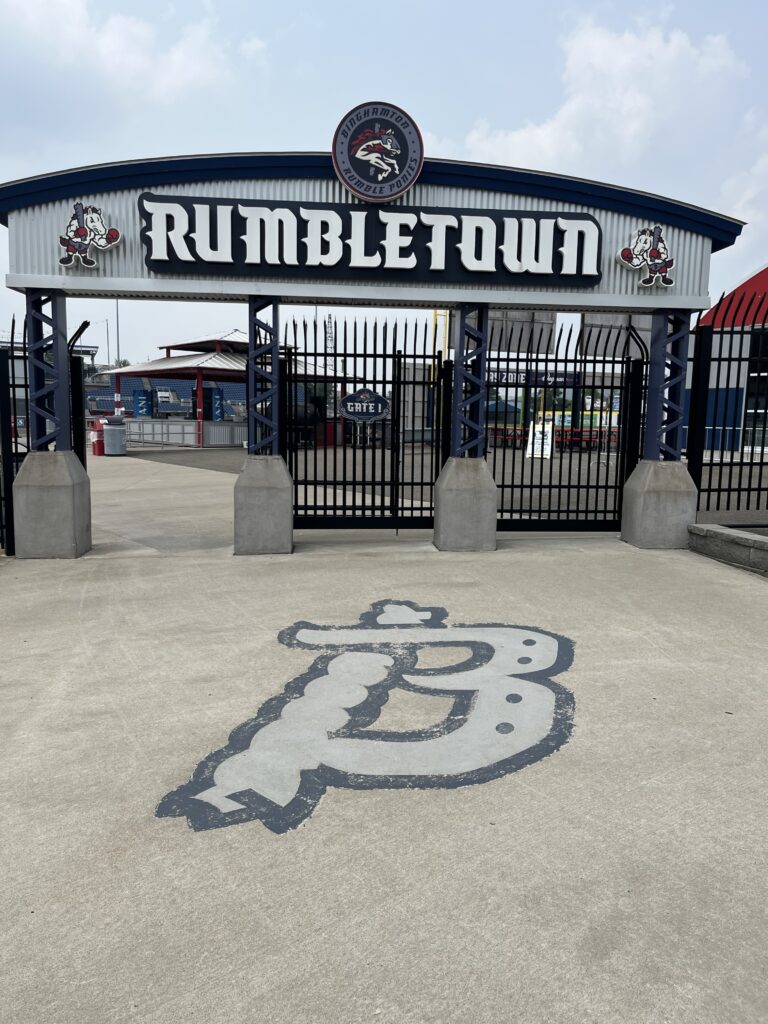
Being a hockey dad means you’re traveling a lot and going/passing through places you may not normally travel. While you may be tired and want to go home after a tournament, sometimes it’s well worth making stops along the way.
Being the avid New York Mets fan I am, my family opted to stop in Binghamton. It made sense as a stop to stretch, eat, and of course, take in Mirabito Stadium.
One thing to know right off the bat is it’s pronounced MER-AH-BIT-TO. A local quickly corrected me when I mispronounced it.
More importantly, the ballpark is open everyday. I found that out when I mentioned to a security guard that I owned this site and was an editor at MMN and I was hoping to walk around the park. His response was, “Okay, well, everyone can walk around as long as they stay off the field.”
Right off the bat, the ballpark has that minor league feel we lose somewhat with the Brooklyn Cyclones. There’s not a bad seat in the house, and you’re right there for all of the action.
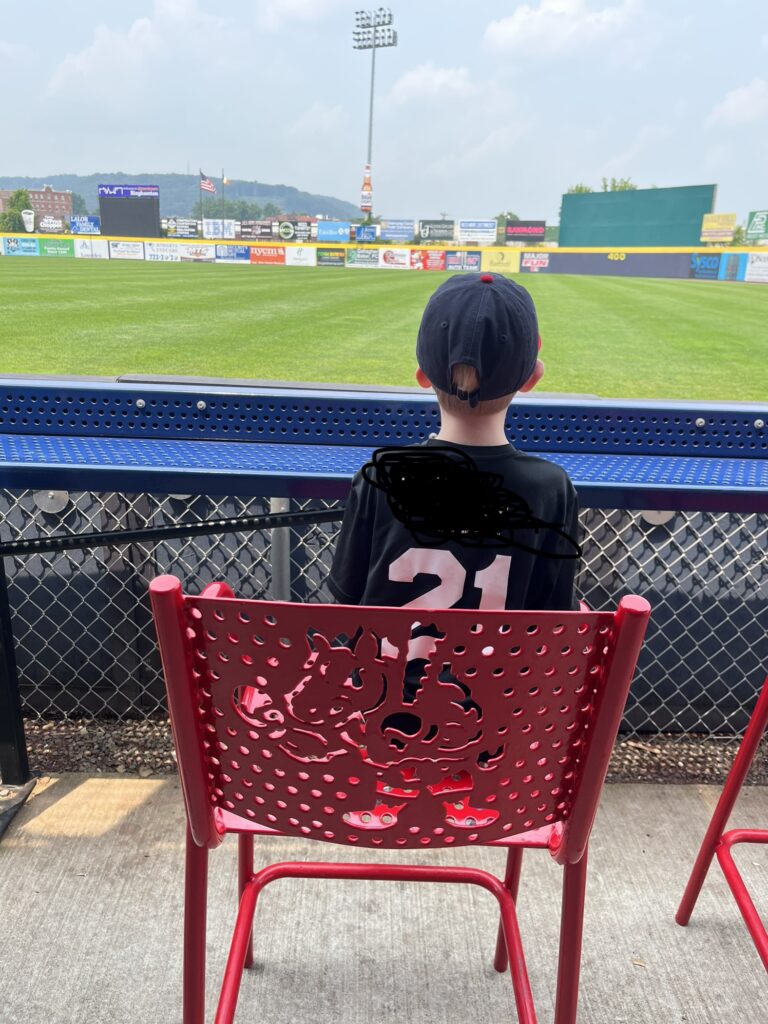
Rowdy the Rumble Pony on the outfield high top chairs was a nice touch. A nice touch describes much of the ballpark which embraces its own history as well as their affiliation with the Mets.
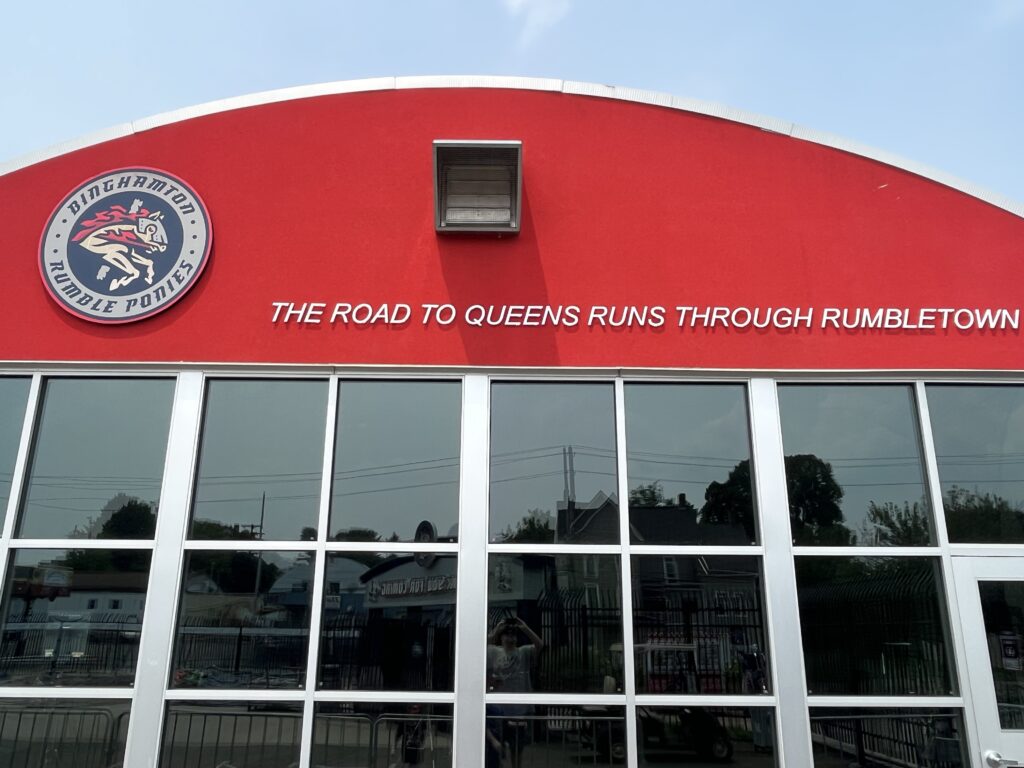
The bullpen carries the monitor “The Road to Queens Runs through Rumbletown.” That was certainly true for current Mets pitchers Grant Hartwig, David Peterson, and Drew Smith. It may also hold true for current Rumble Ponies like Christian Scott and Dominic Hamel.
In terms of the history, Binghamton has a “Binghamton Baseball Shrine” honoring all the Binghamton players of yesteryear. It’s there you are reminded Binghamton hasn’t always been a Mets affiliate.
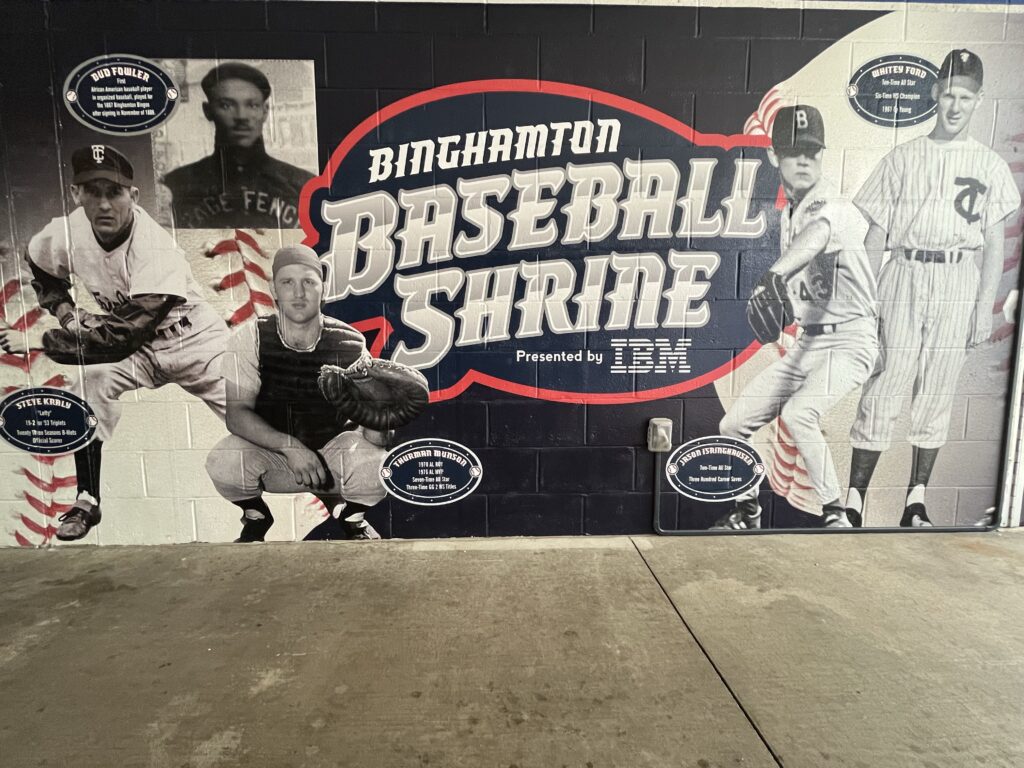
As you can see, most of the players were before the Mets even existed. You see names like Whitey Ford and Thurmon Munson. You can see the Mets feel and acknowledgement with Jason Isringhausen on the far right.
For those wondering where David Wright is, don’t worry, he’s there. He just couldn’t make the main image and is instead off to the side on the door.
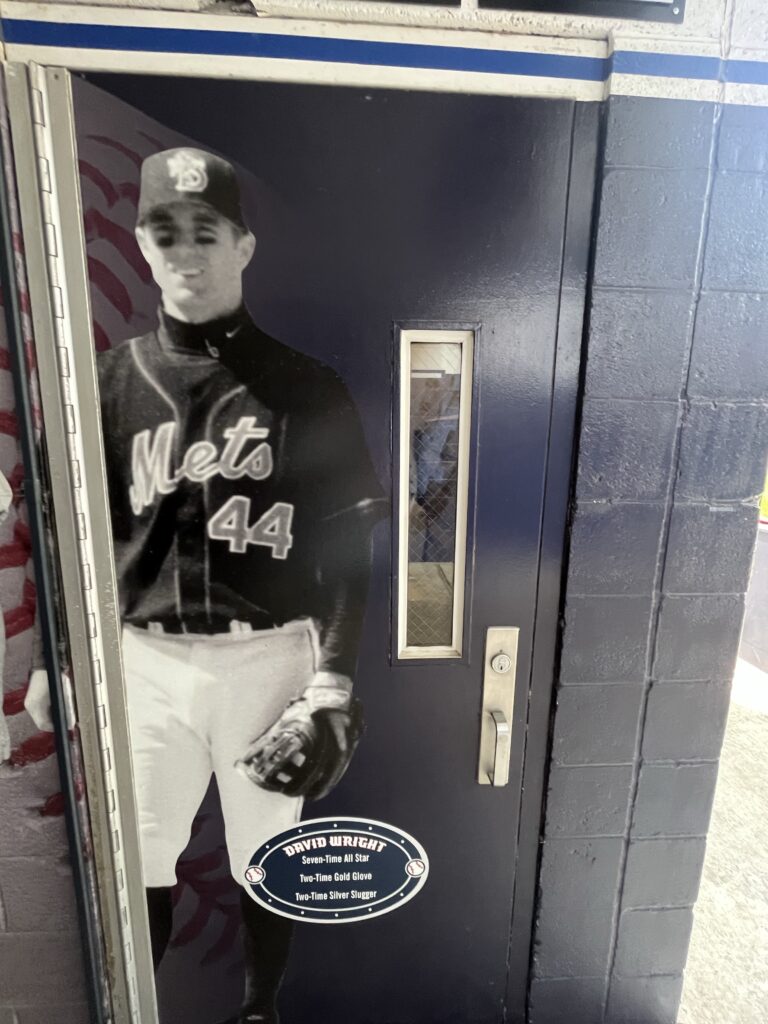
As odd as it was seeing him off to the side, it was even stranger seeing him with the number 44. For those that remember, Wright wanted to wear 4 (he didn’t ask for it) until Charlie Samuel decided Wright should wear 5 for Brooks Robinson and George Brett.
Shockingly, Samuel didn’t remember Robin Ventura of Grand Slam Single Fame. But, I digress.
Unfortunately, the Baseball Shrine is out of the main view, but it is en route to the gift shop. On the way, you will also see things like the lineups and league leaders (Eastern League and MLB).
The gift shop has what you’re really looking for with hats, jerseys, cards, and of course, stuffed animal mascots. You can get the jerseys personalized (but not t-shirts). It’s all reasonably priced with discounted winter items. I walked away with a cap.
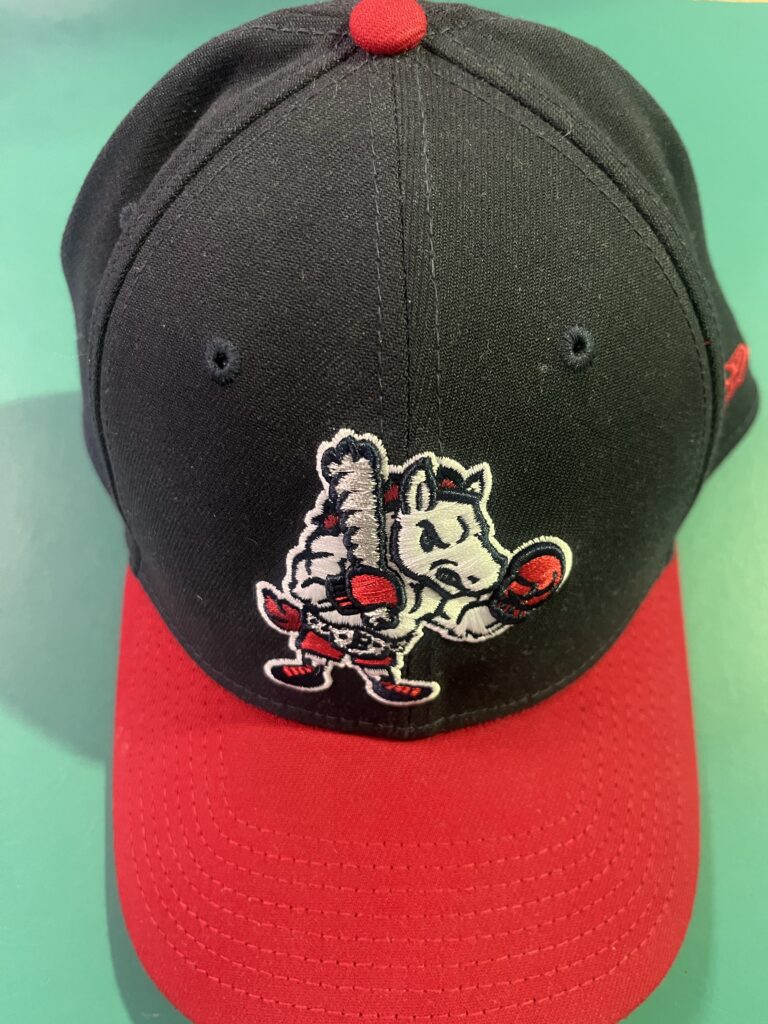
The only downside of the trip to the ballpark was it was not a game day. That said, the staff was great, and my kids had a blast running through the park. Certainly, there will be a trip back to Binghamton to catch a game or two.