With Mike Piazza having been elected into the Baseball Hall of Fame, it does not appear there will be another player who will be inducted into the Hall of Fame as a Met until Carlos Beltran is eligible. Still, there are players with Mets ties on this year’s Hall of Fame ballot. Can you name them? Good luck!
Jeff Kent, Gary Sheffield, Billy Wagner, Mike Cameron, Melvin Mora
To paraphrase the late great Ralph Kiner, I wish everyone on this blessed Thanksgiving a Happy Birthday!
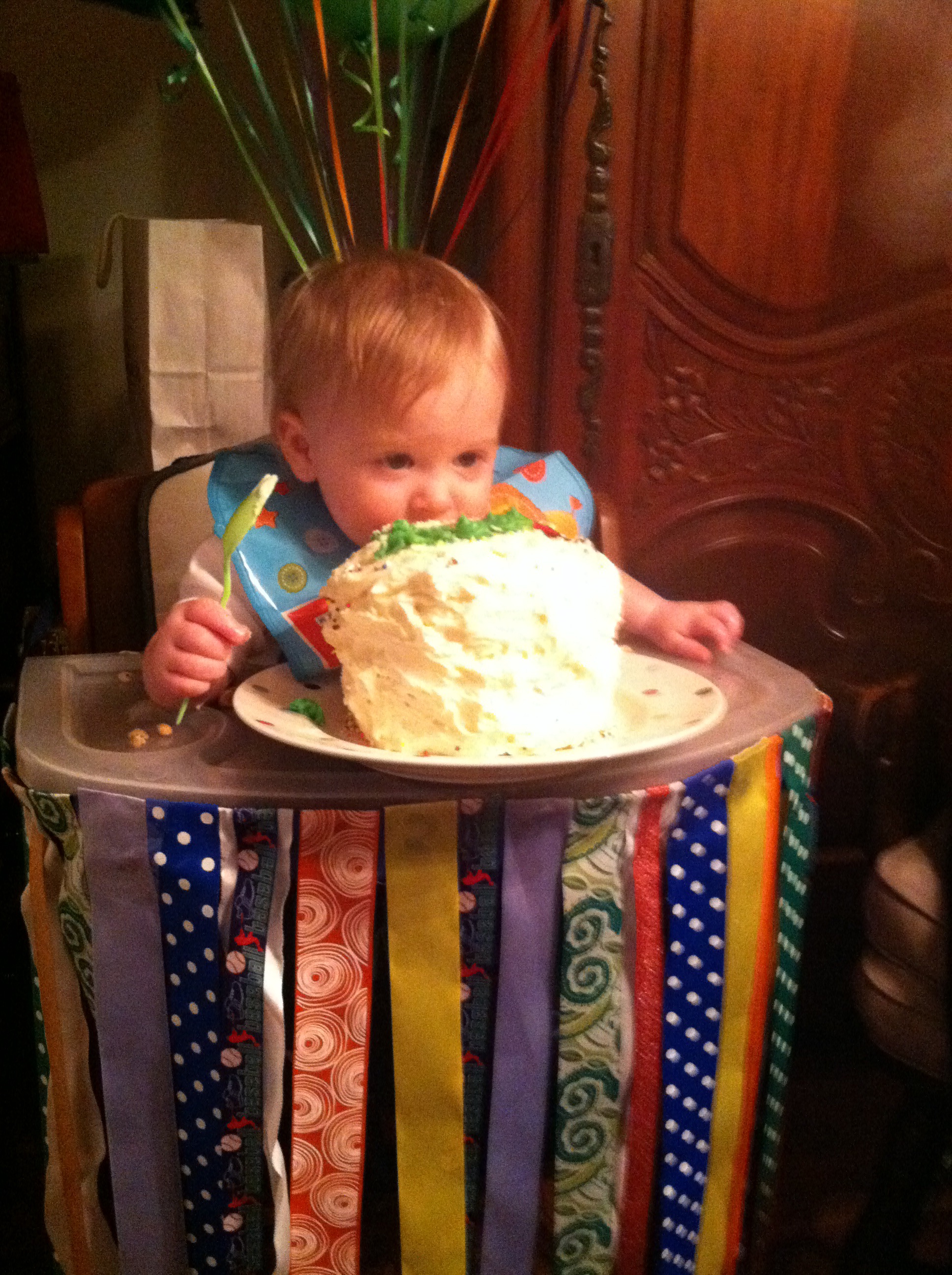
My little guy was born the day before Thanksgiving, and for our first meal as a family, we had pizza and pasta (what the hospital offered).
His first birthday was on Thanksgiving.
As a result, each Thanksgiving is special. It’s a reminder that the holiday was the first full day our family was a family. It’s also a milestone on how much my little guy has grown.

Happy Thanksgiving.
Last year, I put together a Christmas shopping list for toys I either knew my son wanted or for items I thought would be good for a two year old. Looking over the list, some of the items are actually still good items to purchase for a three year old. Notably, I would say my son has gotten tremendous use out of his Thomas Table, and I presume he will continue to do so in the years to come. I know it is a big ticket item, but it has been worth every penny we spent on it (especially since we got it for half-price on Black Friday).
One note to keep in mind, avoid this year’s big toy if at all possible. If you have been in Toys R Us, you know the toy I’m referring to is the Sky High Bridge Jump Set. When assembled, this toy is eight feet long! It is going to dominate your living room, play room, basement, etc. With that in mind, you cannot keep it out all of the time, which creates too much stress and frustration. Just think of the amount of times you are going to have to assemble and disassemble it. Then keep it mind, it is the Track Master (motorized Thomas set) meaning your standard wooden Thomas cannot be used with it. Again, avoid it at all costs.
While I discourage that, here are some toys, I wholeheartedly recommend:
- Thomas Minis and at least one carrying/storage case.
- Thomas Minis Motorized Raceway
- Wooden Railway Expansion Packs and Sets
- Tumble Train
- Disney Pixar Cars sets or Hot Wheels
- Cars Playsets
- Busy Books
- Phonics Books
- Tricycle (preferably one you can hold onto)
- Big Wheels
- Scooter
- Roller Skates
- Helmet
- Puzzles
- Mr. Met
Not on this list, but also recommended is Play-Doh, Legos and Duplos, and books. Always, lots and lots of books for kids. In terms of books, I personally recommend a collection like you will see with Dr. Seuss. This permits you to get a number of books at a fraction of the cost, and it permits you to try to get your kid to read more than just one story over and over again.
Two other things to keep in mind: (1) you will need batteries; and (2) you will need a place to put all of this stuff. It may behoove you to give the carry kits as a gift or to get a new toy box.
While some of these items are more expensive, keep a look out for them at Toys R Us, Target, Walmart, Amazon, etc. this Black Friday and beyond. While you are out there this Black Friday, look for toys your child can use next year (if you have the storage space). You will be thankful for every penny you save on stuff like this you were likely going to buy anyway.
Throughout the season, I attempted to grade the different Mets players performances for each month of the season. In determining the year end grades, the aggregate of the monthly grades given was considered, but it wasn’t conclusive. For example, one player’s awful month could be more than offset by having an incredible month. Also, those decisions were made in the heat of the moment. There has been a cooling off period in giving these finals grades, and with that, there is time for reflection. It should also be noted the Wild Card Game did have some impact on these grades as that game was part of the story of the 2016 Mets. Overall, the final grades assessed considered the monthly grades, but also took into account that player(s) overall impact on the Mets season (good or bad). For the ninth set of grades, here are the other Mets relievers:
This was the second year of his career, and to date, he has yet to carve out a role for himself. The main reason for that is Terry Collins has used him in every sort of role imaginable. He has been used to bail the Mets out of a bases loaded no out jam. He has been used as a set-up man in the seventh and eighth innings. He has closed out a game. He has also been called on to pitch over three innings in a game. Without looking it up, it is safe to say Robles was the only pure reliever this year to throw a pitch in every inning this season. Essentially, Robles has become the Mets version of Ramiro Mendoza.
Robles was having a great year for himself too before Collins over-worked him. In a one week span, Robles threw 127 pitches while making three appearances of over two innings. Robles next appearance after that? Well, it was four days later, and it was a two inning effort that needed Robles to throw 33 pitches. By late August, he was spent having made many more appearances and having thrown many more pitches than he had his entire career. Overall, Robles was 6-4 with a 3.28 ERA and a 1.352 WHIP.
Who knows what’s in store for Robles in 2017? Whatever it is, we can reasonably assume he will perform well in that role.
With Blevins injured in 2015, the Mets had a long search for a LOOGY that never materialized. In 2016, we all got to see what the Mets were missing as Blevins had a good year. Overall, Blevins made 73 appearances going 4-2 with a 2.79 ERA and a 1.214 WHIP. As luck would have it, Blevins would actually have reverse splits for the first time in his career.
Right-handed batters were only able to hit .182/.266/.345 off of Blevins while left-handed batters hit .255/.313/.324 off of him. Those numbers are usually reversed, and in reality, right-handed batters typically hit him much harder than that. This speaks to the strides Blevins made in becoming more than just a LOOGY. He became a pitcher that can be relied upon to pitch a full inning. It increased not just his value to the Mets, but also his free agent value.
Gilmartin went from an important piece of the Mets bullpen in 2015 to having a lost year. He began the year in AAA as a starter, but by the end of the year, it would be unclear what his role with the Mets would be in the future.
Initially, Gilmartin succeeded as a starter, but he would be called up to the Mets to pitch out of the pen. He would be used on three days or less of rest. Initially, he pitched well out of the pen for the Mets encouraging the team to do it more. As a result, his numbers suffered, and he missed part of the year with a shoulder injury. When it became time for the Mets to go to the minor leagues for starting pitching depth, Gilmartin was no longer an option on that front. When the Mets were desperate enough in September to give him a start, he wouldn’t make it out of the first inning.
Overall, Gilmartin made 14 appearances going 0-1 with a 713 ERA and a 1.585 WHIP. After a year like this, it will be interesting to see what role, if any, Gilmartin has on the Mets in 2017.
It appears that Goeddel may be the Eric Campbell of relief pitchers. There are many people who point to a number of statistics to say he should be a capable major league player. However, as the sample size grows and grows, his performance suffers as do his numbers. In 36 appearances this season, Goeddel was 2-2 with a 4.54 ERA and a 1.138 WHIP. This was a result of him becoming more hittable and his issuing more walks. With all that said, there is still hope for him as he did post a 9.1 K/9. Despite that, he looks like he will be best suited to starting the year in the minors.
Josh Edgin C-
In Edgin’s first year back from Tommy John surgery, he did not regain his velocity, and he had some trouble with his control. Those two issues combined led to him issuing more walks and to batters getting more hits off of him. In his 16 appearances for the Mets, he would to 1-0 with a 5.23 ERA and a 1.548 WHIP.
These are ugly numbers indeed, but there was some good news behind those numbers. Edgin, who was supposed to be the Mets LOOGY entering 2015, did limit left-handed batters to a .235/.300/.235 batting line. In that essence, Edgin proved he could handle the role as a LOOGY, and it appears the Mets just might given him that chance in 2017.
Josh Smoker C+
Here is what Smoker is: he is a fastball throwing left-handed pitcher that racks up strikeouts. He is not a pitcher that can left-handed batters out, nor is he a pitcher that should ever pitch more than one inning. Collins inability to recognize that led to Smoker’s numbers being worse than they could have been. Keep in mind, Smoker was called upon to go more than one inning, three times, and on each occasion he allowed a home run.
Overall, Smoker was 3-0 with a 4.70 ERA and a 1.304 WHIP. Most impressively, Smoker struck out 14.7 batters per nine innings. With those strikeout numbers, Smoker belongs in a major league bullpen, and chances are, we may very well find himself in one next season.
All you need to know about his season is the Mets traded him away and gave the Pirates money to obtain Jon Niese, who was having the worst year of his career. When the Mets are giving other teams money to take players off their hands, you know a player was having a nightmare of a season.
Editor’s Note: the grades for April, May, June, July, August, and September/October can be found by clicking the links.
Throughout the season, I attempted to grade the different Mets players performances for each month of the season. In determining the year end grades, the aggregate of the monthly grades given was considered, but it wasn’t conclusive. For example, one player’s awful month could be more than offset by having an incredible month. Also, those decisions were made in the heat of the moment. There has been a cooling off period in giving these finals grades, and with that, there is time for reflection. It should also be noted the Wild Card Game did have some impact on these grades as that game was part of the story of the 2016 Mets. Overall, the final grades assessed considered the monthly grades, but also took into account that player(s) overall impact on the Mets season (good or bad). For the seventh set of grades, here are the Mets spot starters:
Familia would not repeat the dominance of his 2015 campaign, but still he would be among the best relievers in the game. He would set a new Mets record for most saves in a season, beating the record he shared with Armando Benitez. In fact, he led the majors in saves and games finished. He pitched more innings and made more appearances than any other closer. Overall, he was 3-4 with 51 saves, a 2.55 ERA, and a 1.210 WHIP. He was a deserving All-Star, and he cemented his place among the best closers in baseball. Time and again, he answered the call . . . until he didn’t.
In the Wild Card Game, admittedly a game the Mets do not reach without him, Familia was not up to the task. We can over-emphasize the three run homer hit by Conor Gillaspie, but that was just a part of an inning where Familia didn’t have his command, and he wasn’t fooling the Giants hitters. It was a tragic end to what was a good season for Familia.
Addison Reed A+
One thing that was lost during the 2016 season was the eighth inning was supposed to be a question mark with Tyler Clippard departing in free agency. We forget about this because Reed was just that great this season. In 80 appearances, he was 4-2 with a 1.97 ERA and a 0.940 WHIP. Overall, he probably was the best relief pitcher in the National League. He combined with Familia to create the best 8-9 combination in the major leagues, and together, they walked a tight rope night-in and night-out. With no margin for error, they made each game a seven inning game, and they were among the biggest reasons the Mets made the postseason.
Henderson’s 2016 season is an example of why baseball is cruel. After losing almost two full years due to shoulder injuries, he not only made the Mets out of Spring Training, but he was also handed the seventh inning job. In April, Henderson excelled with his 95+ MPH fastball. He was helping turn it into a six inning game with Reed and Familia behind him. Then disaster struck.
After throwing a career high 34 pitches, Terry Collins would put him back in there a day game after a night game. Collins’ excuse was it was a must-win game. It was April 13th. Henderson had nothing that day, and he would get lifted after loading the bases (Hansel Robles got out of the jam). After that game, Henderson lost a bit off his fastball, and he would eventually need a long stay on the disabled list with a shoulder issue. Even with the stay on the disabled list, he was never the same. A promising year ended with him going 2-2 with a 4.11 ERA and a 1.371 WHIP.
Salas came to the Mets at the waiver trade deadline, and he had a similar effect that Reed did for the 2015 Mets. Essentially, Salas locked down the seventh inning, and he allowed the Mets to pull back a bit on the usage of Reed and Familia. He responded well to the workload and the Mets pitch framing. Overall, he would make 17 appearances going 0-1 with a 2.08 ERA and a 0.635 WHIP. The Mets and Salas should be interested in a reunion this offseason.
Editor’s Note: the grades for April, May, June, July, August, and September/October can be found by clicking the links.
Much of the societal blames that goes around now is the fact that there is a generation of children who grew up receiving a trophy or medal no matter what they do. This isn’t completely hyperbole. Do a quick Google search, and you will find different articles espousing the theory.
It is a concept that is strange for me because I remember in my local Little League only the top three teams received a trophy. I also remember the size of the trophy depended upon your standing. I remember in CYO trophies were only awarded for first place and for the team that displayed the best sportsmanship. In soccer, you only received medals for winning the season or tournaments. Personally, I never received or really even saw a participation trophy.
That changed when my son finished his first stint in soccer.
Now, my son did not play on a team. Realistically, there is no way you can form a team of two and three year olds. It is an impossible task. Getting them to sit is an accomplishment. Making sure they don’t use their hands to stop the ball before kicking makes you Vince Lombardi. The whole concept of toddler soccer is to provide an environment where you can introduce some of the basics of the game while making it fun for them. It is part of the reason why I was shocked that my son received a medal at his last session.
The medals were handed out by the coach after each of the kids scored a goal. To that end, the kids actually had to accomplish something in order to receive the medal. Still, it’s not like it was a hard fought season where they overcome all comers to become champions. No, these were little kids who were frankly just goofing around. In the moment, I was a bit surprised the medals were handed out. When I saw the look on my son’s face when he got his medal, I understood why:

My son was beaming as were most of his friends. They were all excited because they felt like they accomplished something. And you know what? They did. They learned how to play soccer. Remember with kids this age, we heap praise on them for anything positive thing they do. Giving them a medal for learning how to play soccer and scoring a goal is no different.
So yes, at two years of age, medals are appropriate. It gives a child a sense of accomplishment, and it gets them more interested in sports. Since that day, he has been more interested in playing soccer and baseball because he wants to earn another medal. Instilling a sense of drive and purpose is a good thing.
Overall, medals are appropriate for two and three year olds. Now, when they start playing organized games, the need for medals goes by the wayside. At that point, medals are only for the victors.
With the Mets adding Gavin Cecchini to the 40 man roster to sit on the bench as the Mets are chasing down a Wild Card spot, the team had one less decision to make on who should be added to the 40 man roster to protect them from the Rule 5 Draft this offseason. Even if the Mets didn’t add Cecchini now, he was going to be added in the offseason. Cecchini is too valuable a prospect, and he would be snatched up immediately in the Rule 5 Draft.
Cecchini was not the only player the Mets were going to have to make a decision on this offseason. In fact, the Mets have to make a decision on 66 different prospects about whether or not they should be added to the 40 man roster to protect them from the Rule 5 Draft. Here is a review of some of the more notable Mets prospects that need to be added to the 40 man roster in order to be protected from the Rule 5 Draft:
AMED ROSARIO
SS Amed Rosario (Advanced A & AA) .324/.374/.459, 24 2B, 13 3B, 5 HR, 71 RBI, 19 SB
Yes, if it hasn’t been apparent this entire year, Rosario is in a class all by himself. If he’s not added to the 40 man roster someone is getting fired.
ARIZONA FALL LEAGUE
1B/3B Matt Oberste (AA) .283/340/.409, 21 2B, 2 3B, 9 HR, 54 RBI, 1 SB
One issue that has plagued Oberste his entire minor league career is he has to fight for at bats as he is usually behind a bigger Mets prospect. That has been literally and figuratively Dominic Smith (who is not yet Rule 5 eligible). Oberste was an Eastern League All Star; however, the issue that is always going to hold him back is the fact that he is a corner infielder that does not hit for much power. Most likely, Oberste will not be added to the 40 man roster.
CF Champ Stuart (Advanced A & AA) .240/.314/.349, 12 2B, 7 3B, 8 HR, 34 RBI, 40 SB
Stuart is an elite defensive outfielder that has speed on the bases as evidenced by him stealing 40 bases this season. The issue with Stuart is he is a maddening offensive player. He went from hitting .265/.347/.407 in 71 games for Advanced A St. Lucie to hitting .201/.264/.261 in 43 games for AA Binghamton. While he certainly has the tools to possibly be a big leauger one day, he’s too far away at this point. Also, with teams putting more of a premium on offense than defense, it’s likely he will not be protected, and he will go undrafted.
C Tomas Nido ( Advanced A) .320/.357/.459, 23 2B, 2 3B, 7 HR, 46 RBI, 0 SB
This year was a breakout season defensively and offensively for the Florida State League batting champion. Normally, with Nido never having played a game in AA, the Mets would be able to leave him unprotected and be assured he wouldn’t be drafted. However, with catcher being such a difficult position to fill, it’s possible a bad team like the Braves takes a flyer on him and keeps him as the second or third stringer catcher all year. It’s exactly how the Mets lost Jesus Flores to the Nationals many years ago.
SP Marcos Molina 2015 Stats (Rookie & Advanced A) 9 G, 8 GS, 1-5, 4.26 ERA, 1.35 WHIP, 7.9 K/9
Molina did not pitch for the Mets organization for the entire 2016 season as he was recovering from Tommy John surgery. The Arizona Fall League will be his first time facing batters in a game since his eight starts for St. Lucie in 2015. It’s likely he will go unprotected and undrafted.
ARMS THAT COULD HELP IN 2017
RHP Paul Sewald (AAA) 56 G, 5-3, 19 saves, 3.29 ERA, 1.20 WHIP, 11.0 K/o
In many ways, it is surprising that a Mets bullpen that was looking for an extra arm never turned to Sewald. While he struggled to start the season like most pitchers transitioning to the Pacific Coast League do, Sewald figured it out and had a terrific second half with 10 saves, a 1.85 ERA, and a 0.95 WHIP. Sewald should be protected. In the event he isn’t, he should be as good as gone.
RHP Beck Wheeler (AA & AAA) 47 G, 0-3, 6 saves, 5.98 ERA, 1.62 WHIP, 12.1 K/9
Wheeler went unprotected and undrafted last year, and based upon the numbers he put up in his time split between Binghamton and Las Vegas, it appears the same thing will happen this year. The one reservation is like with the Braves interest in Akeel Morris, teams will always take fliers on guys with mid 90s fastballs who can generate a lot of strikeouts. It just takes one team to think they can help him reduce his walk rate for him to go in the Rule 5 draft.
RHP Chasen Bradford (5 saves, 4.80 ERA, 1.48 WHIP) – Bradford regressed statistically from last year in large part because he is a sinker/slider pitcher that pitches to contact. On the bright side, he walks very few batters meaning if you have good infield defense, he will be a successful pitcher for your team. His numbers should scare off a number of teams in the Rule 5 draft just like it did last year.
RHP Ricky Knapp (Advanced A & AA) 25 G, 24 GS, 13-6, 2.69 ERA, 1.14 WHIP, 6.3 K/9
Knapp started the year in St. Lucie, and he finished it with a spot start in Las Vegas. Knapp doesn’t have any plus pitches, but he gets the most out of all of his pitches because he is excellent at hitting his spots. He is a very polished product that is best suited to being a starting pitcher. Since he doesn’t strike out many batters, teams will most likely pass on him in the Rule 5 draft.
RHP Luis Mateo (AA & AAA) 51 G, 4-4, 1 save, 2.69 ERA, 1.31 WHIP, 7.0 K/9
He’s a fastball/slider pitcher with a low 90s fastball that generates a fair share of groundball outs while keeping the ball in the ballpark. While his ERA should entice teams, his WHIP and strikeout rate may keep them away just like it did last year when the Mets left him exposed to the Rule 5 draft. He will most likely begin next year in AAA.
RISING PROFILES
2B/3B/SS Phillip Evans (Advanced A & AA) .321/.366/.460, 30 2B, 0 3B, 8 HR, 41 RBI, 1 SB
The Eastern League Batting Champion certainly raised his profile with a much improved offensive season. He’s starting to become more selective at the plate and learn how to be less of a pull hitter. The main issue for Evans is he may not have a position. While he can make all the plays at the infield positions, he lacks range to be a solid middle infielder. He also lacks the arm strength and power numbers you would want at third base.
RHP Chris Flexen (Advanced A, AA, AAA) 25 GS, 10-9, 3.56 ERA, 1.31 WHIP, 6.4 K/9
Flexen appears to be in the mold of a typical Mets pitching prospect in that he has a high 90’s fastball and a good slider. Despite the repertoire, he is not generating a lot of strikeouts right now. On the bright side, he does generate a number of ground balls while limiting home runs. He was rumored to be part of the initial Jay Bruce trade that fell apart due to an unnamed prospect’s physical (does not appear to be him). A second division club like the Reds could take a flyer on him and put him in the bullpen for a year to gain control over him despite him never having pitched at a level higher than Advanced A St. Lucie.
RHP Tyler Bashlor (Full Season & Advanced A) 54 G, 4-3, 2.75 ERA, 1.24 WHIP, 11.8 K/9
While the 5’11” Bashlor is short on stature, he has a big arm throwing a mid-90s fastball and a hard slider which he used to dominate in the Sally League. Bashlor used these pitches to strike out 11.8 batters per nine innings. Like Flexen, there is danger exposing a big arm like this even if the highest level of experience he has is four games for Advanced A St. Lucie.
RHP Kevin McGowan (Advanced A & AA) 42 G, 4 GS, 2 saves, 2.35 ERA, 1.09 WHIP, 8.9 K/9
McGowan is a fastball/changeup pitcher that still needs to develop a breaking pitch. While that fastball/changeup combination has been good enough to get batters out at the lower levels of the minor leagues, he is going to need another pitch if he is going to progress as a pitcher.
DISAPPOINTING SEASONS
RF Wuilmer Becerra (Advanced A) .312/.341/.393, 17 2B, 0 3B, 1 HR, 34 RBI, 7 SB
Around the time of the Rule 5 Draft last year, the debate was whether a bad team like the Braves would take a flyer on Becerra just to get the promising young outfielder into their organization. Unfortunately, Becerra would have a shoulder injury that would rob him of his budding power. More importantly, that shoulder injury would require surgery ending his season after just 65 games.
1B/3B Jhoan Urena (Advanced A) .225/.301/.350, 17 2B, 2 3B, 9 HR, 53 RBI, 0 SB
With the emergence of David Thompson, Urena was pushed from third to first. However, that isn’t what was most troubling about his season. In fact, many questioned whether he could stay at third given his frame. The issue was the switch hitting Urena stopped hitting for power this season. With his not hitting for power, Rosario’s best friend in the minors should go undrafted in the Rule 5 Draft.
LHP Paul Paez (Advanced A & AA) 34 G, 4-1, 3.88 ERA, 1.20 WHIP, 8.9 K/9
This year Paez failed to distinguish himself by not pitching particularly well for St. Lucie and then struggling in Binghamton. He only has a high 80’s fastball and lacks a true swing and miss breaking pitch. While lefties hitting .308 off of him this year, he may not even have a future as a LOOGY in a major league bullpen.
NEEDS TIME TO DEVELOP
OF Patrick Biondi (Advanced A) .271/.352/.332, 17 2B, 2 3B, 0 HR, 34 RBI, 26 SB
While Biondi’s stats look good on the surface, it should be noted at 25 years old, he is old for the level. On the bright side, Biondi has speed and is a good defender in CF. However, until he starts getting on base more frequently, he will not be considered for the 40 man roster.
RHP Nabil Crismatt (Short & Full Season A) 13 G, 7 GS, 1-4, 1 Save, 2.47 ERA, 0.88 WHIP, 10.1 K/9
Crismatt is only 21, but he is mature in terms of his ability to control his changeup and curveball and throw them at any point in the count. Couple that with a low 90s fastball that could gain velocity as he ages, and you have someone who has the repertoire to be a major leaguer. However, considering he hasn’t faced stiff competition yet in his career, he is nowhere ready for the majors, at least not yet.
2B/3B/SS Jeff McNeil 2015 Season (Advanced A & AA) .308/.369/.377, 18 2B, 6 3B, 1 HR, 40 RBI, 16 SB
Coming into the season, McNeil appeared to be more mature physically and at the plate. He seemed ready to begin hitting for more power while still being able to handle 2B defensively. Unfortunately, he would only play in three games this season for Binghamton before going on the disabled list needing season ending sports hernia surgery.
RHP Tim Peterson (Advanced A & AA) 48 G, 4-1, 2 saves, 3.03 ERA, 1.16 WHIP, 12.3 K/9
At each and every level Peterson has pitched, he has shown the ability to strike people out with a fastball that touches on the mid 90s and a plus curveball. The only issue for him in his career so far was his PED suspension in 2014.
AAAA PLAYERS
OF Travis Taijeron (AAA) .275/.372/.512, 42 2B, 5 3B, 19 HR, 88 RBI, 1 SB
Taijeron continued to do what he does best, which is get on base and hit for power. Despite a strong Spring Training and another solid offensive season, the Mets really showed no interest in calling him up to the majors. He will most likely go unprotected, but maybe this year a team out there desperate for some power in the outfield or on the bench will give him a shot.
2B L.J. Mazzilli (AA & AAA) .239/.320/.348, 18 2B, 6 3B, 5 HR, 43 RBI, 8 SB
Lee Mazzilli‘s son is a grinder out there who plays a decent second base. Unfortunately, it appears his bat will prevent him from ever getting a real shot to ever play in the big league.
PREDICTIONS
Guaranteed: Rosario
Likely: Flexen, Nido
Bubble: Bashlor, Knapp, McGowan, Sewald, Wheeler
As for the remaining players, the Mets may very well gamble exposing them to the Rule 5 Draft and potentially lose them to another team. It is also possible the Mets unexpectedly protect a player like Knapp. In any event, the Mets have a number of important decisions to make that can have far reaching implications.