Before tying a ribbon on 2016 and look forward to what the Mets have in store in 2017, it is time to take a quick look back at who the best Mets players were during the 2016 season. Can you name them? Good luck!
Noah Syndergaard, Jacob deGrom, Bartolo Colon, Steven Matz, Addison Reed, Jeurys Familia, Neil Walker, Asdrubal Cabrera, Yoenis Cespedes, Curtis Granderson
Until the 2016 season, Andrew McCutchen was considered a superstar, and given his part in the Pirates resurgence from their 21 consecutive losing seasons, he was one of the most important players in baseball. This is reflected in McCutchen finishing in the Top 5 in National League MVP voting for four consecutive seasons with him winning the award in 2013.
In his career, McCutchen is a .292/.381/.487 hitter who averages 24 homers and 87 RBI. With that type of production from a center fielder, the two years $18.75 million remaining on his contract is an absolute bargain. Arguably, this should make him the most untouchable player in baseball. That should go double when you consider the Pirates are a team that should compete for a playoff spot next year. Despite all of that, the Pirates have let it be known they are willing to trade McCutchen for the right price this offseason. What happened?
For starters, the 29 year old McCutchen had the worst year of his career in 2016. In 153 games, McCutchen hit .256/.336/.430 with 24 homers and 79 RBI. For a player that averaged a 6.4 WAR from 2011 – 2015, McCutchen’s -0.7 WAR in 2016 was startling.
One major reason for the drop-off was McCutchen’s WAR and value was mostly driven by his bat. In reality, aside from 2013, McCutchen has never been an even decent center fielder. In his eight year career, he has averaged a -7 DRS and a -5.9 UZR in center. Over the last three years, those numbers were even worse with him averaging a -16 DRS and a -11.3 UZR in center. Last season was the nadir with his -28 DRS and -18.7 UZR. Overall, these numbers don’t suggest, they scream McCutchen belongs in a corner outfield position.
Now, it has been suggested McCutchen is being positioned too shallow in center, and that has had an impact on his defensive metrics. As a point of reference, the Chicago Cubs moved Dexter Fowler deeper in center field in 2016, and the results were notable. Fowler went from a -12 DRS and a -1.8 UZR in 2015 to a 1 DRS and 1.0 UZR in 2016. While one year defensive metrics are typically unreliable, the results at least suggest there is room for improvement for McCutchen as a center fielder. The question is whether re-positioning him in center is enough, especially with McCutchen having previously dealt with knee issues that affected him at the plate and the field.
There may also be a reasonable explanation for his struggles at the plate last season. While unsubstantiated elsewhere, Pirates blog Rum Bunter suggested McCutchen was dealing with a wrist injury in the beginning of the season. Not knowing when it happened, it is at least plausible McCutchen was dealing with an issue whether it was the wrist, his knees, or some other undisclosed injury. Up until July 31st, McCutchen was hitting .241/.311/.408 with 15 homers and 43 RBI. After taking a few days off in the beginning of August, McCutchen seemed to return to the form we’ve expected from him. From August 5th to the end of the season, he hit .284/.381/.471 with nine homers and 36 RBI.
If you look at the end of the season McCutchen, you see some legitimate hope he could bounce back to the MVP level player he has been for most of his career. Still with knee and other issues, do you gamble on a 30 year old player regaining his superstar form, or do you gamble on your own prospects?
With Rob Biertempfel of Trib Live reporting the Pirates asked the Nationals for Lucas Giolito, who was part of the Adam Eaton trade, and Victor Robles in exchange for McCutchen, you know the price to obtain McCutchen is going to be steep. A comparable offer for the Mets would be Steven Matz and Michael Conforto, which is a price the Mets may not be willing to pay.
Nor should they. Ultimately, the litmus test is whether you are willing to gamble six years of Conforto for two of McCutchen. Do you believe that Conforto can similarly rebound from his wrist injury in the same way McCutchen did in August? Do you believe the McCutchen can improve defensively at 30 years old? Do you believe McCutchen would be better suited to center field than either Conforto or Curtis Granderson?
Even if you answer yes to all of these and many other non-posed questions, are you willing to include a potential front line starting pitcher and possibly other pieces to find out if you’re right? That’s the dilemma in trading for McCutchen. If you’re right, you could have an MVP player that could help the Mets win a World Series. If you’re wrong, you’ve given up a huge part of your future for something you already had in Granderson.
Editor’s Note: this was first published on Mets Merized Online.
In 2015, the Mets not only won the National League East, but they went all the way to the World Series. During that wonderfully unexpected run, the team left a bevvy of left-handed relievers in their wake. Time and again, the team tried to solve their presumed issues with not having a left-handed reliever to no avail. Here is a look at all the left-handed relievers they went through that season:
- Josh Edgin – needed Tommy John surgery before the season began
- Jerry Blevins – appeared in seven games before suffering a broken arm
- Alex Torres – pitched to a 1.515 WHIP and was released on August 4th
- Sean Gilmartin – used as a long man in the bullpen due in part to his reverse splits
- Jack Leathersich – shuttled back and forth between New York and Las Vegas before his season ended due to him needing Tommy John surgery
- Dario Alvarez – appeared in six games before suffering a groin injury that cost him the rest of the season
- Eric O’Flaherty – 13.50 ERA and left off the postseason roster
The lack of the left-handed pitcher did not prevent this team from making it to the postseason or to going to the World Series. The main reason is that team’s right-handed relievers could pitch to left-handed batters. In fact, the batting lines suggests the right-handed relievers performed just as well as a LOOGY would:
- Jeurys Familia .214/.291/.325
- Tyler Clippard .137/.231/.237
- Addison Reed .253/.330/.368
- Hansel Robles .179/.287/.299
The moral of the story is that you do not need a left-handed pitcher to get out left-handed batters. Rather, you need pitchers who are effective at pitching against left-handed batters to get them out.
There are some caveats. First, the Mets did go with Jon Niese as the left-hander in the bullpen during the 2015 postseason, and he did get some big outs including a key strike out of Anthony Rizzo in the NLCS. Second, Blevins was an extremely important part of the 2016 bullpen. Without Blevins in the bullpen, it is quite possible the Mets do not get one of the two Wild Card spots. This creates a problem as Blevins is now a free agent – a free agent that is about to cash in on a terrific year.
So far, we have seen arguably less talented left-handed relievers get big contracts. Brett Cecil received a four year $30.5 million contract from the Cardinals. Marc Rzepczynski received a two year $11 million contract from the Mariners. Mike Dunn received a three year $19 million from the Colorado Rockies. According to Anthony DiComo of MLB.com, Blevins was already seeking a three year deal worth $5-$6 million per season. Based upon the contracts already handed out, it is easy to assume Blevins will get the deal he is seeking.
However, it should be noted that deal is likely not coming from the Mets. As already noted, Sandy Alderson does not want to give out multi-year deals to relievers. Furthermore, it does not not appear the Mets are interested in investing $6 million a year on a left-handed reliever. With that being the case, the Mets best chance might be to revert to the 2015 model thrust upon them.
From that team, Familia, Reed, and Robles still remain, and they are still effective as ever in getting left-handed batters out. Here were their stats from the 2016 season:
- Familia .239/.315/.313
- Reed .210/.264/.269
- Robles .179/.287/.299
There is also some promise with Edgin. Despite him not fully regaining his velocity after his Tommy John surgery, he still showed the ability to get left-handed batters out in a very small sample size. In 2016, he faced 20 left-handed batters, and he limited them to a .235/.300/.235 batting line.
Between, Familia, Reed, Robles, and Edgin, the 2017 Mets may already have sufficient bullpen depth to get left-handed batters out. Moreover, with the Mets resportedly wanting to cut payroll from where it currently stands, the team may be forced to stick in-house and instead seek a seventh inning reliever.
That is certainly a justifiable route because the bullpen as constructed already has enough depth to get left-handed batters out. As such, the team does not need to add a left-hander for the sake of adding a left-hander.
With Addison Reed and Jeurys Familia in the fold, the Mets have their eighth and ninth innings guys set up for next year. In 2016, that tandem was the best in baseball. However, it was also the most taxed. The duo pitched more innings than any other reliever combination in the major leagues. The main reason is that the Mets played many close games that necessitated Terry Collins going to the whip with them time and time again. It was needed in the regular season, but as we saw in September and the Wild Card Game, they were beginning to show some signs of fatigue. With that, obtaining a seventh inning reliever, preferably one with closing experience, should be a high priority this offseason.
With that in mind, the Mets should re-sign Fernando Salas.
Salas had a Reed-like impact on the 2016 Mets. In 17 appearances, Salas was 0-1 with a 2.08 ERA, a 0.635 WHIP, and a 9.9 K/9. With that, Salas completely took over the seventh inning, and he allowed both Reed and Familia some rest down the stretch. Understandably, between his usage and his statistics prior to joining the Mets, you could expect him to regress. That’s almost assuredly true of his 0.635 WHIP. However, his regression would not be as troublesome as one would have you believe because, like Reed, Salas has benefited tremendously from the Mets exceptional pitch framing.
Keep in mind, there was not change to Salas’ stuff or his pitching patters when he became a Met. It is similar to Reed who became a completely different pitcher when he became a Met. Before joining the Mets, Reed had a 4.20 ERA and a 1.275 WHIP. In Reed’s season plus with the Mets, he has a 1.84 ERA and a 0.957 WHIP. When Reed became a Met, he didn’t develop a new pitch or pitching patters. Rather, it was the Mets catchers getting the extra strike for him.
It is something Reed emphasized when he said of Travis d’Arnaud, “There’s been a couple of times just this season that I’ve went back and looked at video just because I wanted to see how low the ball was, and how good of a strike (d’Arnaud) made it look. He’s the best I’ve ever thrown to at doing that. Just the way he frames the ball, it’s unbelievable. He makes balls that are four or five inches below the zone look like they’re almost right down the middle by just the way he flicks his wrist. I couldn’t even tell you how he does it.” (ESPN.com)
Given the pitch framing having a similar impact on Salas, you could expect Salas to have a similarly terrific 2017 season. With that, Collins can be more judicious in how he uses both Reed and Familia. This would permit all three pitchers to be fresh come the stretch run to the 2017 postseason; and hopefully, dominant all the way up until the World Series.
Another important point is that pitching in New York is a completely different animal. Some guys can do it and others can’t. The best and most recent example of this was Antonio Bastardo. Prior to joining the Mets, Bastardo had a 3.58 ERA and a 1.198 WHIP. He spent 2015 with the Pirates, and he was 4-1 with a 2.98 ERA and a 1.134 WHIP. Those numbers were why the Mets gave him a fairly lucrative deal for a seventh inning reliever.
Sure enough, Bastardo was terrible with the Mets. Bastardo made 41 appearances with the Mets with a 4.74 ERA and a 1.420 WHIP. Things got so bad, the Mets actually welcomed back Jon Niese and the Mets actually giving the Pirates some money in the deal. Naturally, Bastardo pitched better with the Pirates with him having a 4.13 ERA and a 1.250 WHIP in 28 games for them.
Simply put, Bastardo is the risk you take when you sign free agent middle relievers who have never pitched in New York. At the time of the signing, no one knew if Bastardo could pitch in New York. Conversely, we found out that Salas absolutely could pitch in New York, and that he could pitch with a postseason berth on the line in New York. With that in mind, the Mets should make every effort to bring back Salas to pitch in the bullpen next year . . . regardless of what happens with Familia.
Editor’s Note: this was first published on Mets Merized Online
Team Italy is recruiting Michael Conforto to play for them in the World Baseball Classic. They have gone so far as to name Conforto to their preliminary roster, along with fellow Met Brandon Nimmo, despite not having heard back from Conforto regarding his willingness to play in the tournament.
By many accounts, it seems doubtful Conforto will play in the tournament. Earlier, Conforto had listened to his advisers in rebuffing Terry Collins‘ request that Conforto play Winter Ball. The decision was grounded in many factors included risk of injury and level of competition. Arguably, the same concerns would present itself with the WBC leading to Conforto ultimately deciding not to play for Italy.
That would be a mistake.
The first reason why it would be a mistake is Conforto would miss out on an opportunity to work closely with Mike Piazza. In 1998, Piazza struggled with the Mets, and he was booed by the fans. Piazza was able to overcome the booing, and he helped bring the Mets to the precipice of the Wild Card. In subsequent years, Piazza was the superstar who led the Mets to consecutive postseason appearances. He is also the first Mets position player to have his number retired and be inducted in the Hall of Fame.
Considering Conforto’s struggles in 2016, there are few people on this planet who can better help him than Piazza. Piazza understands what is means to struggle with the Mets, and how to overcome those struggles to become one of the best and most beloved players in Mets history. Essentially, Piazza understands what Conforto has gone through, and better yet, he understands what it takes to get to that next level. That next level is where Conforto wants to be as a player.
However, it is more than mental. Piazza has widely credited for Team Italy’s unexpected run in the 2013 WBC. Cubs first baseman, Anthony Rizzo said of Piazza, “In my opinion, he’s a Hall of Famer. When he opens his mouth, you listen. He just makes you so relaxed. He’d be a great hitting coach.” (USA Today).
While Piazza is not the hitting coach for Team Italy anymore, the effect Piazza has on players is well noted.
Speaking of Rizzo, another important factor is Conforto will get to experience being the focal point of an offense as he is bound to be one of the better players on Team Italy. Conforto is likely going to be pitched tough by some of the best pitchers in the world. As it stands, Italy is in Pool D with Mexico, Puerto Rico, and Venezuela. It’s already been confirmed that Oliver Perez, Roberto Osuna, Felix Hernandez, and Francisco Rodriguez, and Seth Lugo will pitch. As we have seen in year’s past, there will be many more quality pitchers Conforto will have to contend with in real pressure packed situations. That is a good thing for a player still developing into a middle of the order bat. It’s also better thatn getting on a bus to face another team’s AA, AAA, and AAAA pitchers.
Another factor for Conforto is the WBC gives him an opportunity to get out from the pressure of New York for a while and try to improve as a player. It could be helpful to get out from under the constant, and at times difficult, New York media, and go play for Team Italy. With Team Italy, it may be easier to focus on improving as a ballplayer. Furthermore, with coaches like Piazza, it may be helpful to hear another voice that can help him either mechanically or mentally.
Overall, there are many benefits for Conforto playing in the WBC. It is an opportunity that is in front of him, and it is one he should probably take, especially when you consider how much someone like Piazza can help him.
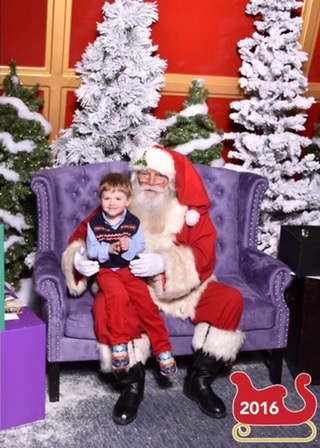
Tonight, Santa Claus’ North Pole Nine will cover the globe delivering joy to all that believe. And how could you not believe in a team this stacked? Look at the lineup!
- Rudolph, SS.299/.364/.458, 33 2B, 3 3B, 19 HR, 67 RBI, 25 SB
- Dashser, LF .260/.354/.466, 31 2B, 5 3B, 28 HR, 72 RBI, 86 SB
- Dancer, 2B .306/.438/.457, 17 2B, 3 3B, 19 HR, 77 RBI, 25 SB
- Prancer, CF .272/.344/.467, 23 2B, 2 3B, 23 HR, 75 RBI, 7 SB
- Vixen, RF .294/.385/.522, 30 2B, 2 3B, 30 HR, 99 RBI, 11 SB
- Comet, P 20-13, 2.89 ERA, 1.344 WHIP, 10.3 K/9
- Cupid, 3B .328/.401/.463, 37 2B, 3 3B, 13 HR, 86 RBI, 32 SB
- Donner, C .314/.355/.446, 8 2B, 11 HR, 56 RBI, SB
- Blitzen, 1B .313/.422/.597, 35 2B, 40 HR, 124 RBI, 4 SB
It is an unorthodox lineup, but this team always delivers in the clutch. One of the main reasons why is that each and every single one of these guys can absolutely fly out there. It is absolute magic to see them out there doing their work each and every Christmas Eve.
If you want to see them tonight, the action is being streamed courtesy of NORAD.
I hope Santa and the North Pole Nine bring you all the fun and excitement you are looking for this Christmas.
Since 2004, different Mets players have suited up to play Santa Claus at the Mets Christmas Party, and afterwards the player has had a disastrous season. This has led many to joke or hypothesize the Mets have a “Santa Curse.” Can you name the players who have been played Santa Claus at the Mets Christmas Party thereby taking their career into their hands? Good luck and Merry Christmas!
Mike Cameron, Daniel Murphy, David Wright, John Maine, Kris Benson, Mike Pelfrey, Jeff Francoeur, R.A. Dickey, Jenrry Mejia, Noah Syndergaard, Steven Matz
On a cold and blustery Christmas Eve night at Citi Field, faithful manager Terry Collins enters Fred Wilpon’s office.
Terry: I just wanted to stop on my way out to wish you and your family a happy holiday, and I just wanted to let you know I look forward to working with you and Sandy to help build a Mets team that can go to the World Series again.
Fred: What do you mean build?
Terry: Well, there are a few areas I was hoping to address. With Fernando Salas and Jerry Blevins free agents, we need a couple of relievers in the bullpen, and –
Fred: Relievers? I just gave you two guys last week!
Terry: I know, but those were minor league deals.
Fred: I don’t get it. After Madoff, I’ve done all I could do to get my money back, and now everyone wants me to just give it away.
Terry: Well, we do owe the fans.
Fred: Seriously?
Terry: Well, I guess not. Anyway, happy holidays, and I look forward to next season.
Fred: Bah!
Not long after Terry leaves, Fred Wilpon leaves Citi Field, and he begins his drive to Greenwich. He pulls up to a stately manor that hasn’t been renovated since 2008. He makes his way into the bedroom, and before he can turn on the lights, he hears a ghostly whisper coming from behind him. It sounds like his name, but he initially can’t quite make it out. Suddenly, as if out of nowhere a figure emerges.
Fred: No, it can’t be. Is that really you?
M. Donald Grant: It is.
Fred: But, you’re dead. How? How?
M. Donald Grant: I’ve come here to deliver a message.
Fred: What?
M. Donald Grant: Remember when I was alive, I won a World Series, and then I refused pay raises to everyone. Remember when I shipped Tom Seaver and everyone of value out of town?
Fred: All while keeping the team profitable!
M. Donald Grant: Yup, I mean no. No! I was wrong, and now I have to watch the 1962 Mets over and over again. But worse, I have to give the players raises after each and every game despite no one coming to the ballpark!
Fred: The horror.
M. Donald Grant: And if you don’t change, your fate will be worse than mine.
Fred: No . . . NO! . . . You’ve got to save me.
M. Donald Grant: Tonight, you will be visited by three spirits. Listen to them! Do what they say! Or you will be cursed for eternity.
And with that the apparition of Grant faded away leaving Fred frightened in his room. A few times he splashed cold water on his face and pinched himself to make sure he wasn’t dreaming. Still shaken, Fred made his way to bed. After a while, his fatigue got the better of his anxiety, and he faded to sleep. Then there was a loud noise like the roar of the crowd. It jostled Fred from his sleep. Still groggy, he looked out and couldn’t believe the figure before him.
Fred: No, it can’t be. Is it really you Gary?
Before Fred was Hall of Fame catcher Gary Carter. Back in 1985, when Fred had just a small interest in the team, the Mets traded for Carter in the hopes that he would put the Mets over the top. Eventually, Carter did with the Mets winning the 1986 World Series. Notably, Carter started the game winning two out rally in the bottom of the 10th to allow the Mets to force a Game 7.
Gary: It’s really me Fred. I’m now the Ghost of Baseball Past.
Fred: Am I dead?
Gary: No, you’re not. I’m here to show you what things used to be like before you changed the way you did business with the Mets.
With that Gary, took a swing of the bat creating a cloud of dust and smoke all over the room. As the dust settled, the Mets found themselves back in a sold out Shea Stadium.
Fred: What a dump!
Gary: You didn’t always think so. In fact, you used to love coming here. Back in the 80s, Shea Stadium was the place to be. Those Mets teams were stacked with players like me, Keith Hernandez, Darryl Strawberry, and tonight’s starter Dwight Gooden.
Fred: Those Gooden starts were something special. No one could beat us then, and we knew it. We never could quite capture the magic from those teams again, but that was something special.
Gary: This is how things used to be. It was always this way. You did it again when you signed Mike Piazza, except you didn’t just sign him. You surrounded him with good players like Robin Ventura and Edgardo Alfonzo. That team came close. You did it again with Carlos Beltran. You spent the extra dollar to get a truly great player. You then added players like Carlos Delgado and Johan Santana to try to get it done. It didn’t work, but the fans came. More importantly, everyone respected you for it.
Fred: But they don’t understand.
Gary: Let’s see what happened next.
With a blink of Fred’s eye, Shea Stadium is just a memory. As he reopens his eyes, he is back in Citi Field as it was before it was fully renovated. The fans were angry with the team. It was one thing that the ballpark didn’t fully honor Mets history; it was another that the Mets let Jose Reyes walk in the offseason without so much as an offer. It was an uninspiring 88 loss win team that was seemingly going nowhere.
Fred: When did we put the Great Wall of Flushing back in? Where are all the fans?
Gary: You didn’t. It’s 2012.
Fred: That was an ugly time. Fans constantly complaining and booing. The team and I were personally cash strapped. I had no idea what our future was or could be. Worse yet, no one seemed to understand. The fans, the players, the press. No one. The whole thought of this time is just too much to bear. I can’t . . .
Before Fred could finish the sentence, he was hit in the head by a foul ball off the bat of Daniel Murphy. Next thing Fred knew, he was awake, with a headache back in his bed in Greenwich.
Fred: Man, I really have to lay off the Shake Shack late at night. It gives me the strangest dreams. And man, just remembering those days just gives me a headache. I never want to get back to that point . . .
As the words left Fred’s lips, there was a strange noise. Fred looked over, and he sees beloved former announcer and Hall of Famer Ralph Kiner in what appears to be old set of Kiner’s Korner.
Fred: Ralph?
Ralph: Well hi everybody it’s Ralph Kiner, the Ghost of Christmas Present, on Kiner’s Korner. Well the Mets are in the middle of the offseason after the team failed to win the Wild Card Game. While the team acted quickly and brought back Neil Walker and Yoenis Cespedes, the Mets offseason has been marked by inactivity. Recently, Mets General Manager Sandy Alderson stated the Mets were going to have to move a contract like Jay Bruce or Curtis Granderson before they could sign additional players this offseason. We have Mets owner Fred Wilpon on to talk about it next.
Fred: Ralph?
Ralph: Welcome back to Kiner’s Korners. As you know Kiner’s Koners is sponsored by Rheingold – the Dry Beer!
Ralph: Hi Mr. Wilpon, welcome to Kiner’s Korners.
Fred: I’m not sure what exactly is happening here.
Ralph: Well, Mr. Wilpon, we’re here to talk about your team and what the 2017 roster will look like.
Fred: We’ve given Sandy free reign to do whatever he needs to do to put the best team on the field. We trust in his decision making, and we always demure to him on personnel decisions.
Ralph: Well Mr. Wilpon, there are not many that believe you. In fact, the fans will say that the team isn’t going to spend the money on the players like the Mets should. It reminds me back when I had won another home run title for the Pittsburgh Pirates, and I went to Branch Rickey to ask for a raise. During the meeting, Rickey denied me a raise saying, “We finished eighth with you, we can finish eighth without you.” From there of course, I was then traded to the Chicago Cubs. This is the same Chicago Cubs franchise that won their first World Series title since 1908. The Cubs were once defeated –
Fred: Okay, okay. No, we’re not spending any money until we move a contract. That’s just the way things work now. This isn’t the old days where Omar gets free reign.
Ralph: Well, the fans are angry the team isn’t spending money. And I remember as a player how much the team wanted to know the owner supported them. When the team had the support of ownership it had an effect in the clubhouse and the play on the field.
Fred: Let’s be honest. The fans will let me do whatever I want so long as we’re winning. With the team we have now, we’re going to fill the seats because we have Cespedes. We have free t-shirts. We get to hype up the starts of not just Matt Harvey, but also Noah Syndergaard. As for the players, the only thing they really care about is their salary.
Ralph: That’s not true. Here is a videotape of your captain David Wright.
A large screen appears on the set of Kiner’s Korner with an image of Wright at his home talking to Collins about the upcoming season.
Collins: I know it may be a little late, but I wanted to wish you and your family a Merry Christmas. And I wanted to let you know that we’re all pulling for you to get back out on that field.
David: It’s hard skip. I wake up in pain everyday. It was bad enough when it was just the stenosis, but now it is my neck too. I just spend all of my day rehabbing and working out. I do all these special exercises for my back and my neck. It’s almost 24 hours of pure hell. It’s made all the harder by the fact that every minute I spend working out is time away from my wife and daughter. Baseball has always been a sacrifice, and I love it. But it just gets harder and harder.
Collins: You know the whole team is behind you. If there is anything you ever need, you just have to ask. And if you feel as if you can’t go on, you’ll always have a place on my staff.
David: I can’t hang ’em up. Not yet. Not with this team. We’re so close. I’ve come so close to the World Series a few times in my career, and I’ve fallen short. I don’t know if I’ll ever feel right hanging it up without winning one.
Fred: This is costing me $20 million a year.
David: And it’s not just about me. I owe a World Series to Mets fans who have supported me my whole career. They’ve gone out and bought my jerseys. They’ve cheered for me. They’ve always been there for me. And more importantly, I owe it to the Wilpon family. I saw what happened with Reyes and the other players who left. They decided to keep me. They made me the face of the franchise and the team captain. I’ve loved being a Met, and the Wilpons made that possible.
Fred: I just never knew how much he cared and how appreciative he was.
Ralph: Time for another commercial break and word from our sponsor the Ghost of Christmas Future.
Everything turns to black like a television screen being turned off. At first, Fred sits there quietly unsure of what is happening. He then finds himself in a strange room with Darryl Hamilton wearing his black Mets jersey. The same jerseys the Wilpons wanted to help drum up fan interest and help increase revenues. At first, Hamilton says nothing. He just looks at Fred before gesturing for Fred to follow him.
Fred follows Darryl down a hallway. Eventually, an image of a badly beaten down Wright emerges. On the walls are different jerseys he wore in his career. A shelf displays all of his awards and his 2015 National League Pennant ring. Wright moves around the room but with great difficulty. Although still relatively young, he moves like an old man. He’s there with another person.
Woman: Look, this is not going to happen overnight. With the beating your body has taken you’re luck you’re even in position to walk.
David: I don’t care. I need you to get me to the point where I can dance again. There is nothing that is going to stop me from dancing at my daughter’s wedding.
Woman: Ok, but we need to take it slowly. You’ve had a number of injuries in your career, especially those last few. Doing things like dancing is going to come with some difficulty for you. The trick is to build everything up so you can do it again.
Fred: What, what happened to him?
Darryl only nods his head in the direction of the trophy case.
Fred: He never won? But we had Harvey and Syndergaard. We had Jacob deGrom and Steven Matz. We had Cespedes. Of course we won at least one. There is no way we let that core go without winning a World Series. Surely, we made a move to get that final piece at least one of those years.
David: On cold days like this, it really makes me wonder how wise it was sticking to the end of my contract rather than just medically retiring the way Albert Belle and Prince Fielder did. I really wonder if Prince has the same problems I have. Still, I would do it all over again because trying to win that ring was important not just for my career, the fans, and Fred.
Woman: What happened?
David: We were so close, but we shot ourselves in the foot in 2015. After that, we always just seemed one or two players short. We gave it the best we could, but it just wasn’t meant to be . . . .
As David drifts off, Darryl gestures for Fred to re-enter the dark hallway. The two make their way down before standing outside the Rotunda entrance to Citi Field. Nearby is a group of men putting up a few statues. In the parking lot adjacent to 126th Street, there are a number of moving vans.
Worker 1: Honestly, it is about time there was a Tom Seaver statue erected at Citi Field. I think adding the Piazza one as well was a nice touch.
Worker 2: Things have been a lot better around here with the new guys came in.
Worker 1: And ain’t no one going to miss the old group.
Worker 2: How can you? They let the whole thing fall apart.
Worker 1: Good riddance!
Fred: What is happening here? What old group? Who authorized these statues?
With that Fred began a dead sprint towards the entrance to the executive offices, but he was distracted by a commotion happening at McFadden’s. Despite wanting to get back to his office, Fred found himself drawn to the bar where he found a group of people in celebration.
Man: Shhh! It’s about to be on the television.
Reporter: After years of seeing homegrown players sign elsewhere, and the Mets having been inactive on the free agent market, Citi Field has become eerily reminiscent of Grant’s Tomb in the 1970s. With fan interest at a nadir and record low revenues for the team, it became time for a change.
Fred: Darryl! What are they talking about?
Man: This is a dream come true for me. As a little boy sitting int he Upper Deck at Shea Stadium, I never imagined I would be in the position I am here today. And yet, here I am.
Cheers spread through McFaddens making the sound from the televisions inaudible.
Man: Back in 1980, the late Nelson Doubleday purchased the New York Mets from the Payson family. From that day, a new era of Mets prosperity began with ownership investing not just in good baseball people, but also its players and its fans. My pledge to the Mets fans is to operate this club much in the same fashion as Mr. Doubleday, and with that, a new era of Mets prominence will begin.
As cheers fill the room and the bartenders try to keep up with the customers needing drinks, a bewildered Fred turns back to Darryl.
Fred: Darryl, what is happening with my team? Was it . . .
As Fred trails off, he can see a sullen Jeff Wilpon standing out on the sidewalk waiting for a driver to take him home. Before Jeff could get into the car, he is ambushed by a group of reporters. Instinctively, Jeff runs out to assist his son.
Reporter: How do you feel today?
Jeff: How do you expect me to feel? The thing that mattered most to my father is now gone.
Reporter: What message do you have for Mets fans?
Jeff: I’m not sure where you guys have been all these years. If you came to the park, we might’ve been able to improve the team and prevent this day from happening.
Fred: Jeff, don’t tell me you did it! Don’t tell me you sold my team!
Reporter: How do you think your father would feel about this moment?
Jeff: Look guys, it’s been a hard day in what has been a hard few years. I just want to go home to my family.
Fred: Jeff! Jeff! I’m over here! Jeff!
With Jeff being worn down by the questioning, and his being unable to hear his father scream, he enters the car. Initially, Fred heads toward Jeff while repeatedly asking him what happened with the Mets. With Jeff being unresponsive, and with Fred knowing he’s not going to be able to get to the door in time, he runs in front of the car in an attempt to stop it. The car pulls from the curb, makes contact with Fred, and everything goes black.
The sun begins to rise, and it begins to light Fred’s room in Greenwich. The sun shines in Fred’s eyes causing him to initially squint. When he realizes that a new day has begun, Fred eagerly jumps from his bed, and he checks his iPhone.
Fred: It’s December 25, 2016! I still own the team! The spirits have given me another chance!
Fred grabs his phone, and he calls his secretary to immediately set up a conference call with Collins, Alderson, and Wright.
Fred: I’m sorry to bother you on Christmas morning, but I felt like this couldn’t wait any longer. We have a window here, and we have to take advantage of it. Sandy, the shackles are off. You have everything you need at your disposal. We owe Terry the best team possible for him to lead the Mets back to the World Series. And we owe it to you David because you stuck by us when times were at their lowest. We can’t let you finish your career without winning a World Series. It wouldn’t be fair, and it wouldn’t be right.
Terry: Thank you, and God bless you Mr. Wilpon!
David: God bless us everyone!
Ken Rosenthal’s recent reported for Fox Sports the Mets are interested in pursuing a center field upgrade for the 2017 season. At this point in the offseason, we have a general idea of the centerfielders that are available in trades. The Pittsburgh Pirates are known to be willing to move Andrew McCutchen for a king’s ransom. The Kansas City Royals are willing to move both Lorenzo Cain and Jarrod Dyson. And while the Colorado Rockies have steadfastly maintained he is not available, many assume the Ian Desmond signing could possibly make Charlie Blackmon available.
There are debates to be had on each of the aforementioned players. McCutchen is coming off a career worst year, and he has rated as one of the worst center fielders in baseball over the past three seasons. Dyson may be nothing more than a left-handed hitting Juan Lagares. Cain has his injury issues. Then there is Blackmon.
The 2016 Blackmon was one of the best center fielders in all of baseball. In 143 games, Blackmon hit .324/.381/.552 with 111 runs, 35 doubles, five triples, 29 homers, 82 RBI, and 17 stolen bases. His oWAR was the highest of any outfielder in the National League. That is all the more impressive when you consider that means he rated better than bona fide superstars like Yoenis Cespedes and Bryce Harper. He had the highest wRC+ out of any center fielder in baseball not named Mike Trout. With stats like these, Blackmon quite justifiably won his first ever Silver Slugger.
With the Nationals giving up a massive haul of prospects to acquire Adam Eaton from the Chicago White Sox, you could imagine what teams would be willing to offer for Blackmon. Offering up such a haul could be a very costly mistake.
The 2016 season was Blackmon’s third season as a starter for the Rockies. In the prior two seasons combined, Blackmon was a .287/.341/.445 hitter who averaged 88 runs, 29 doubles, six triples, 18 homers, 65 RBI, and 36 stolen bases. Putting the sometimes overstated Coors Field effect aside, that’s a pretty good player. Still, is that the type of player that is worth giving up a massive haul of prospects? Maybe, if he brings real value to a team as a defensive center fielder.
He doesn’t. Over the past three seasons, Blackmon has averaged a -3 DRS and a -6.6 UZR in center field. In essence, Blackmon is below average in center field. Now, it is difficult to play center field in Coors Field. However, the same could be said for playing center field at Citi Field. Since the ballpark has been opened, Lagares is the only center fielder who has played over a thousand innings in a season that has posted a positive DRS and UZR for the Mets. Therefore, expecting an improvement in center for Blackmon due to a change in ballpark would be folly.
Even assuming Blackmon would be a better fielder, would his improvement as a defender offset what would likely be a reduction in his offensive numbers?
Over time, there has been a noted Coors Field effect on players where we see drastic home/road splits. Blackmon is no different. In his career, he has been a .334/.389/.511 hitter at home and a .261/.305/.422 hitter on the road. That should give any team pause, especially the Mets with Blackmon hitting .219/.254/.375 in 18 career games at Citi Field. The obvious caveat there is sample size and his having to fact the Mets pitchers. Despite that, there is every reason to believe Blackmon would regress offensively away from Coors Field, especially when we see most hitters regress after leaving Coors Field.
For example, in Matt Holliday‘s career he is a .361/.427/.656 hitter at Coors Field. In his last three years as a Rockie, he hit .329/.400/.579 while averaging 44 doubles, four triples, 32 homers, and 113 RBI a season. In his three seasons after leaving the Rockies, Holliday became a .308/.391/.524 hitter who averaged 40 doubles, one triple, 25 homers, and 96 RBI a season. While Holliday was still a very good hitter after leaving the Rockies, he was no longer the same offensive player.
The obvious counter-point to Holliday is Dexter Fowler, who is a career .298/.396/.490 hitter at Coors Field. As a Rockie, Fowler was a .270/.365/.423 hitter who averaged 24 homers, 11 triples, eight homers, and 42 RBI as a regular. Since leaving the Rockies, Fowler has been a .266/.369/.419 hitter who averaged 25 doubles, six triples, 13 homers, and 43 RBI. Arguably, Fowler has not experienced a drop off in his offensive production since leaving the Rockies. However, it should be noted that unlike Holliday, Fowler has played in Minute Maid Park and Wrigley Field, two ballparks that traditionally favor hitters.
Even with the outfield walls being reconfigured, Citi Field is still not a hitter’s park. In that respect, it is likely Blackmon sees a regression similar to the one Holliday experienced playing in O.co Coliseum and Busch Stadium. In addition to the Coors Field regression, we may likely see a regression in Blackmon’s numbers from the 2016 season as much of his offensive production was fueled by a .350 BABIP, which is 27 points higher than his career mark entering this year. It is also hard to believe Blackmon will build off his 2016 season with him turning 31 next July.
Ultimately, it is quite likely he regresses in 2017 at the plate whether or not he is playing in Coors Field. Moreover, given the advanced data and his getting older, it is a real debate how much longer Blackmon should play in center field. With these red flags, and what a possible prospect cost would likely be, the Mets should not look to trade for Blackmon.
Editor’s Note: this was first published on Mets Merized Online