MIke Piazza
Before yesterday’s game about the only thing Edgardo Alfonzo and Wilmer Flores had in common was the fact that they were Venezuelan born Mets infielders. Other tha that, they could not be more different.
Fonzie was about as clutch a hitter the Mets have ever had. The reputation began in his first ever postseason at bat where he homered off Randy Johnson. In his second at bat, he hit a grand slam off Bobby Chouinard. It was part of an NLDS that saw him hit three homers. The Mets needed each one of them as Mike Piazza was injured in that series.
Fonzie’s clutchness was part of what has made him the best second baseman in Mets history. In fact, as per WAR, he’s the seventh best Met ever over players like Piazz, Jose Reyes, and Keith Hernandez. Overall, Fonzie hit .282/.367/.445 with a 113 OPS+ as a Met. He was a Gold Glove caliber second baseman (even if he never won one) that was part of the Best Infield of All Time. Overall, he was a great Met that accomplished many great things.
One of them was going a perfect six for six with three homers, a double, six runs, and five RBI. No one expected Fonzie to match Fonzie’s August 30, 1999 performance. Of all the Mets you could imagine, you’d probably go through a lot of names before you come up with Wilmer Flores.
Wilmer Flores etches his name in @Mets history with 6-hit performance.https://t.co/vRXSCzkIhP #MLBmemorybankhttps://t.co/1rirM2rdMV
— MLB (@MLB) July 4, 2016
In his short career, Flores has been known as the guy who was miscast as a shortstop. The Mets have told fans about his offensive potential, but he’s still only a career .249/.288/.379 hitter with an 85 OPS+. He’s only playing everyday now because of David Wright‘s discectomy and fusion. In fact, most of Flores’ career has been forgettable except for the time he cried on the field:
The only real highlight had been his home run after the deal sending him and Zack Wheeler for Carlos Gomez fell through:
Flores has another highlight now with his 6-6, three run, four RBI, two home run performance. It was a moment that all could appreciate, even Fonzie:
Really cool: Edgardo Alfonzo just called to congratulate Wilmer Flores on joining him in the 6-for-6 club. #Mets
— Anthony DiComo (@AnthonyDiComo) July 3, 2016
It might’ve been unlikely for Fonzie to do it, which makes it next to impossible for Flores to do it. And yet, Flores did do it. Flores had found his way into Mets fans’ hearts when he didn’t want to leave. He is now forever in the record books.
The main entrance to Citi Field is the well-designed and well-conceived Jackie Robinson Rotunda. It is an area that not only pays homage to one of the most important and transformative figures in baseball history, it lets you catch a glimpse of what he was as a man and a ballplayer. There is even a giant 42 that stands in the back of the rotunda that can be used as a backdrop for fan photos:
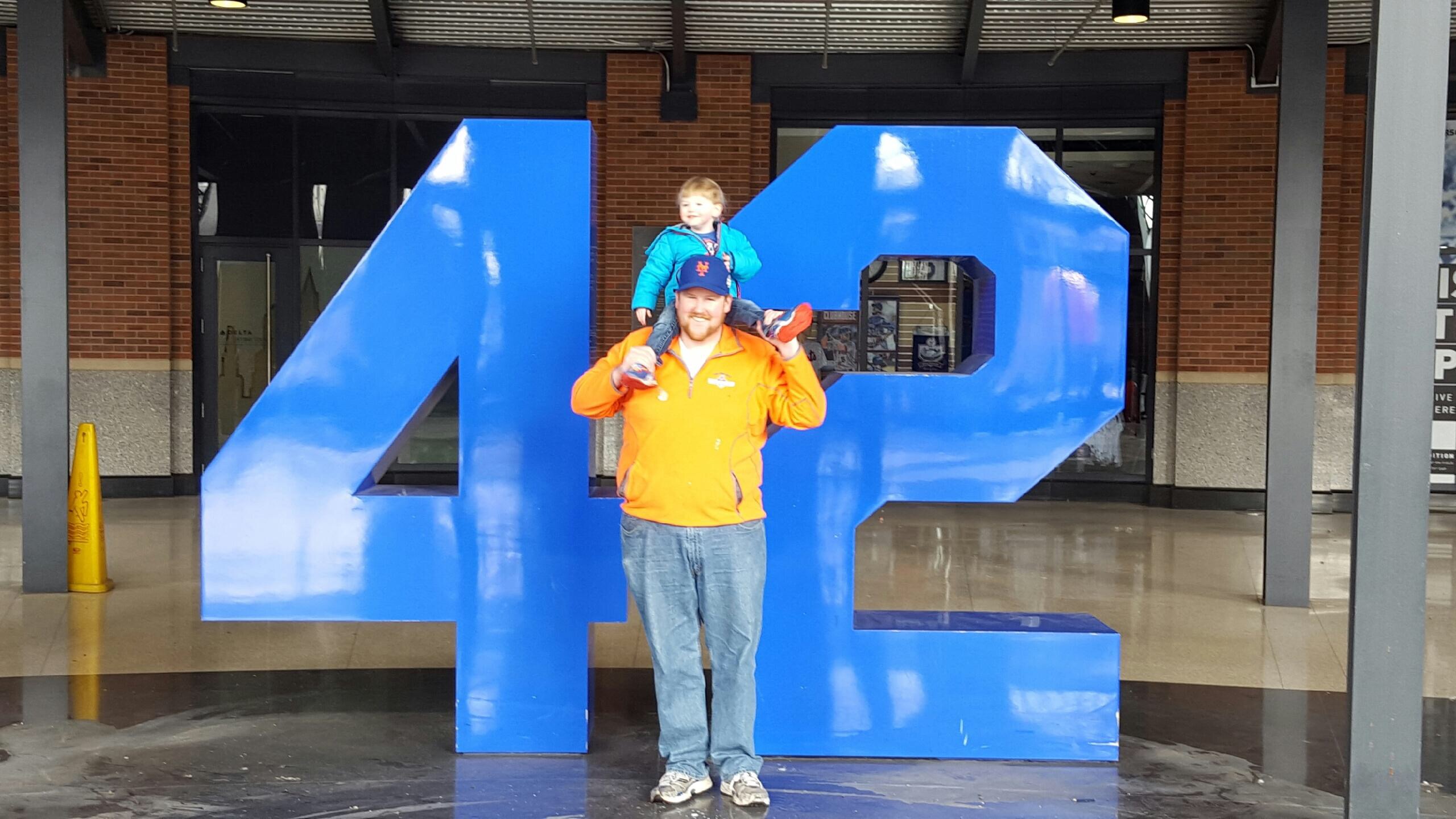
There are many things right about the Jackie Robinson Rotunda. However, the rotunda highlights one major flaw about Citi Field – Robinson is the only player that is celebrated there.
Sure, there are the retired numbers in left field. Also, there is the Mets Hall of Fame (which has also become an extension of the team store). However, is it really enough? If you are like many Mets fans and Nancy Seaver, the answer is a resounding no. As Nancy Seaver told the New York Daily News, “They should have a statue for all those numbers they have retired on their wall — Seaver, Gil Hodges, Mike Piazza.” She finds the fact that here isn’t one for her husband to be “ridiculous.” She sums up her feelings by saying, “I’m embarrassed for (the Mets). I really am.”
The fact of the matter is she’s right. At a minimum, there needs to be a statue for Tom Seaver. He is the Mets version of Babe Ruth.
Seaver has been the greatest player to ever don a Mets uniform. Considering the mind boggling stats he put up, it is next to impossible to imagine a scenario where there will come another player who will legitimately challenge Seaver’s place in Mets history. He helped turn the Mets around from a losing franchise to a team that miraculously won the 1969 World Series. He was the ace of a staff that almost won a second unlikely World Series in 1973. He’s the Mets all-time leader in wins, ERA, innings pitched, strikeouts, complete games, and shutouts. It’s one of the many reasons Seaver has been dubbed The Franchise. The Mets reputation as being a traditionally pitching rich organization began with him. It’s why he was the first player to have this number retired by the Mets. It’s why the Mets chose him to throw out the last pitch at Shea Stadium and the first pitch at Citi Field. It’s why he was elected to the Hall of Fame with the highest voting percentage ever given to a pitcher. It’s why he needs to have a statue featuring him with that classic leg drive:
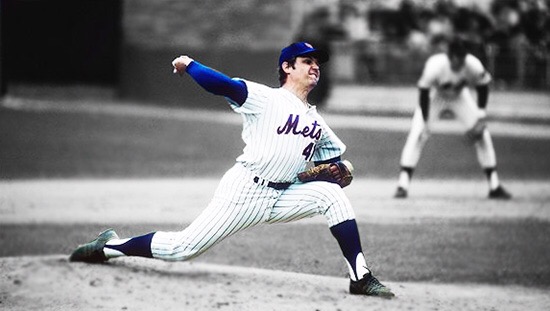
Any argument against the Seaver statue is ill conceived:
- It’s too costly – You’re a major league franchise in New York. You can afford a statue.
- Seaver can’t travel for the unveiling – Hodges’ number was retired posthumously. It’s about honoring a player properly, not about attendance.
- There’s nowhere to put it – First, you found a spot for the old Home Run Apple. Second, there are empty places in and around the ballpark. If it’s important to you, you find a spot.
- It would diminsh the importance of the Jackie Robinson Rotunda – It won’t.
- Building one for Seaver means the Mets will have to build ones for other Mets Hall of Famers – So what? There are only two of them so far. I think the team can manage that.
Other than that, what possible reason is there for not having a statue? There is no legitimate reason.
The time has long since passed to build a statue in Seaver’s honor. As many have done before, Nancy Seaver shone a light on the issue. She’s right that it is embarrassing that the Mets won’t honor the greatest player in their history. It’s time for the Mets to right that wrong and build the statue.
On Saturday, September 27, 2003, my father, brother, and I sat down to watch what was seemingly a meaningless baseball game. The Minnesota Twins had already locked up the AL Central, and the Detroit Tigers had already locked up the worst record in baseball. At that time, the only matter at issue was whether the Tigers would finish with a worse record than the 1962 Mets.
As each and every Mets fan knows, the worst team in baseball history was the 1962 Mets. They were bad from the beginning. The 1962 Mets lost their first nine games. That wouldn’t even be the lowpoint of the season. From May 21st until June 6th, the Mets would lost 17 straight games. That wasn’t even their only 10 plus game losing streak. There was an eleven game losing streak in late July, and there was a 13 game losing streak that spanned most of August. The 1962 Mets didn’t really do anything well except maybe lose. They inspired manager Casey Stengel to utter the phrase, “Can’t Anybody Here Play This Game?” It was a phrase so utterly perfect that Jimmy Breslin used it as the title for his book about the 1962 Mets.
The funny part about that team is that they are somewhat beloved. There were colorful characters Mets fans know to this day regardless of whether or not they were around to see it. There were old heroes like former Brooklyn Dodgers like Gil Hodges and Don Zimmer. There was future Hall of Famer Richie Ashburn. There were colorful characters as well. There was Marvelous Marv Throneberry who missed not just first but second base when running out a triple. There was speedy catcher Choo-Choo Coleman who best utilized his speed chasing down balls that went to the backstop. About the only players who didn’t belong was Frank Thomas with his 34 homers and 17 year old Ed Kranepool who actually had a bright future ahead of him in the majors.
That 1962 season was the first season in Mets history, and it was an important one at that. This record is quintessentially the Mets. It is a terrific reference point for each and every time the Mets have success. Whenever a 1969 or 1986 happens, it’s a reminder of how the Mets really did come from nothing to achieve great heights. Having this record was important, and it should be important to Mets fans.
It is why my family was rooting for the Tigers that day. At that point it wasn’t looking good. The Tigers had to take three of four from the Twins to avoid loss 120. They lost the prior game, and they were down 7-1 going into the bottom of the seventh. Somehow, someway, the Tigers pulled it off. They scored three in the seventh and then four in the eighth to somehow time the game. Then in the ninth, old friend Jesse Orosco threw a wild pitch allowing Alex Sanchez to score the winning run. At that point, Orosco was probably throwing things in disgust. However, to Mets fans, it looked like Orosco was throwing his glove into the heavens like he had done in 1986. The Tigers snatched a win from the jaws of defeat number 120. The 1962 Mets would be safe.
Now, this year, the 1962 Mets are being challenged once again. The Atlanta Braves come to Flushing sporting a 19-46 record. With their .292 win percentage, the Braves are on pace for a 47-115 season. If the Mets sweep the Braves like they should, the Braves will be all the closer to loss number 120. If the Braves are able to move the few major league quality bats from their line-up like Freddie Freeman, who knows how much worse things will get in Atlanta. Towards the end of the season, there will most likely be a race to see if the Braves could actually surpass the 1962 Mets loss total.
While it has been ingrained in me from the days of Mike Piazza and Edgardo Alfonzo to never root for the Braves, I will root for the Braves to win some games to avoid losing 120 or more games. Preferably, those wins will come at the expense of the Washington Nationals. Hopefully, at the end of the season, the 1962 Mets place in history will be secure.
Since Mike Piazza left the Mets in free agency, no Met had worn 31. The number was taken out of circulation until he made the Hall of Fame. Once that happened, the Mets announced his #31 was going to be retired this summer. The Mets were following their long unwritten policy of only retiring the numbers of Mets Hall of Famers.
It makes you question why the Mets have continuously issued Carlos Beltran‘s number 15 since he was traded away from the Mets.
They reissued the number to Val Pascucci the same year Beltran was traded away. The number was then worn the following year by Fred Lewis. Travis d’Arnaud tried it out for the following two years before switching to the number seven. At that point, former bench coach, Bob Geren wore 15 for the 2015 season. Now, Matt Reynolds has become the latest Met to wear Beltran’s number.
Make no mistake. It is Beltran’s number.
With Beltran hitting his 400th homerun this year, he had further cemented his Hall of Fame case. He’s only the fourth switch hitter with 400 homeruns. He’s only one of three players with 500 doubles, 400 homeruns, and 300 stolen bases. He’s been a true five tool player that has the WAR, WAR7, and JAWS score to deserve induction. All of this is before taking into account his postseason heroics. Make no mistake, he is a Hall of Famer.
For his part, Beltran has said he could see himself going into the Hall of Fame as a Met.
However, at this point, it doesn’t seem the Mets are interested in encouraging Beltran to enter the Hall of Fame as a Met. They say it loud and clear every time they reissue his number to other players. It was clear going into this year that Beltran was going to be a Hall of Famer. The number was vacated with Bob Geren’s departure. The Mets should’ve set the number aside until that day the Mets retired his number.
They’re not. Instead, the Mets are going to let their differences and acrimony get in the way of honoring a great Met.
Beltran gave his all with the Mets. He was the best baseball player on the planet in 2006 leading the team to the NLCS. He’s in the Top Six in WAR as a Met (seven spots ahead of Piazza). He’s in the Top Ten in runs (eighth), doubles (seventh), homeruns (sixth), RBI (sixth), OBP (sixth), and SLG (fifth). He made six All Star teams and won three Gold Gloves. He hit the final Mets homerun in Shea Stadium.
Beltran was a great Met. He will be a Hall of Famer. He should be in the Hall of Fame as a Met, and his number 15 should forever be on the LF wall. It’s why his number shouldn’t have been issued to Matt Reynolds.
This past week, I was able to interview Anthony Scaramucci regarding him and his partners purchasing the Mike Piazza post 9/11 homerun jersey. I appreciate Mr. Scaramucci purchasing the jersey and taking the time to answer my questions.
Special thanks goes to Mets Merized Online, who not only ran this interview on their site, but also many other of my Mets articles.
I also appreciate the links and recommendations for this interview including being part of Adam Rubin’s Morning Links. My wife was so thrilled she got a screen shot of it:
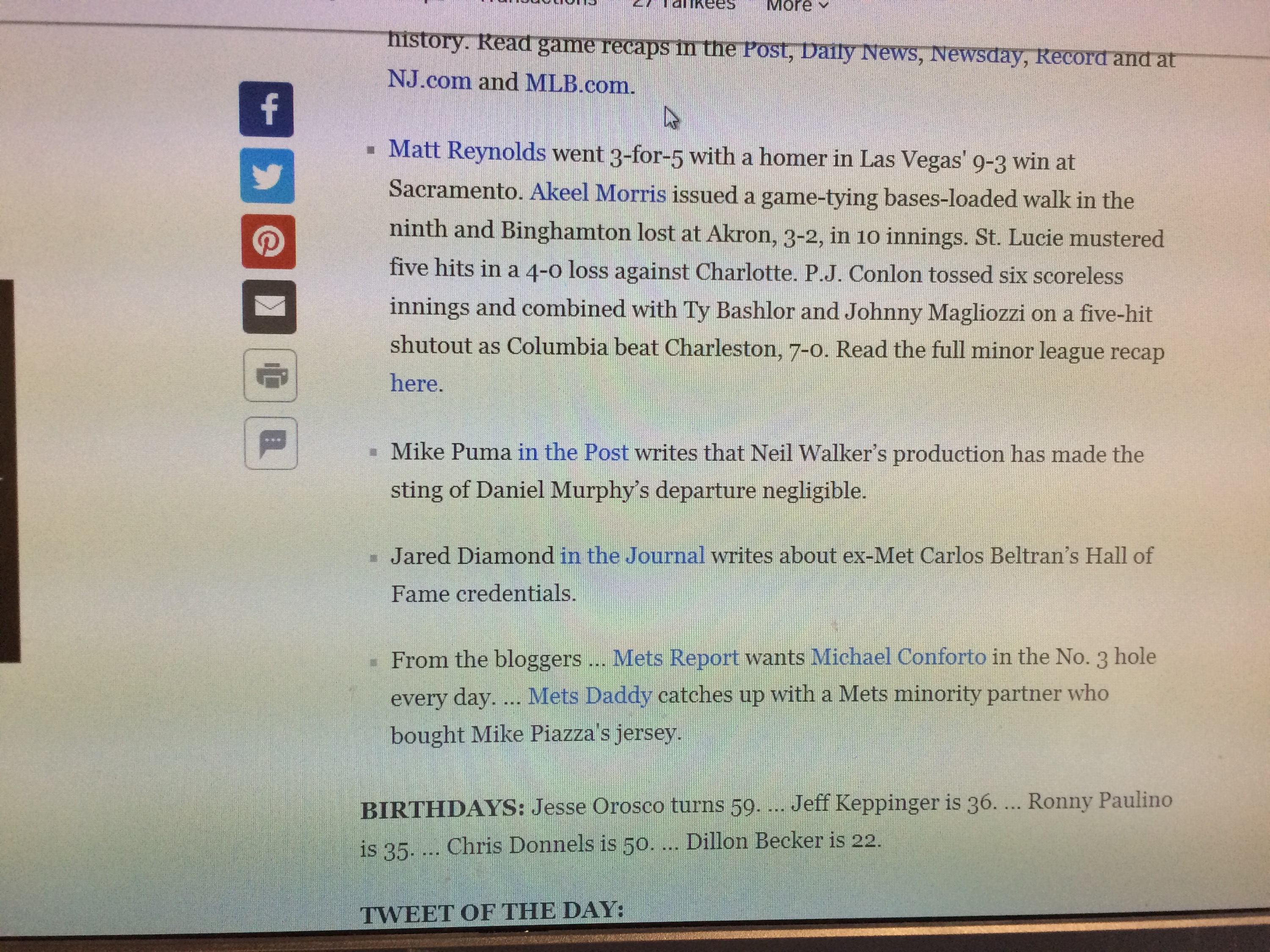
There were also links from SNY and Kevin Kernan, whose reporting brought the issue to light.
I appreciate everyone who linked the interview as well as those who took the time to read it. I especially appreciate those who read the site day in and day out.
Thanks to Kevin Kernan, we all discovered that Mike Piazza‘s post-9/11 homerun jersey was up for auction with Goldin Auctions. The jersey faced an uncertain future until a group stepped forward and purchased the jersey for a record $365,000. Part of that group included Anthony Scaramucci.
For those who don’t know Mr. Scaramucci, he is the founder and co-managing partner of global investment firm SkyBridge Capital, founder of the SkyBridge Alternatives (“SALT”) Conference and host of iconic financial television show “Wall Street Week.”
Despite his busy schedule, he was able to answer some of my questions regarding his Mets fandom and the Piazza jersey:
How did you become a Mets fan?
Growing up on Long Island, I got hooked in 1969 with the Miracle Mets and the 1973 team that made it back to the World Series. They could have lost every game after that. It wouldn’t matter to a true fan.
What is your favorite Mets memory?
I’d have to say winning the World Series in ‘86. Last year’s World Series run was also a thrill, seeing our young team get back to winning ways. I can’t wait to see what the future holds for the franchise.
What were your recollections from Mike Piazza’s post 9/11 homerun?
The 9/11 attacks had an impact on all Americans, but especially those living in and around New York. It was almost guaranteed that you knew someone directly or indirectly who died that day. There was no precedent for how to respond to such a tragedy. When should life return to normal? Should sports resume, and if so when? Should we play games in New York? I felt very strongly that we needed to get things back to normal as quickly as possible to honor the fallen and send a message to the world that you cannot disrupt our way of life.
In the stadium, everyone was tense and uneasy for most of the game. Players were hesitant to make a hard slide or argue a call. Everyone was sort of going through the motions. When Piazza hit that home run, the place erupted, the old suspension system at Shea was literally bouncing, everyone was hugging each other and there wasn’t a dry eye on the place. It was an outpouring of grief and the beginning of the healing process for New Yorkers and for the country.
What did the jersey mean to you?
The jersey to me is a symbol, a symbol of American resolve and resilience in the face of unspeakable tragedy, a symbol that no matter the adversity we will always pick ourselves up, dust ourselves off and move forward. Some might say it was just a baseball game and it’s just a jersey, but anyone who was there or watching that day knows differently.
Why did you decide to purchase the jersey?
I know the jersey meant a lot symbolically to the people of New York – 9/11 first responders to families of the deceased to fans and former players – and when the opportunity came to get it back my partners and I just couldn’t let the opportunity pass. We wanted to make sure it came back home to New York to be displayed in the public domain forever.
At any point, did you ever consider wearing it around like George Costanza wearing Babe Ruth’s jersey on Seinfeld?
You didn’t think I would pay all that money without trying the jersey on did you? Unfortunately it isn’t quite my size. In true New York fashion, I’ve mostly been carrying it around in a garment bag on a cheap wire hanger.
Where is the jersey first going to be displayed?
We’re not 100% sure on that yet. All three venues where it will rotate (the 9/11 Memorial Museum, National Baseball Hall of Fame and Citi Field) have to figure out some display logistics, so in the meantime we’ll be showing it around and I’m going to bring it out to Las Vegas for the SkyBridge SALT Conference in May. Hopefully the flight stewardess has room to hang it up in the pilots’ closet.
How long will the jersey be on display?
We are writing a clause into the deal so the jersey will forever be displayed in the public domain, hopefully well after we’re dead and gone.
How do you feel when people thank you and your partners for purchasing the jersey?
I’m conflicted on that. On one hand obviously I appreciate the kind words and support, but I also don’t want to pretend like I’m some kind of hero for buying a jersey. There were thousands and thousands of heroes on 9/11 – workers in the towers herding others to safety, first responders rushing up into the burning buildings, volunteers digging through toxic rubble for days on end in hopes of finding one or two miraculous survivors. I feel fortunate that my success has put me in a position to contribute to a gesture like this, but the jersey and this moment isn’t about me, it’s about honoring the legacy of those who died that day.
What are your predictions for the 2016 season?
I’m an optimistic guy, but I think the Mets are going to win the whole thing. We have one of the greatest pitching staffs of all time and it’s going to be fun to see those young guys grow. Management did a great job keeping Cespedes and making some nice additions to the team. It’s going to be a year to remember.
Personally, I would also like to thank him for taking some time out of his busy schedule to answer my questions.
I would also like to thank Mr. Scaramucci and his partners for purchasing the jersey and sharing it with the people of New York. When I tell my son about 9/11, I will also tell him how Piazza’s homerun uplifted New York. Because of Mr. Scaramucci and his partners, I will be able to show the jersey Piazza wore that day to my son.
* picture from Anthony Scaramucci’s Twitter account (@scaramucci)
Editor’s Note: this article also ran on metsmerizedonline.com
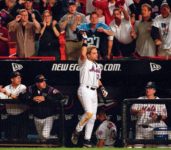
Thanks to three people, Anthony Scaramucci, Tony Lauto, and another in identified buyer (Oliver Stone?), Mike Piazza‘s 9/11 jersey is safe. The trio agreed that the jersey will forever rotate between Citi Field, the 9/11 Museum, and the Baseball Hall of Fame. These three people stepped up and did what was right and what was needed.
They had to step up because Mets ownership wouldn’t. As Kevin Kernan of the New York Post reported, the Mets never made a bid for the jersey.
To be fair, let’s not revisit the past here. We don’t know why the jersey was sold. It might’ve been the result of the financial troubles the Wilpons experienced as part of the Madoff scandal. It could’ve been an oversight. It’s possible no one realized the importance of the jersey. Maybe, just maybe, it was never supposed to be sold in the first place, but it was due to oversight. Fact is we’ll never know why it was sold. Most agree that in retrospect, it was wrong to sell the jersey. The Mets organization admitted as much in their statement to the New York Post stating, “We made a mistake in selling the jersey and Jeff [Wilpon] called Mike [Piazza] to express our regret in doing so.”
With the jersey up for sale, the Mets got that rare opportunity to right a wrong. They chose not to do so. They didn’t despite Jeff Wilpon assuring Piazza the Mets contacted the seller and were “making a concerted effort to get the jersey back.” They didn’t. Instead, they let someone else step in and purchase it.
At this point, it’s inexcusable. They told their newly elected Hall of Famer, they were going to make a concerted effort, and they didn’t. They got lucky because three people not only purchased it, but also agreed it should be on permanent display instead of in one of their homes. The thing is as the owners of that jersey that was their right. That was what the Mets risked.
At this point, we just have to ask,”Why?”
Why didn’t the Mets realize the jersey’s importance in the first place? Why didn’t they make an effort to buy the jersey? Why did they not keep their promise to Piazza? Why didn’t they understand what the jersey meant to the fans? Why were they willing to let the jersey to possibly be sold to someone who didn’t feel the obligation to display the jersey publicly?
The answer to all of these questions, and many more is, at the end of the day, baseball is a business. The owners only care about the fans to the extent that they want to create an environment suitable enough for them to spend as much of their disposable income on the team as possible. To Mets ownership, the Piazza 9/11 jersey didn’t have any special meaning. Rather, it was a jersey: (1) that could be sold for a profit; and (2) whose current purchase price was cost prohibitive. Pure and simple, these were business decisions.
The Mets will continue to make business decisions like they’ve always done. They’ll sell bricks which line the outside of Citi Field, but they won’t erect a Tom Seaver statue. They won’t sign a player like Yoenis Cespedes, despite the fans’ attachment to him, unless it is at a price suitable to them. For better or worse, that’s how the Mets operate.
And that’s all the Piazza 9/11 jersey decisions were to them – business decisions.
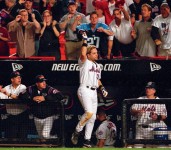
The Wilponzi Era was about as difficult a time as I’ve experienced as a Mets fan. You can argue that after bad trades and bad free agent signings. We can have a real debate about whether or not it was time to break it down and rebuild. However, what the Mets and their fans went through was so much more than that.
The news of the scandal broke in December 2008 as the Mets closed Shea Stadium and were on their way to open Citi Field. Despite the distraction, the Mets opened the season with a the second highest payroll in baseball at a little over $149 million. The team would suffer injury after injury before falling way out of contention. In 2010, despite payroll dropping about $20 million, they did try to improve the club by signing Jason Bay. As we know neither Bay nor the 2010 season worked out well.
In subsequent seasons, the Mets made no major free agent acquisitions. How could they? The Wilpons lost at least $178 million. They were named defendants in the Madoff case and were sued for $1 billion. The Wilpons were forced to do whatever they could do to keep control of the Mets. They initially took out $65 million in loans from Major League Baseball and Bank of America. In total, the Mets borrowed over $980 million. Of that amount, $430 million was borrowed using the Mets as collateral.
The once $149 million payroll dropped down to $85 million (ranked 21st in the league). The Wilpons were facing a financial crisis, and they were doing everything they could go to go from being bankrupt. They began selling minority stakes in the team. They were trying to keep their main assets, which included the Mets.
As fans, we believed the most damaging effects of this was in the Win-Loss column. We believed it was the Mets being unable to put a winning, if not at times competitive, team on the field. We were very wrong.
Thanks to Kevin Kernan we now know what the most damaging effects of the Wilponzi Era was the sale of the jersey Mike Piazza wore when he hit this homerun:
This moment means different things to different people. I know I shed a tear when it happened. In my opinion, it is amongst the top three moments in Mets history along with ’69 and ’86. It may mean something different to you. You may fell differently. That’s fine. We all acknowledge it was a powerful moment in history.
Here’s the thing. As much as the moment means to everyone, and as much as the jersey means, I don’t blame the Wilpons for selling it. In fact, I think they deserve some credit.
Being objective, if you’re the Wilpons owning the Mets is much more important than that jersey. If you lose the team, you lose the jersey. Looking at Kernan’s article, they did a private sale, and they arranged to have the jersey displayed in the Mets Hall of Fame.
The Mets settled the Madoff case for $162 million seemingly around the same time as the Piazza jersey was sold. They got the infusion of cash they needed while still having the ability to share the jersey with the fans. Remember, the Wilpon’s settlement in the Madoff case called for turn
However, as we now know, the Mets selling the jersey also meant the Mets lost control over the jersey. It could be sold without their permission, and it can be taken out of the Mets Hall of Fame to someone who wants to do whatever it is they want to do with it.
If you want to be angry with someone, be angry with Major League Baseball. They are the ones that allowed this to happen. This is the same organization that forced Frank McCourt out. McCourt committed two crimes. The first was he sought a $200 million loan to the Dodgers and a $30 million loan to him personally from Fox. The second was he wasn’t in good with Bud Selig. The Wilpons were.
The Wilpons had similar crippling debt and a desperation for money. In fact, they borrowed more than McCourt ever sought to borrow – over three times the amount. However, the Wilpons went about it the way Major League Baseball wanted. They made sure to keep in Selig’s good graces.
The Wilpons were empowered by Major a League baseball to cut the payroll nearly in half. Major League Baseball empowered the Wilpons to refuse to sign a free agent of real consequence. Major League Baseball empowered the Wilpons to start selling off memorabilia to stay afloat. The Wilpons were probably doing all they needed to do to keep the Mets. They were just the people ripping the copper wiring out of the walls.
With that said, their free pass on this issue ends right now.
According to Kernan’s article, it is anticipated that Piazza’s jersey will sell for north of $300,000. The good news for the Mets is they released Ruben Tejada. In doing so, the Mets saved approximately $2.5 million. There is plenty of money to allocate from those savings to permit the Mets from re-acquiring a jersey they should never have been in a position to sell in the first place. There’s no excuse this time.
Despite all of this, the Wilpons are not moving heaven and Earth to get that jersey back. According to Kevin Kernan’s latest article, the seller, Goldin Auctions, will make the jersey available for sale before the auction due to the significance of the jersey. It is something the seller has never done before, but it acknowledges the importance of not only the jersey, but also where the jersey belongs. The seller believes the jersey belongs at the 9/11 Memorial. Mets fans believe it belongs in the Mets Hall of Fame, but certainly wouldn’t object to it being placed at the 9/11 Memorial.
Despite this, the Wilpins have yet to make an offer for the jersey despite having an extra $2.5 million in their coffers from Tejada’s release. They are merely monitoring the situation gauging fan reaction. This sounds just like the Wilpons’ behavior when Piazza was a Marlin on the trading block. Don’t spend the money until the fan backlash is too fervent for you not to make the move. Well, the stakes are higher this time. It’s time for the Wilpons to stop waiting around. It’s time for action.
The Wilpons need to make sure they do everything they can to bring that jersey back to the Mets Hall of Fame where it belongs.
The Mets really are their own worst enemies, and it all starts with what is a terrible Public Relations Department.
The Mets’ ace, Matt Harvey, was dealing with a private medical issue. He had blood clots in his bladder. The causes for blood in the urine can be scary. It can be caused by kidney stones, cancer, or in Harvey’s case, holding it in too long. The number one thing to take from this whole situation is that Harvey is healthy, and he will be ready to pitch on Opening Day.
However, that doesn’t mean there isn’t a problem here. Why did Matt Harvey have to go through this publicly at all?
Harvey had tests and a procedure done by this morning. The Mets could’ve said Harvey was going to miss today’s Spring Training start because he had the flu, or they wanted to give someone else a start while Harvey threw on the side, or literally anything else where you don’t announce to the world that Harvey is dealing with a private medical issue. While he is dealing with this, many people are cracking jokes or making nasty comments. Well, Harvey noticed:
Matt Harvey also chided people for the "nasty things" they speculated his condition might be. He's fine now. #Mets
— Anthony DiComo (@AnthonyDiComo) March 29, 2016
Again, why was Harvey subjected to this? In part, it’s because people like to make jokes. The bigger issue is the Mets made an announcement before one needed to be made. They made a private matter a public matter and subjected their ace to ridicule. By the way, now that the news is out that Harvey is alright, new jokes have emerged. This is a failure of epic proportions by the Mets organization.
It’s not the first time Mets players have had a real issue with how the front office, and specifically Jay Horowitz, prioritizes the media over its own players. As Mike Piazza wrote in his autobiography, Long Shot (p. 259):
Because I’d the huge shadow the Yankees cast in the city, it seemed to me and other players that the Mets chronically catered to the press in the continual effort to get attention. In the process, they often exposed us – almost sacrificed us, in effect – to the jaws of the New York media monster. Our publicity director, Jay Horowitz, was a good guy who worked hard and loved the ball club, but I felt that he was more loyal to the writers and broadcasters than he was to the players.
******************
[The front office’s] position seemed to be that players come and go but the stations and newspapers will always be around. The effect, for us, was a sense that we were constantly walking the plank with the sharks circling below.
Once again, the Mets were more concerned about playing nice with the media rather than protecting one of its players. It was a problem with Piazza. It still seems to be a problem today.
So overall, the Mets have no problem sacrificing their players and their privacy to the media. They have no issues subjecting their players to ridicule for what are serious health issues. Harvey deserved better than this. Piazza and his teammates deserved better when they were playing.
The funny thing is that while the Mets have no problem having their players have to answer questions about private matters like their health, they are still ducking the media when it comes to the Madoff scandal or Jeff Wilpon firing a single mother. You see the Mets cozying up with the media only works when it comes to their players. When it comes to their own issues, they are nowhere to be found.
There will be jokes that follow Harvey the rest of his career because of this. It never needed to happen. The Mets failed one of their players by subjecting him to mockery and ridicule they don’t allow themselves to face. The Mets front office is the real joke here.
In honor of Pi Day, let’s look at all the things to look forward to during the 2016 season:
3.1 – Mike Piazza
This summer Mike Piazza is going into the Hall of Fame as a Met. He’s the first Mets position player to do so. The following weekend, he will also be the first Mets position player to have his number retired. He will forever be remembered for all of his homeruns, especially the homerun after 9/11. More importantly, he will forever be a Met.
41 – Tom Seaver
Seaver is the greatest Met to ever wear the uniform, and perhaps, the greatest right handed pitcher of all time. He was rightly dubbed “The Franchise.” With him, he began the aura of the Mets always having good pitching. This year his mantle will be picked up again by a dominant young staff reminiscent of the pitching staffs Seaver was a part of back in his day.
59 – Antonio Bastardo
Bastardo is one of a few key free agents the Mets added this offseason. Last year, the Mets had bullpen problems forcing them to overuse Jeurys Familia and trade a lot of good young pitching away to build a bullpen around the trade deadline. This year, Bastardo is a key arm in what appears to be a bullpen worthy of holding down the leads handed to them from their dominant starting pitchers.
26 – Kevin Plawecki
Plawecki had a rough 2015 whether it was because of him being rushed to the majors too soon or him needing sinus surgery. Given Travis d’Arnaud‘s injury history, it is very possible Plawecki is going to get another shot at being the Mets starting catcher next year. At some point, he will be called upon to not only continue his tremendous work as a receiver, but also being a more potent bat to the Mets lineup.
5 – David Wright
The biggest question mark in the 2015 season is how much David Wright can play and how effective he can be over the course of a 162 game season. Wright is the team leader and Captain, and they’re going to need him. At the end of 2015, he showed he can still hit and be an important part of the Mets. They’re going to need him at some point next year.
35 – Logan Verrett
After losing Verrett in the Rule 5 draft last year, he’s back with the Mets organization. Last year, he was an important swing man. He was first a bullpen arm and later a spot starter who gave a young pitching staff some rest before the postseason. In 2016, Verrett is likely to serve a similar role regardless of where he starts the year. At some point, the Mets will need him, even if it’s just to get the starters some rest before another postseason run.
89 – The Closing of a Window
After the Mets lost in the 1988 NLCS, there was no reason to believe that was the end of their window. There were veterans on the team, but there were also prospects behind them and rising stars on the team. There was still the pitching. It’s a stark reminder that when the window is open, you do everything you can in that timespan. You never know when that window closes.
79 – Paul Sewald
Sewald is just one of a number of Mets pitching prospects who are chomping at the bit to get called-up to the majors. Sewald has had a 1.83 ERA in his entire minor league career. If he continues pitching this well, he very well might get a call-up in the event there is an open bullpen spot this year.
32 – Steven Matz
In Matz’s first two career starts, he was incredible on the mound and at the plate. Even after his injuries, he has shown flashes of brilliance. He’s an early leader in the Rookie of the Year race. He’s primed to become the next great Mets starting pitcher. In 2016, he needs to stay healthy and take that next step.
38 – Dan Warthen
Warthen and the entire Mets organization have been blessed with amazing pitching. It’s encumbent upon Warthen to not only help each of these pitchers take the next step in their development, but also to help keep them healthy over the course of a full season.
4 – Wilmer Flores
We end with Flores, who was the last Mets to bat in the 2015 World Series. Flores was the player who cried at the possibility of leaving the Mets to a fan favorite. He has gone from the starting shortstop to a utility/platoon player. The 2016 Mets are a heavy left-hand hitting team. Flores can balance this out in his role as a super sub.
He’s also the first choice for third base in the event that Wright needs to sit or go on the DL for long stretches of time. He’s the primary backup at every infield position. He’s going to be an extremely important piece for the Mets.
They are all important actually. As we saw in 2015, a team will have to go deep into their roster at times. However, by building a strong 25 and 40 man roster, as the Mets have now, you give your team the best chance to make it to the postseason. Hopefully, the Mets can come full circle (pi pun) in 2016, and win the World Series.