The first ever pitcher to be used in a doubleheader after Major League Baseball’s inception of the 26th Man Rule was former Met Jeremy Hefner. On April 23, 2012, Hefner would make his big league debut pitching three scoreless innings in the first game of the doubleheader. Since that point, Hefner would need not one but two Tommy John surgeries. After the second surgery, the Mets would not offer him a contract making a free agent. Currently, he is pitching for the Cardinals’ AAA affiliate the Memphis Redbirds. His story might have began as one of a statistical oddity to one of perseverance.
With that in mind, it is fitting that Josh Smoker was called-up by the Mets to be the 26th man for the second game of the doubleheader against the Cardinals last night.
Smoker had originally been a first round pick by the Washington National back in 2007. However, Smoker would never make it past A ball. There was the first surgery in 2008 to remove bone spurs from his pitching shoulder. There would be two more surgeries in 2013 to repair his labrum and rotator cuff. After that, he was released by the Nationals organization leaving him with two options: (1) retire from baseball altogether; or (2) give it one last shot.
His shot would come with the Rockford Aviators of the Independent Aviator Leagues. That Illinois team is located approximately 886 miles away from Citi Field, but in reality, Smoker seemed further away from the big leagues than that. Initially, his three times surgically repaired shoulder didn’t have its velocity leaving him with an unspectacular 1-0 record with a 4.03 ERA and a 1.793 WHIP. However, his velocity would come back, and the Mets would take notice offering him a minor league contract.
Suddenly, Smoker and his fastball that could top out around 98 MPH was blazing through the Mets minor league system. He would start the year in the Sally League, and he would finish the year with AA Binghamton. The pitcher who had trouble getting independent leaguers out had a 3-0 record with a 3.12 ERA and a 1.184 WHIP. Given his prior years of service in the Nationals’ organization, the Mets were forced to decide whether to put Smoker on the 40 man roster or to expose him in the Rule 5 Draft. Not only would the Mets put him on the 40 Man Roster, but they would also allow him to start the year in AAA. Like most pitcher’s in the Pacific Coast League, Smoker’s ERA and WHIP would take a hit. However, what really stood out this season is the fact that Smoker is striking out 13.2 batters per nine innings. With the Mets having an open roster spot, and the team not wanting to tax the bullpen, the Mets had little choice but to add the pitcher who is striking out more batters per nine than anyone in their farm system.
And with that, Smoker has officially made it. He is now a big league pitcher. He persevered through three shoulder surgeries and diminished velocity. He has overcame each and every obstacle thrown his way. He didn’t get in the game, but it doesn’t diminish what he’s accomplished. Given the quirks of the 26th Man Rule, he’s on his way back to AAA. Without a doubt, he will be back with the Mets, and he will pitch in a game next time.
Congratulations Josh Smoker.
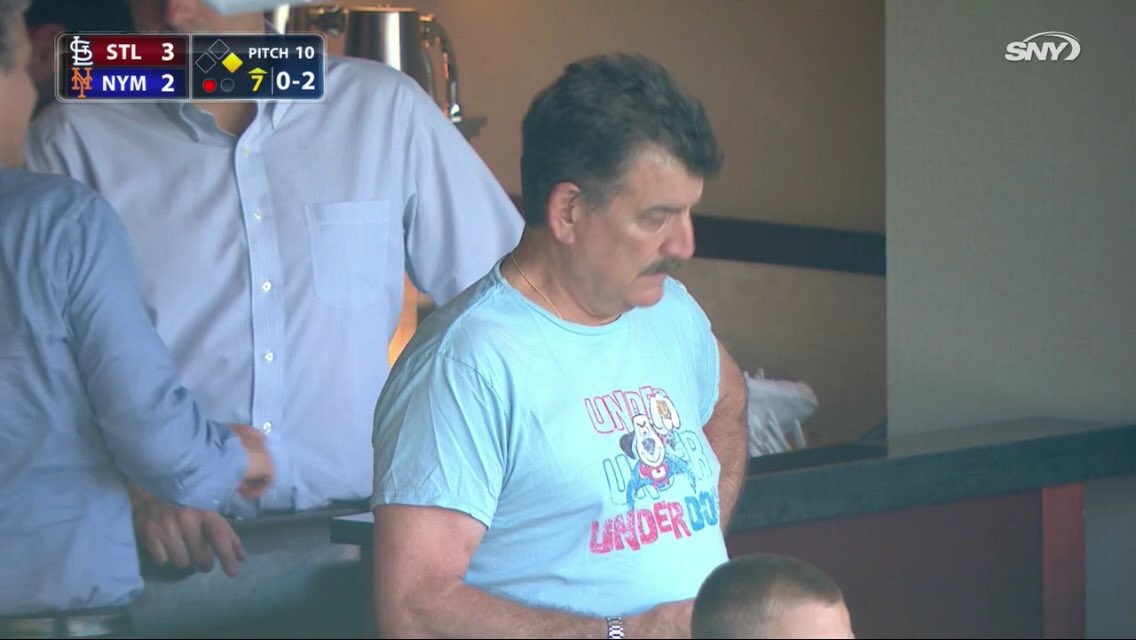
You knew it was going to be a strange day when Keith Hernandez showed up during the first end of the doubleheader wearing an Underdog shirt:
We would then see Noah Syndergaard give up an unearned run in the second when Syndergaard made an errant throw allowing Yadier Molina to score. The Cardinals scored a run that inning without a ball leaving the infield. Perhaps stranger than that was seeking Jedd Gyorko hit a two run bomb to left the following inning to give the Cardinals a 3-0 lead. For the day, Syndergaard would pitch six innings allowing three runs, two earned, and three walks with eight strikeouts.
Of course, all of the Mets offense would come off a Rene Rivera two run homer in the fourth. After that hilarity would ensue.
There was Curtis Granderson of all people throwing out a runner at the plate (with the really throw from Kelly Johnson). It’s bizarre that the Cardinals sent Matt Adams, who just might be slower than James Loney. It’s even stranger when you consider that earlier in the game the human windmill Tim Teufel held Jose Reyes at third when he could’ve scored off a Yoenis Cespedes two out double.
Speaking of Cespedes, he had quite the juggling act in the outfield in the sixth:
Then there were the curious decisions like Terry Collins keeping Wilmer Flores on the bench while sending James Loney and Johnson up to bat in the eighth against Cardinals lefty Kevin Siegrist. They weren’t able to muster a rally.
The Mets would start a rally in the ninth with a Granderson leadoff single off new Cardinals closer Seung-hwan Oh. That rally would end when Granderson tagged up on Cardinals center fielder Tommy Pham after a deep Cespedes fly out:
Stop it, Pham. https://t.co/QUYrvtDqs6 pic.twitter.com/3sl2LVk3MG
— MLB GIFS (@MLBGIFs) July 26, 2016
After a Loney fly out, the Mets lost 3-2. The second game of the doubleheader would be much calmer, but it would still nevertheless be strange.
For starters, the spark plug of the Mets offense in the game was Alejandro De Aza. De Aza would go 1-1 with a double, a walk with two runs. Even more bizarre is that he would be driven in both times by Asdrubal Cabrera.
In the third, Cabrera followed a De Aza double with a double of his own striking an 0 for his last 697,597,475,491 streak (actually, it was 0-32). In the fifth, Cabrera would hit a sac fly to score De Aza from third.
The other run would score when Loney hit into a fourth inning double play scoring Flores. Flores was on third because he hit a leadoff double, and he moved to third when Randal Grichuk flat out dropped a ball in right field off the bat of Neil Walker. Considering how he’s been playing lately, it’s just about the only way Walker can reach base. He would go 0-2 with a walk on the night.
These three runs were enough for Bartolo Colon who was terrific tonight after pitching to a 7.36 ERA and allowing batters to hit .338/.386/.662 against him over his last three starts. Naturally, on this night, Colon only allowed one earned on three hits with no walks and eighth strikeouts. Of course, he would out pitch Syndergaard tonight in the Mets 3-1 win.
Finally, in the sixth inning, things began to calm down. Collins made a curious decision to allow Colon to bat in the sixth with the bases loaded and two outs. Collins eschewed the chance to blow the game open.
Then in the eighth and ninth, Addison Reed and Jeurys Familia shut down the Cardinals to preserve the win.
After all that craziness, the Mets and Cardinals split the doubleheader. The end result was nothing changed between them in the Wild Card standings. The Mets stayed a half game up on the Cardinals with the runner game tomorrow.
Game Notes: Josh Smoker was called up to be the 26th man in the second game of the doubleheader. He would not make an appearance.
Lately, when the Mets have needed a pinch hitter or someone to double switch into a game, Terry Collins first choice off the bench has been Alejandro De Aza. What follows is much hand wringing and consternation from Mets fans. It leaves fans questioning why he didn’t go with Kelly Johnson or Wilmer Flores. They question whether Collins knows what he’s doing.
It turns out that Collins just might know what he’s doing.
Since June 30th, De Aza is hitting .286/.444/.429 with a homer and six RBI in 27 plate appearances stretch across 17 games. For sure, this is a small sample size, and it shouldn’t distract from the fact that De Aza has not been good all year. His .181/.258/.267 batting line will attest to that. However, what it is is a start for De Aza. It is him finally taking advantage of the opportunities Collins has given him. De Aza is back to being a useful player on the bench for the Mets.
It may not be that surprising. Looking over his career, De Aza is typically a slow starter, who usually begins playing better in June. However, given his relative lack of playing time, De Aza has found his stride later in the season than he usually does. If his career patters hold true, De Aza is bound to have a good finish to the season. In his career, the final month of the season is his best as he hits .274/.352/.425. That is his highest OBP and SLG in any month of the season for his career. Last year, De Aza hit .262/.388/.361 in the final month of the season for a San Francisco Giants team that was within striking distance of the National League West as the month began.
De Aza is back in a pennant race, and he is performing like it at a time when the Mets need him. Yoenis Cespedes‘ quad has left him hobbled, and it may require him to take the occasional day off. This has forced Michael Conforto into center field in order to keep his bat in the lineup. With that said, the Mets need to play musical chairs late in the game to get their best defensive outfield into the game, which usually requires the Mets holding back Juan Lagares. This means the team needs De Aza to step in as a pinch hitter, pinch runner, or a defensive replacement himself. As strange as it may sound after his terrible start, the Mets need De Aza now. Fortunately, he is finally producing.
For most of the year, Mets fans wanted De Aza off of the team, but Terry Collins and the Mets front office has stuck by him. It is starting to look like De Aza is starting to reward the Mets faith in him. They deserve credit for seeing through the early season struggles and allowing him to get back to form and put him in position to have a strong finish to the season like he typically does.
In April, Neil Walker hit .307/.337/.625 with nine homers and 19 RBI. From there, it has gotten progressively worse. Here are his monthly splits in the subsequent months:
- May .250/.333/.420 with four homers and six RBI
- June .214/.292/.274 with one homer and seven RBI
- July .155/.254/.259 with two homers and eight RBI
From May 1st on, Walker is hitting .213/.298/.326 with seven homers and 21 RBI. It has dropped his .307/.337/.625 hot April to .239/.308/.409 this season with six doubles, 16 homers, and 40 RBI. Overall, he has a 91 OPS+ and a 95 wRC+. Walker’s season stats aren’t good, and they’re even worse when you consider he has progressively gotten worse each month of the season. Each and every game he is on the field, he is out there hurting the team.
The only solace for the Mets is they gave up Jon Niese to get him. Niese has had an even worse year than Walker. In his 18 starts, Niese was 7-6 with a 5.13 ERA and a 1.574 WHIP. Like Walker, he wasn’t getting any better as the year progressed. Niese put up a horrific June that saw him go 1-4 with a 6.21 ERA and a 1.710 WHIP. Those numbers would be even worse had he not had a terrific outing against the Mets on June 7th that saw him pick up the win after pitching seven scoreless innings while allowing four hits and two walks while striking out two. Take that game out of the equation, and Niese would’ve been 0-4 with a 7.86 ERA and a 1.937 WHIP. These numbers were so ugly that the Pirates were all but forced to demote Niese to the bullpen where he has pitched effectively in his three appearances.
Like the Pirates, the Mets need to admit the trade was a mistake from their end and demote Walker. He needs to be put on the bench because he’s hurting the team on a day-in and day-out basis. In his stead, the Mets could go with a Wilmer Flores–Kelly Johnson platoon at second base. Since May 29th, Flores is hitting .283/.338/.534 with nine homers and 25 RBI in 44 games. On the season, he is hitting .316/.371/.667 with six homers and 13 RBI in 29 games against a lefty. Since coming to the Mets, Johnson has been hitting .317/.394/.524 with three homers and five RBI in the 31 games he has played since re-joining the Mets. Both Flores and Johnson have earned playing time, and they have both produced from May to the present.
Right now, the Mets are a half game back of the second Wild Card, and they are five games out in the division. The Mets were exploring the possibility of trading a good, young, cost-controlled catcher in Travis d’Arnaud to acquire Jonathan Lucroy in the hopes of improving their offense. It appears the Mets are now out on Lucroy, and they are going to need to make offensive improvements elsewhere. For now, it appears the biggest improvement they can make is removing Walker from the lineup in place of two players that are hitting.
For the past two days, it appears that is Terry Collins approach as he has sat Walker in favor of Johnson against Marlins starter Jose Urena, and he was going to sit against Cardinals starter Carlos Martinez before the rainout. This is a precipitous drop from where Walker was when the Mets obtained him in the offseason and a freefall from where Walker was in April.
Considering how poorly Walker and Niese have fared away from the teams that drafted them, maybe the Pirates and Mets should get together and undo that trade.
Back when my wife and I were in the beginnings of planning a family, we bandied about different baby names. Coincidentally, one name we compromised on was Olivia Shea.
We didn’t have a need for the name, nor will we ever use it as we had a boy:
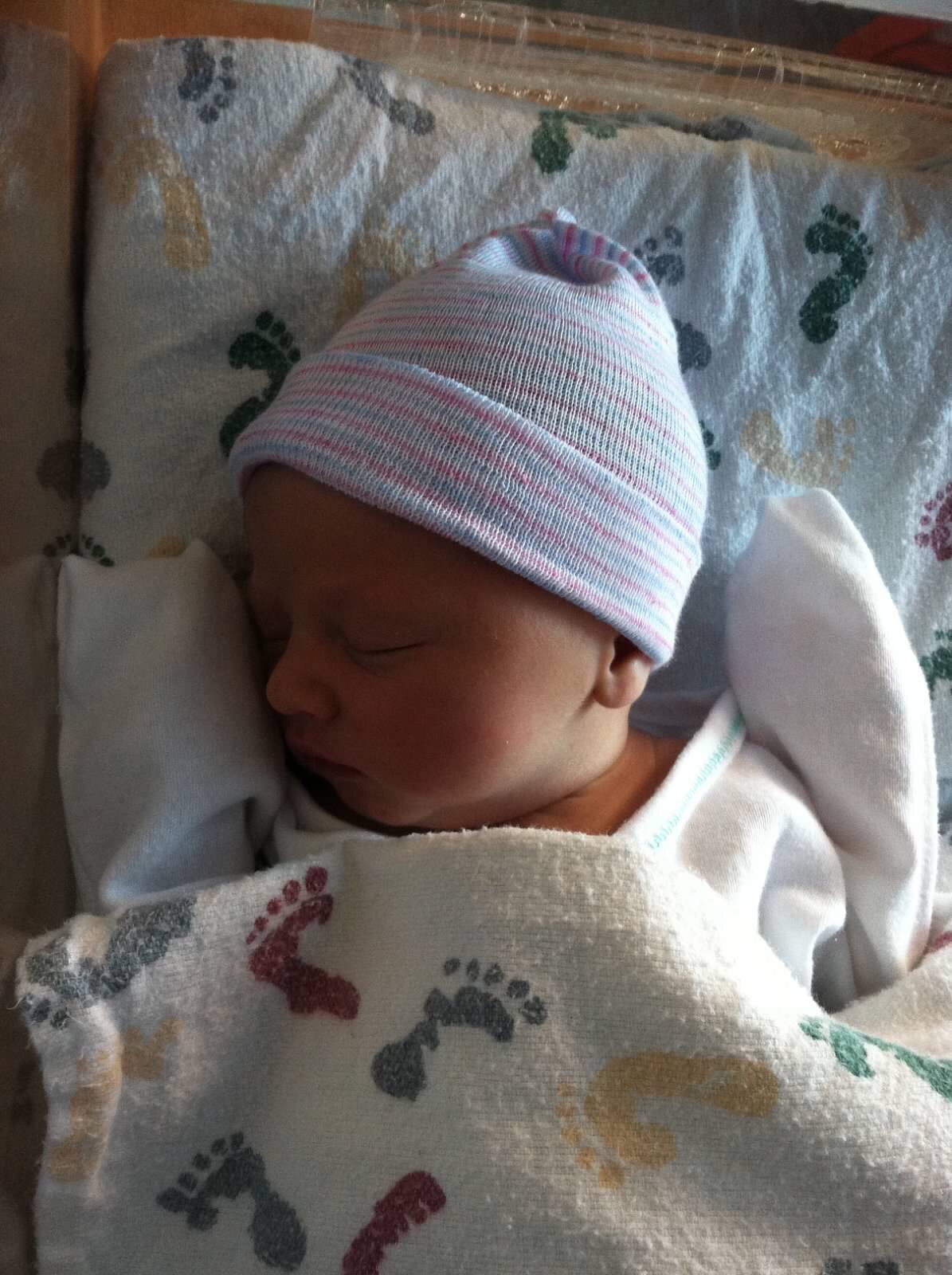
With a boy, the stakes were much higher, and the pressure was on. My son had to be the IV. It was my name, my father’s name, my grandfather’s name, and my grandfather’s uncles name, who died in WWI. It was also the name of my first ancestor who immigrated from Ireland. As the family joke became, the name goes all the way back to Adam & Eve. For whatever reason, my grandfather started counting with himself, but I digress.
There needed to be a new compromise. My wife knowing how important it was to me acquiesced, and in the interim, obtained naming rights to the next boy or our first girl. With that, we will not be using the name Olivia Shea. Still, it’s a good name, and someone should use it.
And who better than David Wright?
David and Molly Wright welcomed a baby girl, Olivia Shea Wright into the world on Saturday, July 23. #Mets pic.twitter.com/mI9oDPs9TA
— New York Mets (@Mets) July 25, 2016
I wish all the best to Wright, his wife, and to his daughter Olivia Shea.
There is probably not hotter prospect in all of baseball right now than Amed Rosario. He recently played in the Future’s Game, Keith Law recently ranked him as the number 14 overall prospect in all of baseball, and the Mets have called him untouchable in trade discussions thereby assuring he is going to be the Mets shortstop of the future. Given the fact that he is hitting .405/.471/.568 with six doubles and three triples in 17 games at AA Binghamton after dominating the Florida State League, the natural question arises as to when he will get called-up to AAA, so he can work on what he needs to work on there before taking over as the Mets shortstop for the next decade or more.
There’s one problem with aggressively promoting Rosario right now. Gavin Cecchini is currently the shortstop for the AAA Las Vegas 51s.
The 22 year old Cecchini was the Mets 2012 first round draft choice (12th overall). He is a well regarded prospect in his own right being listed as the 89th best prospect in all of baseball by Keith Law heading into the season. He was also MLB.com’s 87th best prospect. He was ranked so high as he hit .317/.377/.442 hitter with 26 doubles, four tripes, seven homers, and 51 RBI for AA Binghamton last year. His play in AA merited him a promotion to AAA where he has so far hit .319/.395/.447 with 17 doubles, two triples, five homers, and 40 RBI. Overall, Cecchini’s statistics alone establish that he’s a worthwhile prospect that should not yet be pushed aside.
Ultimately, statistics aside, Cecchini projects to be a good to very good major league hitter. He could quite possibly be the best contact hitter in the Mets’ minor league system. Cecchini has a nice compact swing who hits the ball with authority from gap to gap. In many ways, he reminds you of a right-handed younger Daniel Murphy at the plate. When his body begins to fill out some of those doubles may begin to turn into home runs at the big league level. While he may not be an All Star, he could very well be an above average regular.
There is one problem with Cecchini. Since he has been in the Mets system, he has mostly struggled defensively. This season is no different with him having an extremely poor .916 fielding percentage. While he has been willing to put in the work and do extra work on the side with Wally Backman, the results just aren’t there. Given the presence of Rosario, the natural inclination would be for the Mets to just move Cecchini to second base. This would create room for Rosario at shortstop, and the two can begin building a chemistry together as a future double play combination.
However, the Mets cannot do that as the Mets second baseman of the future, Dilson Herrera, is currently Cecchini’s double play partner in Las Vegas. The Mets have long been high on Herrera. Two years ago, the Mets gave him an 18 game cup of coffee due to a number of injuries. Last year, the Mets called him up to the majors rather quickly when both Murphy and David Wright went down with injuries. While Herrera didn’t produce much during either short stint in the majors, the tools are all there to be a very good major league hitter. He is still only 22 years old, and he has hit .302/.356/.487 while playing in AAA. Herrera can very well make an All Star Game or two on the basis of his bat alone.
And yet, there are some warning flags with Herrera. While he has good hands, he does not project to be a plus defender at second base. Additionally, he has seemingly taken a step back in AAA this year hitting only .278/.330/.465 in what has been an injury plagued year. He has become much less patient at the plate seemingly swinging at everything instead of working the count and getting a pitch to drive. It is somewhat troubling, but he is still only 22 years old, and he has shown he can be a terrific hitter. It is way too early to give up on player who can be a terrific hitter who has plus power for a middle infield position. Accordingly, you can’t just move Cecchini to second.
So what do you do with Cecchini? There are no easy answers.
The Mets could try to move him to third base where he could serve as insurance against David Wright‘s back. Given his lateral mobility and his arm, Cecchini could play the position. However, given Cecchini’s lack of true home run power, he doesn’t have the type of bat that could play at a corner infield position. Furthermore, removing Cecchini from shortstop would only serve to diminish his potential trade value.
Indeed, the Mets could look to trade him like they are apparently willing to do with any prospect named Amed Rosario. However, if the Mets were to do that, they would be parting with a player who has shown he could be a viable major league player. If the Mets were to part with Cecchini, they would be losing a big insurance policy. Rosario and Herrera could falter or get injured like some can’t miss prospects do. In the event that happens, Cecchini could prove to be a valuable piece who takes advantage of his opportunity. Mets fans saw this happen as recently as 2013 when Jacob deGrom established himself as a front line starting pitcher while Rafael Montero became an also ran. In essence, it is important to have depth, and Cecchini is certainly that.
Still, there is no doubt that Rosario and Herrera are the better prospects right now, and you cannot have Cecchini blocking their path to the majors no matter how good Cecchini is. The Mets could make him a third baseman or utility player thereby making him a better option for the big league club, but also diminishing his trade value. Overall, there are seemingly no good answers as to what the Mets should do with Cecchini. In some ways, it is a dilemma. In others, it is a good problem to have.
With the Mets looking to improve their roster in the hopes of both making the postseason and winning the World Series this year, the Mets may very well have to include him in a trade to get that player who puts them over the top. It’s also likely teams will force the Mets to give up Herrera in a trade. In either event, the problem will have been solved for the Mets. In the event that neither one is moved at the trading deadline, things will become interesting for the Mets. Ultimately, it is going to be very interesting to see how this whole situation eventually plays out.
With the Mets having just taken two out of three from the Marlins and having gained a game on the Nationals this weekend, the pennant race is in full swing. The Mets are within striking distance of the division and both Wild Card spots. This is a team desperate to go back to the postseason and take that one step further and win the World Series. In order to accomplish that goal, they have to pursue every avenue in an attempt to make the team better. That could include Jonathan Lucory.
Over the weekend, the latest rumor in what should prove to be a week of crazy rumors was that the Mets were interested in trading Travis d’Arnaud straight up for Lucroy. The Brewers understandably said no, as Lucroy is among the top three catchers in the sport, and he has an extremely reasonable $5.25 million option for his age 31 years season. With his production and his contract, every team in baseball should be interested in him except the Giants who have Buster Posey. Still, it is interesting to see the Mets engaged with the Brewers on a trade for Lucroy, when it is going to cost them d’Arnaud and a good to elite prospect. Overall, this may say something about how the Mets feel about d’Arnaud.
Overall, it is hard to get a real feel on who the real d’Arnaud is. Part of that is his injury history. Part of that is his inconsistent play.
When d’Arnaud was first called up to the Mets, he struggled. In his first 139 games which spanned across 2013 and 2014, d’Arnaud hit .233/.299/.384 with 25 doubles, three triples, 14 homers, and 46 RBI. He was having the types of offensive struggles we have seen Kevin Plawecki have in similarly limited duty. d’Arnaud had really struggled to start 2014 hitting .180/.271/.273 through 39 games. He left the Mets no choice but to send him down to the minors. In AAA, d’Arnaud got his head straight, and he came back a much better player for the end of the 2014 season. He played in 69 games after getting recalled hitting .272/.319/.486 with 19 doubles, three triples, and 10 home runs with 32 RBI. He seemed on his way to turning the corner.
That belief was only fortified in a strong 2015 campaign. Although limited due to two injuries, d’Arnaud did hit well throughout the 2015 season hitting .268/.340/.485 with 14 doubles, one triple, 12 homers, and 41 RBI in 67 games. If he was healthy, and that is always a big if with him, d’Arnaud was on pace to hit 28 doubles and 24 homers and 82 RBI if he was able to play in 134 games, which is a fair number of games to expect a healthy 26 year old catcher to play. For what it’s worth, Lucroy has never hit more than 18 homers in a year, has averaged 22 doubles, and 82 RBI is his career high mark in his seven year career. By the way, Lucroy plays in a great hitter’s park in Miller Park whereas d’Arnaud plays in Citi Field which still plays like a pitcher’s park even with the moved in outfield fences. Simply put, it was fair to expect d’Arnaud to be every good as Lucroy this year.
It hasn’t happened that way. So far this year, d’Arnaud is hitting .246/.302/.339 with five doubles, no triples, two homers, and 10 RBI. He has missed 48 games with a shoulder injury. It makes you question whether this meager production is related to his shoulder injury, his batting eighth in the lineup most nights, his new stance that has him wrapping his hands, or maybe just maybe, he’s not as good as we thought he was going to be. It’s possible the 67 games he played last year was an outlier as the production he has put up in his other 173 major league games are more in tune with the the production he has had this year.
Personally, I believe he is the player we saw last year. He is the catcher who is an excellent pitch framer that handles a very good starting staff very well. He is a guy with good power at the position who can be a difference maker in the lineup. You don’t want to move a piece like that especially when that player is under team control until 2020. It’s one thing to do everything you can do to win a World Series. It’s another thing to trade a player like d’Arnaud who should have similar, if not better, production to Lucroy and give away a big asset along with him.
And yet, d’Arnaud isn’t the player he was supposed to be. Given the fact that the Mets pitchers are starting to reach arbitration now and free agency is just on the horizon, the window is now open even with the Matt Harvey injury. The Mets can ill afford to punt a year away when they are in contention. With that in mind, is it fair to the team and the fans to sit around and wait to find out what d’Arnaud is when there’s a player like Lucroy available who can help you win this year and the next?
It’s not an easy answer especially when that other piece that would be traded along with d’Arnaud could be moved for another piece that could be a much bigger upgrade than what Lucroy would be over what d’Arnaud may be perceived to be. Either way, it’s telling that the Mets are at least considering the swap. At a minimum, it tells you they believe d’Arnaud is not as good as Lucroy. It may also be telling you that they don’t believe d’Arnaud will ever reach his full potential.
Every major league team that has been around long enough has three faces to their franchise. The first is The Immortal player. He is the player you first think of when you mention a franchise. The next is the Living Legend. This player is the one that is revered by young and old. He is the player that throws out the first pitch at first home game of the World Series. He’s in the Hall of Fame, and his number is retired. The last is the best or most popular player on the team. He is the player that has been traditionally dubbed the Face of the Team. Here are a few examples:
| New York Yankees | |
| Immortal | Babe Ruth |
| Living Legend | Derek Jeter |
| Face of the Team | Alex Rodriguez |
| Boston Red Sox | |
| Immortal | Ted Williams |
| Living Legend | Pedro Martinez |
| Face of the Team | David Ortiz |
| St. Louis Cardinals | |
| Immortal | Stan Musial |
| Living Legend | Bob Gibson |
| Face of the Team | Adam Wainwright |
| Los Angeles Dodgers | |
| Immortal | Jackie Robinson |
| Living Legend | Sandy Koufax |
| Face of the Team | Clayton Kershaw |
Yesterday, with Mike Piazza‘s formal induction into the Baseball Hall of Fame and with Tom Seaver unable to attend the Hall of Fame ceremony he loves to attend, the Mets now how their own triumvirate.
Not only is Mike Piazza a Hall of Famer who is about to have his number retired by the Mets, he has also become the Mets resident Living Legend. It’s why he was the former player who threw out the first pitch prior to Game Three of the World Series. Every big moment for the Mets from here on out is going to prominently feature Mike Piazza much in the same way we have seen through the years with players like Ernie Banks, Stan Musial, Yogi Berra, Willie Mays, Hank Aaron, and once upon a time Tom Seaver.
It’s unfortunate to see Seaver unable to travel to attend the ceremony and host his table of 300 game winners, including friend and former teammate Nolan Ryan, from his day like he loved so dearly. It’s sad that he can’t travel cross-country to throw out the first pitch for any of the World Series games or to sit in the owner’s suite and cheer on The Franchise’s Franchise. It’s almost a surety that he will be unable to attend Piazza’s Number Retirement Ceremony this weekend. In some ways, that makes him like Gil Hodges and Casey Stengel – gone but not forgotten.
No one can ever forget Seaver. He’s the best player to ever put on a Mets uniform. He’s The Franchise. He’s quite possibly the greatest right handed pitcher to ever play the game. He is the pitcher who has received more Hall of Fame votes than anyone in baseball history. He is an Immortal. No one, not even Piazza, can ever knock him off that perch.
He is joined by the Living Legend Mike Piazza and the current Face of the Mets Franchise, be it David Wright, Yoenis Cespedes, or Noah Syndergaard to become one of the three all important faces of the Mets franchise. In that way, the Mets have become an older major league franchise with a history worth celebrating.
On a typical Sunday, I’ll catch the first few innings on the car radio. Not today. We got out of the house earlier than usual to ensure we’d be home in time for my son and I to watch not only the Mets game, but also Mike Piazza‘s induction into the Baseball Hall of Fame.
Everywhere we went, Mets were talking about how excited they were for both an important game against the Marlins, but also to see Piazza join Tom Seaver as the only Mets players in the Hall of Fame. My son got caught up in the excitement as well singing “Take Me Out to the Ballgame” and “Meet the Mets.” However, he was most excited when he got his lemonade. Check that, he took my peach jalapeño sticking me with the Strawberry one.

It’s a big Mets day, I’ll call it my Darryl Strawberry one.
Naturally, we started with the Mets game as Piazza wasn’t at the podium. By the way, God bless whoever created picture-in-picture. The Mets game got off to a great start with Michael Conforto showing that he just might be able to play well in center field:
Then, in the third, Jose Reyes would hit a two out RBI triple scoring Conforto, who was actually in scoring position. The Mets had a 1-0 lead, and soon it would be time to tune in to watch Piazza officially become a Hall of Famer:
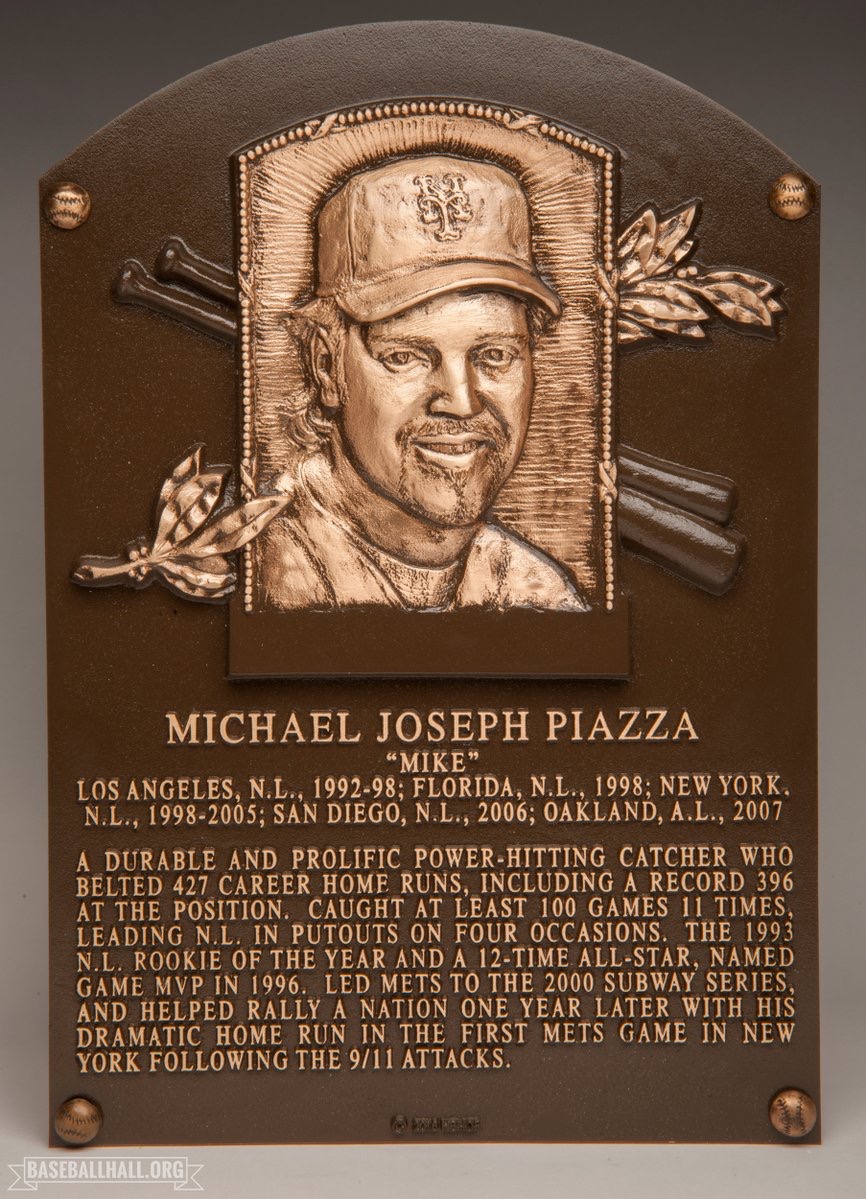
His speech was perfect.
He touched on everything you would want him to touch upon. He spoke glowingly about his boyhood idol Mike Schmidt and how Johnny Bench was the standard bearer at the position. He thanked everyone on the Dodgers including Tommy LaSorda, Eric Karros, and Tom Candiotti. He talks about how great it was growing up as a Dodger before talking poignantly about what it meant to him to be a Met.
He talked about how John Franco welcomed him into his home and gave him his #31. He talked about his on and off the field relationship with Al Leiter. He spoke about how clutch Edgardo Alfonzo was making it easier for him to do what he did, which was hit big homers including the post 9/11 home run.
But like the most of the speech, Piazza deflected the attention away from himself. Instead, he talked about the real heroes were those that gave their lives on 9/11. Much like the moment he hit that home run, there wasn’t a dry eye in the house – Cooperstown, yours, and mine.
His acknowledgment of Mets fans was also touching. It’s something that’s not always seen in Hall of Fame speeches. It was touching to hear he loved us as we loved him.
All while this was happening, Steven Matz was back in form, and he was mowing down the Marlins. I barely noticed him pitching six innings allowing four runs, none earned, and two walks with six strikeouts. By the time, I was fully re-engaged in the game I mostly ignored in the picture-in-picture, Hansel Robles was on the mound.
Robles did what he has done for most of the year and shut down the opposition. He seems to have been given the seventh inning job, and he has it locked down.
In the top of the eighth, the Mets finally got some insurance. Yoenis Cespedes singled home Alejandro De Aza, who had reached base on a wild pitch by Kyle Barraclough after striking out. Seriously, how else would De Aza reach base? James Loney singled home Curtis Granderson. The Mets seemed poised for more after a Kelly Johnson walk. However, Asdrubal Cabrera hit into a force out with Cespedes out at home (initially ruled safe, but it was overturned on replay) making him 0-32 in his last 32 at bats with runners in scoring position. Juan Lagares then lined out to end the rally.
Lagares had come on for defense in place of Conforto in the seventh. Conforto has played well before the seventh showing he could be a viable option going forward. He also had a nice day at the plate going 2-2 with a run scored.
After eight, it was 3-0 Mets which was a lot more support than Addison Reed and Jeurys Familia needed. Reed and Familia shut the door giving the Mets a 3-0 win putting them a half-game behind the Marlins. It was Familia’s 34th straight save this year and 51 straight dating back to last year.
It put the end to what was a great day to be a Mets fan.
The things we are willing to tell ourselves as fans can sometimes be quite outlandish. Back in 1997, if you polled Mets fans, they would probably tell you they would rather have Todd Hundley than Mike Piazza. Why not?
The two were the same age. Both were All Stars in 1996 and 1997. In those two years, Hundley had hit 71 homers to Piazza’s 76. Hundley had 198 RBI to Piazza’s 229. Hundley’s 53 doubles surpassed Piazza’s 48. In fact, Hundley’s 127 extra base hits were actually two more than Piazza’s 125. On top of that, Hundley was a switch hitter and a much better defensive catcher. He was the homegrown Met that was afan favorite with his very own Todd Squad cheering section at Shea Stadium. Hundley’s career was taking off, and he was seen by Mets fans as a newer version of Gay Carter. When he returned from his elbow surgery in 1998, he was expected to once again be the slugging defensive minded catcher who was going to lead the Mets to the postseaon for this first time in a decade. If you took a poll of Mets fans, they may begrudging admit Piazza was the better player, but overall, they would also state their belief that they would rather have Hundley as he was their guy. It was all a moot point anyway because there was no way the Dodgers would ever get rid of Piazza.
Until they did. There wasn’t a baseball fan alive in 1998 that was utterly shocked when Piazza was traded to the Florida Marlins along with future Met Todd Zeile for a package that included future Met Gary Sheffield and former/future Met Bobby Bonilla. Once Piazza was a Marlin, the world over knew the team that sold everything except the copper wiring after winning the 1997 World Series was going to trade the impending free agent Piazza. All of a sudden, the very same Mets fans who loved Hundley, desperately wanted Piazza. Myself included.
It was certainly possible. In that offseason, the Mets had acquired Al Leiter and Dennis Cook. There was a reporte there. Even with those trades, the Mets still had a good farm system headlined by Mookie Wilson‘s stepson, Preston Wilson, who could justifiable headline a Piazza trade. Without Hundley, the team was languishing around .500, and they needed a shot in the arm if they were ever going to earn a postseason berth. You could tell yourself that when Hundley got back he could either play left field in place of the struggling Bernard Gilkey or in right in place of another fan favorite, Butch Huskey. At least, that is what you told yourself.
Amazing, it actually happened. On May 22, 1998, the 24-20 Mets actually pulled off a trade to acquire Piazza. Perhaps just as a amazing, when the Mets activated Hundley from the disabled list on July 22nd, they put him in left field. Very rarely in life does things happen exactly as you imagined it would. This did.
Except it didn’t. While Piazza was originally greeted with a hero’s welcome, he would then become roundly booed by the very same fan base who was desperate to acquire him. Hundley would be a disaster in left field. As uncomfortable as he was in the field, he was equally uncomfortable at the plate hitting .162/.248/.252 with only one home run. He eventually forced Bobby Valentine‘s hand, and he became the backup catcher to Piazza. In retrospect, how could it have ever worked? Piazza was a star in Los Angeles, which is nowhere near the hot bed New York was. Hundley was a catcher out of the womb as he was taught the position by his father Randy Hundley.
But then on a September 16th game in the old Astrodome, it all worked according to plan. In the top of the ninth, with the Mets trailing 3-1, Piazza, who had been 0-3 on the night, stepped in the box against Billy Wagner with two on and two out. He would launch a go-ahead three run homer. After Cook blew the save in the ninth, Hundley would be summoned to pinch hit in the top of the 11th. He would hit a game winning home run. It would be the first and only time Piazza and Hundley would homer in the same game. In fact, it was Hundley’s last homer as a Met. At that point, the Mets seemed to have control of the Wild Card, but they would eventually fall apart, thanks in LARGE part to Mel Rojas, and they would just miss out on the postseason.
Going into that offseason, the Mets had to make a choice. Do you stick with your guy Hundley behind the plate, or do you bring back Piazza. To everyone’s delight, the Mets made Piazza the highest paid player in the game giving him a seven year $91 million dollar contract. When the Mets re-signed him, the Mets seemed assured of returning to the postseason.
And they did with the help of both Piazza and Hundley. With Piazza back in the fold, the Mets had to move Hundley. That spurned two shrewd moves by Steve Phillips that helped build a supporting cast around their superstar. Hundley was traded for Roger Cedeno and Charles Johnson, the same Johnson who was traded by the Marlins to acquire Piazza. Cedeno would spend 1999 being tutored by Rickey Henderson, and he would set the then Mets single season record for stolen bases while manning right field. Phillips would then flip Johnson for Armando Benitez, who would become a dominant closer out of the bullpen.
Piazza was dominant that year. He hit .301/.361/.575 with 40 homers, a Mets right-handed batter single season record, and 124 RBI, which is the Mets single season record. He led the Mets throught the play-in game and into the NLCS. His seventh inning opposite field home run off John Smoltz in Game Six of the NLCS tied the game at 7-7. In a game they once trailed 5-0 and 7-3 and a series they had trailed three games to none, it seemed like the Mets were on the verge of pulling off the impossible. With a Kenny Rogers walk, they didn’t. The Mets came so close to making the World Series, but they fell short. Even with as much as Piazza gave them, they would need more in order to make it to their first World Series since 1986 and to play in consecutive postseasons in team history.
Amazingly, Piazza had another gear. He would hit .324/.398/.614 with 38 homers and 113 RBI. It remains the highest slugging percentage in team history. The 78 homers and 237 RBI over two years stands as the team records over a two year stretch. He would tie the Mets single season record with three grand slams. In 2000, the Mets would go to the World Series, and they would fall agonizingly close as his shot to center field fell just short of tying the game.
It was a start to an amazing Mets career and part of a Hall of Fame career. Before Piazza left the Mets after the 2005 season, he would hold many records. He would have the most home runs by any right-handed Mets batter and second most all time to Darryl Strawberry. He would also be second to Strawberry in team RBI. He would be passed by David Wright in those catergories. However, Wright wouldn’t pass Piazza in some other catergories. Piazza has the third highest team batting average, and he has the highest slugging percentage in Mets history. He would also hit the most home runs all time by a catcher surpassing Johnny Bench. It was one of many memorable home runs in Piazza’s time with the Mets, which included the June 30, 2000 home run capping a 10 run eighth inning rally that saw the Mets overcome an 8-1 deficit against the Braves, and the most important home run he would ever hit:
Now, Piazza is going to be a Hall of Famer. He is going to be a Hall of Famer in a Mets uniform. It never seemed possible.
Years ago, Mets fans would’ve picked Hundley over Piazza. Almost twenty years later, Piazza chose us when he chose to enter the Hall of Fame as a New York Met joining Tom Seaver as the only Mets in the Hall of Fame. It was an incredible ride that has seen Piazza become perhaps the most beloved Met to ever wear the uniform. He deserves that love and much more. He deserves every congratulation and accolade the Mets, Mets fans, and all of baseball can throw his way.
Thank you Mike Piazza.