Musings
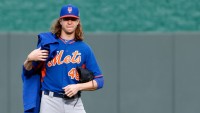
The Mets have a $140 million payroll. The strength of the team is its young, cost-controlled pitching. The pre-arbitration pitchers make little money by baseball standards. However, their $500,000+ salary should allow them to live comfortably.
Families make a lot less than that, and they can put a roof over their families heads and put food on the table. One of the crazy things a family is able to afford, even with relatively modest means, is a mattress for everyone. When they go away to places like Florida, they can stay at places that have decent mattresses. So with that said, why can’t the Mets and their players?
Last year, Steven Matz almost missed the postseason because he injured his back sleeping on a Barcalounger. Yesterday, Jacob deGrom missed his Spring Training start because he tweaked his back sleeping on a mattress that was too soft. He was able to throw a bullpen. He then counseled with Matt Harvey who, like Baby Bear, had a mattress recommendation that is just right.
I know, I know. We should calm down. Matz was able to pitch in the postseason, and deGrom was able to pitch a pain free bullpen. However, I get nervous because it’s the dumbest things that interfere with a great or potentially great season.
The 1987 Mets never got traction with their pitchers missing time. Most notably was Dwight Gooden and his cocaine suspension. Aside from Gooden, I think every Met pitcher had an injury including the guy who threw batting practice.
In 1988, the Mets returned to form, but there was a strange injury that hurt their chances at another World Series title. On the day the Mets clinched the NL East, Bob Ojeda, who was amazing in 1986, nearly severed the middle finger on his pitching hand while trimming the bushes in his front yard. The Mets, who dominated the Dodgers in the regular season, lost the NLCS in seven games.
In 2006, Duaner Sanchez suffered a season ending shoulder injury during a late night cab ride to get a late night bite. This caused a number of moves to try to replace his spot in the bullpen. In the seventh inning of Game Two of the NLCS, Guillermo Mota shook off Paul Lo Duca and threw a change up that Scot Spiezio turned into a game tying triple. In Game Seven, Aaron Heilman allowed Yadier Molina to hit the series winning homerun. It’s possible Sanchez would’ve closed the door in either situation. Instead, he was unavailable.
The overriding point is that it’s not just the Tommy John surgeries that kill your chances. It’s also the yard work and can rides. It’s the unforeseen problems that arise. Maybe the Mets win in 1988 if Ojeda hires a gardener. Maybe the Mets win in 2006 if Sanchez orders room service. I don’t want to say maybe the Mets win in 2016 if their pitchers had better mattresses.
If in the equipment manager, I’m ordering a mattresses that Harvey recommended for every player. The 2016 season cannot be derailed by a bad mattress.
Thr first thing you should know about running NCAA pools is you shouldn’t. It’s just aggravation. The biggest one is chasing down people for money. With that in mind, here are some friendly suggestions:
- It’s 2016, have everyone enter picks into an Internet site like ESPN, Yahoo, or CBS. You don’t have to do this on paper.
- Again, it’s 2016. Use PayPal. You can have everyone send the money to you electronically, and when you do the payout, you can send it out electronically. No need to chase people down for money or cash checks.
- Have a small entry fee. The smaller the fee, the more likely people will be willing to do it. With more people in, it’s more fun, and hopefully, the payouts will be higher.
- A fun rule to increase participation is to offer last place their money back. Many people who are on the fence may be willing to give it a go knowing that if their picks are terrible, they’re getting their money back.
- Make sure everyone knows the points system and other rules upfront. Also, keep those rules available whether it’s a message board or an email chain.
If you follow these simple suggestions, running a pool shouldn’t be as stressful as it usually is.
Good luck.
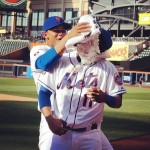
In honor of Pi Day, let’s look at all the things to look forward to during the 2016 season:
3.1 – Mike Piazza
This summer Mike Piazza is going into the Hall of Fame as a Met. He’s the first Mets position player to do so. The following weekend, he will also be the first Mets position player to have his number retired. He will forever be remembered for all of his homeruns, especially the homerun after 9/11. More importantly, he will forever be a Met.
41 – Tom Seaver
Seaver is the greatest Met to ever wear the uniform, and perhaps, the greatest right handed pitcher of all time. He was rightly dubbed “The Franchise.” With him, he began the aura of the Mets always having good pitching. This year his mantle will be picked up again by a dominant young staff reminiscent of the pitching staffs Seaver was a part of back in his day.
59 – Antonio Bastardo
Bastardo is one of a few key free agents the Mets added this offseason. Last year, the Mets had bullpen problems forcing them to overuse Jeurys Familia and trade a lot of good young pitching away to build a bullpen around the trade deadline. This year, Bastardo is a key arm in what appears to be a bullpen worthy of holding down the leads handed to them from their dominant starting pitchers.
26 – Kevin Plawecki
Plawecki had a rough 2015 whether it was because of him being rushed to the majors too soon or him needing sinus surgery. Given Travis d’Arnaud‘s injury history, it is very possible Plawecki is going to get another shot at being the Mets starting catcher next year. At some point, he will be called upon to not only continue his tremendous work as a receiver, but also being a more potent bat to the Mets lineup.
5 – David Wright
The biggest question mark in the 2015 season is how much David Wright can play and how effective he can be over the course of a 162 game season. Wright is the team leader and Captain, and they’re going to need him. At the end of 2015, he showed he can still hit and be an important part of the Mets. They’re going to need him at some point next year.
35 – Logan Verrett
After losing Verrett in the Rule 5 draft last year, he’s back with the Mets organization. Last year, he was an important swing man. He was first a bullpen arm and later a spot starter who gave a young pitching staff some rest before the postseason. In 2016, Verrett is likely to serve a similar role regardless of where he starts the year. At some point, the Mets will need him, even if it’s just to get the starters some rest before another postseason run.
89 – The Closing of a Window
After the Mets lost in the 1988 NLCS, there was no reason to believe that was the end of their window. There were veterans on the team, but there were also prospects behind them and rising stars on the team. There was still the pitching. It’s a stark reminder that when the window is open, you do everything you can in that timespan. You never know when that window closes.
79 – Paul Sewald
Sewald is just one of a number of Mets pitching prospects who are chomping at the bit to get called-up to the majors. Sewald has had a 1.83 ERA in his entire minor league career. If he continues pitching this well, he very well might get a call-up in the event there is an open bullpen spot this year.
32 – Steven Matz
In Matz’s first two career starts, he was incredible on the mound and at the plate. Even after his injuries, he has shown flashes of brilliance. He’s an early leader in the Rookie of the Year race. He’s primed to become the next great Mets starting pitcher. In 2016, he needs to stay healthy and take that next step.
38 – Dan Warthen
Warthen and the entire Mets organization have been blessed with amazing pitching. It’s encumbent upon Warthen to not only help each of these pitchers take the next step in their development, but also to help keep them healthy over the course of a full season.
4 – Wilmer Flores
We end with Flores, who was the last Mets to bat in the 2015 World Series. Flores was the player who cried at the possibility of leaving the Mets to a fan favorite. He has gone from the starting shortstop to a utility/platoon player. The 2016 Mets are a heavy left-hand hitting team. Flores can balance this out in his role as a super sub.
He’s also the first choice for third base in the event that Wright needs to sit or go on the DL for long stretches of time. He’s the primary backup at every infield position. He’s going to be an extremely important piece for the Mets.
They are all important actually. As we saw in 2015, a team will have to go deep into their roster at times. However, by building a strong 25 and 40 man roster, as the Mets have now, you give your team the best chance to make it to the postseason. Hopefully, the Mets can come full circle (pi pun) in 2016, and win the World Series.

In his first Spring start, Jacob deGrom showed decreased velocity, and he got hit around a bit. Today, deGrom will miss his start with back stiffness.
Take a deep breath. It’s still only Spring Training. The season is still about a month away. There is time for him to rest and improve. Even if he’s not ready right alway, there’s a lot of off days early in the season that the Mets can navigate April without deGrom if needed. However, that’s jumping the gun. It’s just one day. Relax. Just keep your composure:
There are moments that will forever stick out in your mind; moments that bring a father and son closer. For me, that moment was the 1989 NCAA Tournament. More specifically, I’m referring to the Championship Game.
The 1989 Championship Game was the first time my father was able to coax my mother into allowing me to stay up past my bedtime to watch a sporting event with him. This was the first year I had ever done an NCAA bracket, and I actually had Michigan and Seton Hall in the Championship game. I had Michigan winning the game too.
I still remember my father trying to talk me out of rooting for Michigan.
“Seton Hall wears blue uniforms. Blue is your favorite color.”
“Seton Hall is a Catholic school. Aren’t you an altar boy? You shouldn’t root against a Catholic school as an altar boy.”
“Seton Hall is in the Big East!”
There, you see, my father was like the dad in Rudy. There’s only one conference we root for in this house, and that’s the Big East. I remember when Getty did their annual Big East glasses promotion, my Dad would make sure he got each and ever glass to complete the set – even Miami. He never much liked Miami joining the Big East.
I’ll be honest, my father had me close. It was only the second time in my life my Dad had a different rooting interest than me. The first time was the Flipper Anderson Game. It made me nervous, but I still was rooting for Michigan. I had them all along. It’s funny how on the night, I was the biggest Michigan fan in the world. That also meant I was rooting hard for Seton Hall to lose.
Life is funny. I grew up to be a Seton Hall fan. There are times that I want to go back in time, smack that kid upside the head, and say, “What’re you doing? We root for Seton Hall!” I would then utilize that time machine to stop the referee from making a bogus call to send that game into overtime.
But no, in 1989, I was a Michigan fan. More importantly, I was hooked on college basketball and the NCAA tournament. From that year forward, I ran a pool. I ran it in my Catholic elementary school, high school, and beyond. In college, my pool including the do entire dorm, the accounting department, and half the faculty in the School of Business.
During this long journey, I became a Seton Hall fan. It wasn’t because of Gary Cohen, but trust me, I love that he’s the radio play-by-play announcer. It’s also not because of Bill Raftery, although every college basketball fan should hold a special place in their hearts for Seton Hall because they brought Bill Raftery to the scene. Every time this NCAA Tournament you hear him describe a team starting out “man-to-man” or scream “ONIONS!” after a huge shot, thank Seton Hall. Conversely, don’t blame us for Dick Vitale.
In any event, I’m a Seton Hall fan, and in the first year at the Prudential Center, I was a season ticket holder. There have been few ups and many downs in my rooting for Seton Hall. The most baffling was the change in Pirate mascots. Amongst the lowest was last year, when the team collapsed. The year and team were so bad, on and off the court, that good players left the school rather than dealing with that nonsense. Kevin Willard kept his job in a situation where 99 out of a 100 coaches would’ve lost their jobs. Seton Hall made the right choice.
For the first time in 23 years, Seton Hall won the Big East Tournament. It really is an amazing feeling. The Dukes of the world take things like this in stride. For Seton Hall fans, this is a momentous occasion. There’s no telling what this team will do in the NCAA Tournament, but after seeing them knock off Xavier and Villanova on back-to-back nights, I’m ruling nothing out.
So for the next month, not only do I get the chance to watch the NCAA Tournament, which I love, I get to see Seton Hall play in it. Even better, Seton Hall has a legitimate chance to make some noise. It looks like 2016 is off to an amazing start in my corner of the sports world.
Onward Setonia, we are bound for victory . . .

In all seriousness, the last thing I want to do is to write about Jenrry Mejia again. It’s going to be an exciting year for the Mets, and there are so many great and positive things to write about and discuss.
However, he called a press conference, and WOW, do we need to address his allegations.
First, Mejia alleged that baseball threaten him with a third suspension if he didn’t name names. Essentially, Mejia is asserting that the way MLB handles its steroid policy is nothing short of how the McCarthy hearings transpired. For not naming names, Mejia alleges he was suspended a third time even though he was not using a banned substance at the time of the last suspension.
Now, Mejia only admitted to being guilty the first time, which he chalked up to an accident. He said the subsequent tests were no accurate. When pressed on whether MLB was issuing false positives, Mejia’s attorney said the information is confidential. Despite the confidentiality asserted here, it did not prevent Mejia from making that assertion.
Second, Mejia has alleged that MLB has hacked into player’s social media accounts. Following the Cardinals’ hacking scandal this is no small allegation. Mejia is not only asserting baseball has infringed upon his rights, he is also accusing baseball of criminal behavior. If true, this is a scandal that could rock baseball. If false, these allegations are nothing short of defamation.
Of less surprising news, Mejia says he is innocent, and he will appeal the suspension through the Player’s Union. As such, no court case as of right now. As we’ve seen in past cases, these appeals happen behind closed doors, which is a shame. With all that Mejia is claiming, I’d love to see this on live TV.
This press conference has raised many issues regarding how MLB handles people who test positive for PEDs. If MLB is willing to bargain with a tainted player for information, it puts the legitimacy of the policy and what’s on the field in question. Conversely, if MLB is creating false positives and hacking into player’s social media accounts, it shows the great lengths baseball will go to in order to catch PED users. At this point, this all seems a little far fetched . . . at least I hope it is.
The Mejia drama has taken some strange twists and turns thus far, and by the looks of it, the drama is not going away any time soon.
Editor’s Note: this was first published on metsmerizedonline.com

Coming into the 2016 season, the Mets should be talking about Erik Goeddel as a lock for the Mets bullpen.
In two years, Goeddel has made 41 appearances. In those 41 appearances, he has gone 1-1 with a 2.48 ERA, 1.000 WHIP, and 9.0 K/9. Advanced stats like him as well. Goeddel’s ERA+ is 150, and his FIP is 2.58. He had a low to mid 90’s fastball, curveball, and a splitter. The discussion shouldn’t be about if he’ll make the roster. No, the discussion should be what inning is he going to get.
So, why is his position on the roster in peril?
For starters, Goeddel is hurt with a lat strain. On Wednesday, he just started throwing from 120 feet to start getting ready for the season. While Goeddel is rehabbing, once long shot candidates like Jim Henderson and Josh Smoker are pitching well in Spring Training games. They are trying to force their way onto the Opening Day roster.
Ultimately, injuries are Goeddel’s biggest problem. He has had THREE TOMMY JOHN SURGERIES! Even with all of that, he still went on the 60 day DL last year with an elbow strain requiring platlet rich therapy. In sum, while Goeddel has the stuff and the results, he cannot be relied upon over the course of a 162 game season.
With everything that has gone against Goeddel in his career, it’s a flat out miracle that he made it to the majors. It’s a testament to his will, tenacity, and yes, talent helped him succeed when he made it to the majors. It’s heartbreaking that when he gets to the majors and succeeds, his elbow betrays him again.
Right now, it’s his lat. He needs to proceed cautiously because any injury to the core or legs can lead to either an arm injury or an exacerbation of an existing arm injury. The last thing anyone wants to see is Goeddel suffer another elbow problem.
So with that, Goeddel may not make the Opening Day roster. He will be heard from this year, but at no point should the Mets count on him going forward.

Man today’s players just don’t respect the game or their opponents. Years ago, they never would’ve celebrated on the field:
Yes, that’s Kirk Gibson celebrating a homerun off of Goose Gossage. That was from the 1984 World Series. You know what I couldn’t find anywhere? Gossage condemning Gibson for the celebration. Sure, it would seem like sour grapes, but he had a platform then and didn’t use it.
Now? Well now, the Hall of Famer rails against how players today celebrate. He called Jose Bautista and Yoenis Cespedes and their celebrations to be an embarrassment and disgrace to the game. He’s apparently taking issue with the bat flips:
Gossage comes off like an old man lamenting how things were better in his day. He is remembering the days when if you hit a homerun, you put your head down and rounded the bases. No one out there showed any emotion so as to not show anyone up. They knew if they did the pitcher was going to stick one in your ear. The thing is that he has selective memory. Additionally, times have changed.
In an ESPN the Magazine interview with Tim Keown, Bryce Harper shared his thoughts on player celebrating on the field:
Baseball’s tired. It’s a tired sport, because you can’t express yourself. You can’t do what people in other sports do. I’m not saying baseball is, you know, boring or anything like that, but it’s the excitement of the young guys who are coming into the game who have flair. If that’s Matt Harvey or Jacob deGrom or Joc Pederson or Andrew McCutchen or Yasiel Puig — there’s so many guys in the game now who are so much fun.
Jose Fernandez is a great example. Jose Fernandez will strike you out and stare you down in the dugout and pump his fist. And if you hit a homer and pimp it? He doesn’t care. Because you got him. That’s part of the game. It’s not the old feeling — hoorah . . . if you pimp a homer, I’m going to hit you right in the teeth. No. If a guy pimps a homer for a game-winning shot . . . I mean — sorry.
If a guy pumps his fist at me on the mound, I’m going to go, ‘Yeah, you got me. Good for you. Hopefully I’ll get you next time.’ That’s what makes the game fun.
Overall, Harper’s thoughts represent a a change in the culture of baseball.
Players today are more apt to celebrate on the field. Their celebrations are more elaborate. When these celebrations happen, players seem to take it the same way Heyward says he takes it.
Sure, there are current players who feel differently than Bautista, Cespedes, and Heyward. Apparently, there were people like Kirk Gibson who felt differently than Goose Gossage when it came to celebrating a homerun back in the day when Gossage pitched.
If this is the current culture of the sport, we should all accept it. As long as these bat flips don’t result in players getting plunked, who are we to judge? In fact, what Harper states is that the celebrations fuel him to get the pitcher the next time. If these celebrations are both fun and bring out the best in everyone on the field, how can this be anything but good for baseball?
For baseball’s part, they seem to be embracing it showing the bat flips in commercials and putting them on YouTube. Baseball is going it because the culture has changed from the time Goose Gossage has played the game. Players want to celebrate, and fans want to see it.
The culture of baseball has changed whether or not the Goose Gossages of the world approve.
Editor’s Note: this article first appeared on metsmerizedonline.com
“Dad, who did you vote for in the Republican primary?”
“I voted for Donald Trump.”
“Why Dad?”
“Well son, Paul O’Neill endorsed him.”
In my life, I have honestly never come across someone who voted for a candidate because a baseball player or other celebrity endorsed that person. However, that still didn’t stop the outrage.
Some people are apoplectic that this happened. Doesn’t he know what Trump stands for? Doesn’t he know Trump’s policies? How could Paul O’Neill possibly have endorsed Donald Trump? I’m sure there are also people who are commending O’Neill for understanding why the country needs to elect Trump.
For all the uproar, I haven’t seen one interview with O’Neill questioning him why he endorses Trump. I’m sure he can provide a cogent argument for his decision. As I’m sure Johnny Damon could as well for why he has endorsed Trump.
With that said, I’m not making my decisions based upon that. I’m not going to let O’Neill’s endorsement affect the way I think about him as a player or the election. To me, he will always be the player who Armando Benitez couldn’t strike out. He’s the guy who once kicked the ball into the infield while he was in Cincinnati.
I encourage everyone to get involved and make their own decisions even if the my disagree with mine. Although, I wish you would agree with me. Watch tonight’s debate. Research the candidate’s history and what they believe.
Don’t support a candidate based upon your favorite player. Don’t let a player’s endorsement let you affect what you think of that player. If you’re a Yankee fan, you should adore O’Neill for all that he’s done. As a Mets fan, tip your cap to him for having the at bat that might’ve altered the course of the entire World Series.
I don’t watch baseball to get into endless political debate. People don’t listen to Mark Levin or watch Rachel Maddow to get their take on the Mets chances this year. People need to compartmentalize.
I’m moving on now and ignoring who any future athletes endorse.

Going into the 2016 season, there is one fear each and every Mets fan has. We dare not speak its name, but that doesn’t change the fact that it’s still present. That fear is that a pitcher will get seriously injured.
Looking at this year’s list of pitchers who could befall the dreaded “Verducci Effect,” Noah Syndergaard headlines that list. If Syndergaard was to suffer a season ending injury requiring Tommy John surgery? it would greatly hinder the Mets chances of winning not only the World Series, but also making it to the postseason. It’s something that not just Mets fans fear, but as Anthony DiComo of MLB.com reports, Syndergaard fears it also:
I’ve thought about it quite a bit. But I trust myself to put my body in the right situations to be able to perform at a healthy level.
The fear is justified. Syndergaard threw 65.2 innings more last year. He throws over 95 MPH more than anyone in the game. He’s working to add the fabled Warthen Slider to his already dominant repertoire. Name a risk factor for UCL years requiring Tommy John surgery. Syndergaard meets most if not all of them.
One risk factor not readily discussed is the team he plays for. Look at the projected Mets rotation when healthy: Matt Harvey, Jacob deGrom, Noah Syndergaard, Steven Matz, and Zack Wheeler. Put aside Syndergaard for a moment. What do the other four have in common? They are all hard throwing pitchers under the age of 30 who have already had Tommy John surgery.
Go outside this group. Since Warthen took over as the Mets pitching coach, the following homegrown Mets have sustained arm injuries: Jon Niese (shoulder), Dillon Gee (shoulder), Jeremy Hefner (two Tommy John surgeries), Rafael Montero (shoulder), Bobby Parnell (Tommy John), Josh Edgin (Tommy John), Jack Leathersich (Tommy John). There are more, but you get the point.
Now, is this an organizational problem since Warthen took over, or is it just bad luck? Could this all have been avoided? Back in the 60’s and 70’s the Mets developed pitchers like Tom Seaver, Jerry Koosman, Nolan Ryan, and Jon Matlack. These pitchers threw more innings than the pitchers today, and yet, Matlack was the only one of this group that suffered an arm injury.
In the 80’s, the Mets had Dwight Gooden, Ron Darling, Sid Fernandez, Rick Aguilera, Randy Myers and David Cone. Of this group, only Doc and Cone had arm issues. It should be noted that Doc had many other issues as well, and Cone’s problem was an aneurysm later in his career.
In the 90’s, Generation K was a bust, and the Mets haven’t developed the caliber of starting pitchers like they have in the past until now. However, this generation seems to befall injuries far more often than their predecessors. Is it organizational? Is it bad luck? Is it preparation? For his part, Harvey wonders what if:
I think now, there are things I could have done better in high school or in college to maybe prevent it. But I don’t know. I’m not saying [Syndergaard] works that much harder than everybody else, because we all work hard. I think as time progresses, guys pay more attention to stretching the shoulder, strengthening the shoulder. If I could go back — I don’t know if this would’ve prevented me from having [surgery], but if I could go back and really do 20 extra minutes of stretching and arm care, you never know what could happen.
That’s the thing. We really don’t know why one guy suffers elbow and shoulder injuries while others don’t. Is it preparation? Is it good genes? Is it just good luck? Much time, energy, and money has been spent on this issue, and yet pitchers still get injured. Pitchers get injured despite teams doing everything in their power to try to prevent it.
It will help Syndergaard being in a clubhouse with players who have had Tommy John surgery. They each will have advice for him on why they suffered the injury and what they could’ve done differently. More importantly, Syndergaard appears to be a hard worker who takes the health of his arm very seriously. There is no doubt he is doing everything he can do to avoid the dreaded Tommy John surgery.
Based on what we’ve seen, if anyone can avoid it, it’s him.
Editor’s Note: this article was first published on metsmerizedonline.com